
New Elon Musk book tells tale of how Tesla Cybertruck started as round and aluminum
Key Points
- 🚗 The Tesla Cybertruck went through various design iterations before its iconic stainless steel, sharp-edged appearance.
- 🧩 Initially, the Cybertruck was designed with curves and an aluminum exterior, looking relatively “normal.”
- 🎨 Tesla’s Chief Designer Franz von Holzhausen and Elon Musk collaborated on the design in a serene studio behind SpaceX Headquarters.
- 🗓️ Ideas for the Cybertruck began in early 2017, and over two years, they transformed it into the unique vehicle we know today.
- 🔍 They explored traditional designs and even considered using materials like aluminum and titanium before settling on stainless steel.
- 🛠️ Engineers and others initially resisted the unconventional design but were eventually convinced by Musk’s vision.
- 📅 In November 2019, the Cybertruck was officially unveiled by Musk and Franz, and it is now nearing its first deliveries.
The Tesla Cybertruck was a lot of things before it became what it is now, and before CEO Elon Musk and Chief Designer Franz von Holzhausen landed on a cyberpunk, stainless steel truck with sharp lines and edges, it was initially designed with curves and an aluminum exterior.
According to an excerpt from Walter Isaacson’s new book titled, “Elon Musk,” the Cybertruck was originally designed as something that was relatively “normal” in the grand scheme of things. Von Holzhausen and Musk would collaborate in a design studio behind SpaceX Headquarters in Hawthorne, Los Angeles, every Friday.
It was a serene time of the week as Tesla had fended off near bankruptcy, three vehicle launches, and, around this time, what Musk called “production hell,” referring to the Model 3 launch.
In early 2017, Musk and Von Holzhausen had started kicking around ideas for the Cybertruck, and in over two years, they’d unveil their design to the world.
In the past, we’ve seen images of how massively wide the scope was for the Cybertruck. It was not always the design that we have come to know as the Cybertruck:
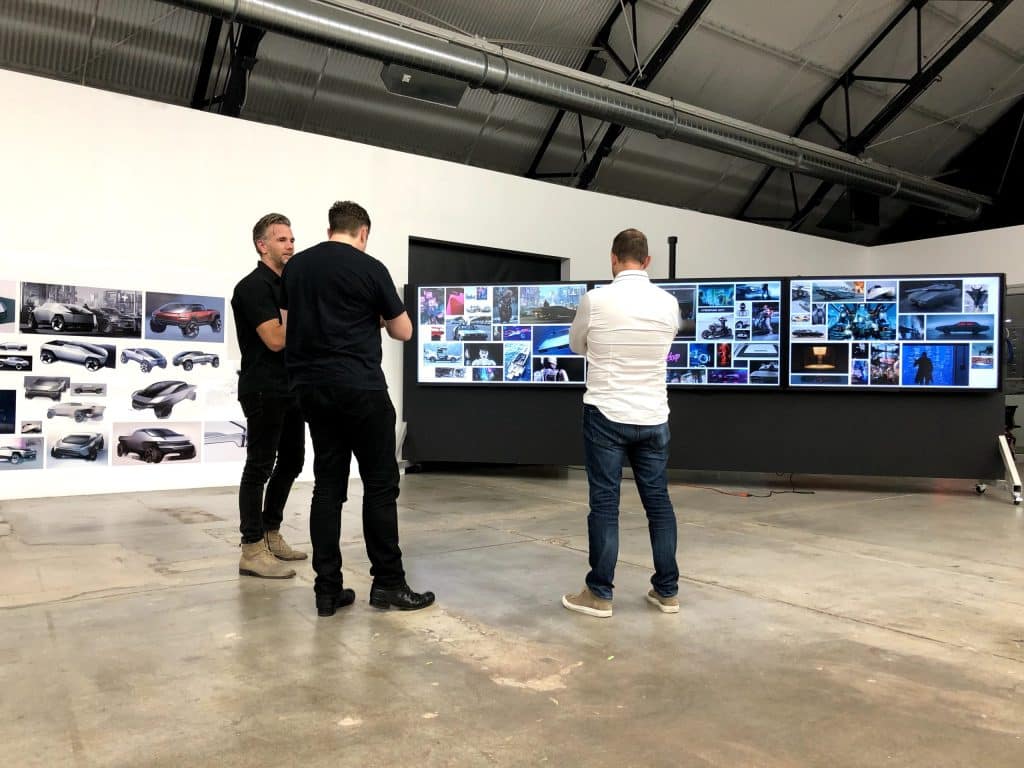
An excerpt from the book confirms that:
“Beginning in early 2017, they began kicking around ideas for a Tesla pickup truck. Von Holzhausen started with traditional designs, using a Chevrolet Silverado as a model. One was placed in the middle of the studio, and they studied its proportions and components. Musk said he wanted something more exciting, perhaps even surprising. So they looked at historical vehicles with a cool vibe, most notably the El Camino, a retro-futuristic coupé made by Chevrolet in the 1960s. Von Holzhausen designed a pickup truck with a similar vibe, but as they walked around the model they agreed that it felt too soft. “It was too curved,” von Holzhausen says. “It didn’t have the authority of a pickup truck.”
Eventually, Musk and Franz made a trip to the Petersen Automotive Museum, where they realized something that would end up being a key point of their presentation in November 2019: pickup trucks are essentially all the same.
“We realized that pickup trucks basically haven’t changed in their form or their manufacturing process in eighty years,” Von Holzhausen said.
They then started kicking around ideas on how they could make this pickup unique. The first thing was what material it could be made of, and initially, aluminum was what was ideal. But titanium was also in the conversation due to its durability.
Musk came in and announced one day after weeks of deliberation on potential materials, “We are going to do this whole thing in stainless steel.”
Not everyone in the Tesla Design Studio was on board, either. Engineers and others heard rumblings of severe pushback against the project, and they were hoping Musk would withdraw his idea for the Cybertruck and go with something more traditional.
He told those in the Design Studio, “We’re not doing a traditional boring truck. We can always do that later. I want to build something that’s cool. Like, don’t resist me.”
In November 2019, Musk and Franz unveiled the Cybertruck.
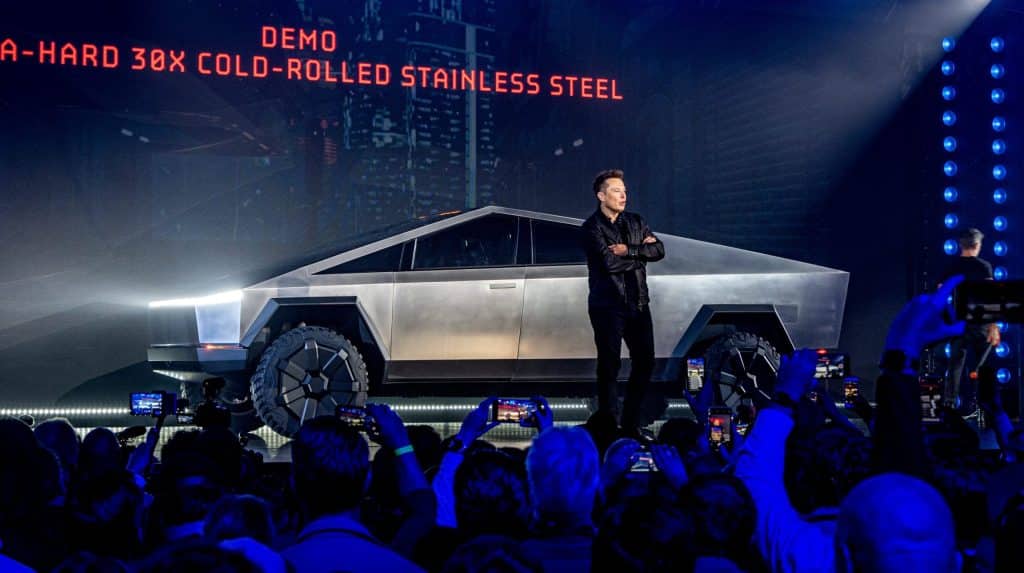
And now, nearly four years later, the Cybertruck is nearing its first deliveries, and Tesla plans to hand over the first units by the end of the year.