Category: SpaceX

SpaceX Crew-12 Soars to New Heights: Historic Falcon 9 Launch and First-Ever Landing at LZ-40 Ushers in Reusability Revolution

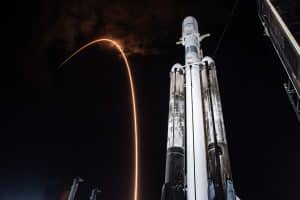
What a way to kick off the year! On February 13, 2026, at precisely 5:15 a.m. Eastern Time, SpaceX etched another milestone into the annals of spaceflight history. A Falcon 9 rocket thundered off Space Launch Complex 40 (SLC-40) at Cape Canaveral Space Force Station, propelling the Crew Dragon Freedom toward the International Space Station (ISS). But this wasn’t just any crew rotation—it doubled as the debut of Landing Zone 40 (LZ-40), SpaceX’s shiny new booster touchdown pad right next to the launch site.

U.S. Smuggles Thousands of Starlink Terminals into Iran: Defying the Regime’s Digital Darkness

As a tech policy analyst and blogger with over a decade tracking the intersection of satellite internet, censorship battles, and U.S. foreign policy in repressive regimes, I’ve seen technology emerge as the ultimate equalizer in fights for freedom. The latest revelation from The Wall Street Journal—that the Trump administration covertly smuggled around 6,000 Starlink terminals into Iran following a savage crackdown on protests—is nothing short of a geopolitical thriller. This isn’t just about beaming internet from space; it’s a calculated strike against Tehran’s iron-fisted control over information, echoing Cold War-era radio broadcasts but with Elon Musk’s satellites as the delivery system. In this deep dive, we’ll unpack the protests’ roots, the smuggling op’s mechanics, internal U.S. debates, and why this could reshape global digital resistance.

Starlink Shutdown: SpaceX Delivers a Battlefield Game-Changer by Blocking Russian Troops in Ukraine

In a pivotal move amid the ongoing Ukraine conflict, SpaceX has deactivated unauthorized Starlink terminals wielded by Russian forces, plunging their frontline communications into chaos. Ukrainian officials, including Defense Minister Mykhailo Fedorov, confirmed the coordination with Elon Musk’s company, marking a rare instance where commercial satellite tech directly alters military dynamics. This isn’t just a tech tweak—it’s a strategic blow that’s slowed Russian offensives and highlighted the fragility of asymmetric warfare reliant on borrowed innovation.

Elon Musk’s Strategic Pivot: SpaceX’s Moon City Race Before Mars – A Game-Changer for Multi-Planetary Life

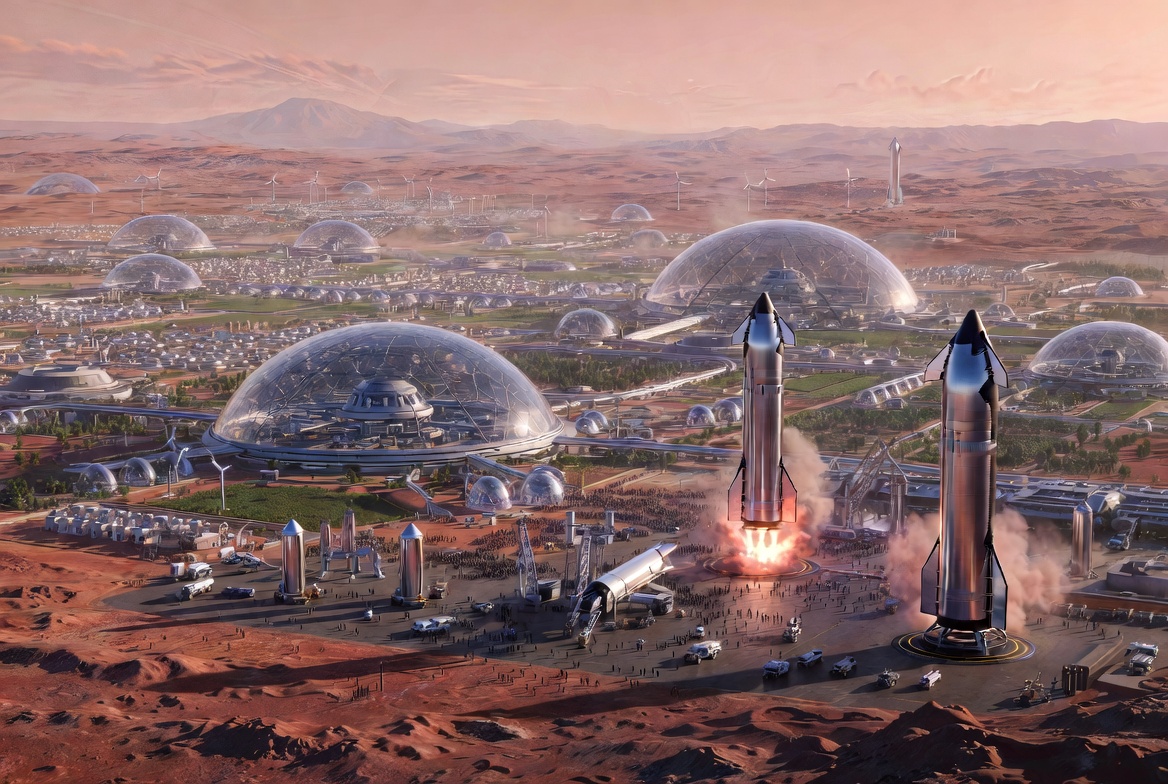
In a stunning revelation that’s sending shockwaves through the space community, Elon Musk has announced that SpaceX is shifting its immediate focus to building a self-growing city on the Moon. This isn’t a abandonment of the long-dreamed Mars colony—far from it—but a pragmatic acceleration toward humanity’s survival beyond Earth. Drawing from Musk’s recent posts on X (formerly Twitter), this pivot prioritizes speed, iteration, and risk mitigation. As a space exploration blogger with over a decade tracking SpaceX’s milestones—from Falcon 1 failures to Starship’s orbital triumphs—I’ll break down what this means, why it’s brilliant, and the challenges ahead. Buckle up; this could redefine our species’ timeline to becoming multi-planetary.

Starlink’s Epic Super Bowl Debut: SpaceX Goes Mainstream and Eyes Global Domination

In a move that signals a seismic shift for Elon Musk’s SpaceX, the company aired its first-ever Super Bowl commercial during Super Bowl LX on February 8, 2026. This wasn’t just any ad—it was a bold declaration that Starlink, SpaceX’s satellite internet powerhouse, is no longer a niche service for remote adventurers or enterprises. It’s gunning for your living room, your airplane seat, and every corner of the globe. As a space tech blogger who’s tracked Starlink since its beta days, I see this as the tipping point where satellite broadband becomes as ubiquitous as streaming services. Let’s dive deep into what this ad means, the explosive growth behind it, regional triumphs like Brazil, and what it spells for the future of connectivity.

Seven Years On: The Tesla Roadster’s Cosmic Legacy and the Explosive Rise of SpaceX and Tesla

In the annals of space exploration, few moments capture the imagination quite like the Falcon Heavy’s maiden flight on February 6, 2018. Strapped atop this behemoth rocket wasn’t a satellite or scientific payload, but Elon Musk’s cherry-red Tesla Roadster, complete with a mannequin named Starman at the wheel, blasting David Bowie’s “Space Oddity” into the void. Critics called it a stunt; visionaries saw it as a declaration of intent. Fast-forward seven years to 2026, and that “stunt” has aged like fine wine, symbolizing the audacious risk-taking that propelled SpaceX and Tesla from precarious upstarts to trillion-dollar titans reshaping industries.

Elon Musk’s Masterclass in M&A: SpaceX Acquires xAI via Triangular Merger, Dodging Billions in Debt and Liabilities

As a tech and space industry veteran who’s tracked Elon Musk’s empire-building for over a decade, I can confidently say this week’s bombshell – SpaceX’s acquisition of xAI – isn’t just the largest M&A deal in history at $1.25 trillion; it’s a textbook example of surgical corporate strategy. Valuing SpaceX at $1 trillion and xAI at $250 billion, the deal consolidates Musk’s AI ambitions under his rocket powerhouse without the messy entanglements of debt, lawsuits, or taxes. But how? Enter the triangular merger – a structure so clever it feels like Musk pulled it from a sci-fi playbook. In this deep dive, we’ll unpack the mechanics, the wins, the risks, and what it means for SpaceX’s looming IPO and the future of orbital AI.

Elon Musk Crushes Starlink Phone Rumors: SpaceX Focuses on xAI Merger and Satellite Dominance

In the ever-buzzing world of Elon Musk’s tech empire, rumors of a “Starlink phone” have been swirling like satellites in low Earth orbit. Just yesterday, Reuters dropped a bombshell report suggesting SpaceX was gearing up to launch a direct-to-satellite mobile device to supercharge revenue ahead of a potential IPO. But true to form, Musk wasted no time shutting it down—twice—on X, declaring, “We are not developing a phone” and accusing Reuters of “lying relentlessly.” As a space tech blogger who’s tracked SpaceX’s meteoric rise for over a decade, this latest drama underscores a bigger picture: SpaceX is laser-focused on its core missions amid massive expansions like the recent xAI merger. Let’s dive deep into what really happened, why it matters, and what it means for the future of connectivity.

Starlink Phone: SpaceX’s Game-Changing AI-Optimized Satellite Smartphone on the Horizon?

In the ever-evolving world of space technology, SpaceX continues to push boundaries beyond rockets and reusable spacecraft. The latest buzz from Reuters reveals that Elon Musk’s powerhouse is seriously considering a Starlink-branded phone – a dedicated mobile device designed to connect directly to the Starlink satellite constellation, bypassing traditional cell towers entirely. ❶ ❷ This isn’t just idle speculation; it’s a strategic pivot that could redefine global connectivity, especially as Starlink already dominates SpaceX’s revenue stream. As a space tech blogger who’s tracked Musk’s ventures for over a decade, I see this as the natural evolution of Starlink’s direct-to-device (D2D) ambitions – blending satellite internet with AI prowess in a handheld form factor.

SpaceX’s Bold Leap: FCC Accepts Filing for 1 Million Satellites to Power Orbital AI Data Centers

Imagine a sky filled not just with stars, but with a million tiny supercomputers orbiting Earth, guzzling endless solar power to crunch AI workloads that would cripple terrestrial data centers. That’s the audacious vision SpaceX just lodged with the FCC – and on February 4, 2026, the agency accepted it for review, kicking off a public comment period that could reshape computing, space policy, and humanity’s cosmic ambitions.

Load more