
Category: News

Tesla Semi’s Official Specs Revealed: 822 kWh Beast Reshapes Class 8 Trucking in 2026

After nearly a decade since its dramatic 2017 unveiling, the Tesla Semi is no longer vaporware—it’s rolling off production lines and poised to disrupt the $100 billion North American Class 8 trucking market. A recent California Air Resources Board (CARB) filing from April 2026 has spilled the beans on the truck’s core specs, confirming battery capacities, power outputs, and chemistry that make it a formidable contender against diesel giants. Coupled with high-volume production ramping at Tesla’s Sparks, Nevada facility—as announced by Semi Program Director Dan Priestley on X on April 29, 2026—this is the moment fleets have been waiting for.

Tesla Semi Hauls Cybercabs: Iconic First Delivery Signals Robotaxi Revolution from Giga Texas

Imagine a futuristic scene straight out of a sci-fi movie: a sleek, all-electric Tesla Semi trucking down the highway, its flatbed loaded with shiny, steering-wheel-free Cybercabs—the autonomous robotaxis poised to redefine urban mobility. This isn’t fiction; it’s happening right now at Gigafactory Texas (Giga Texas) in Austin. On the heels of drone footage showing dozens of Cybercabs staged for shipment, a Tesla Semi was filmed hauling multiple units, marking the first documented delivery run of these game-changing vehicles. As a Tesla enthusiast and EV industry analyst with over a decade tracking Elon Musk’s ventures, I see this as a watershed moment. It’s not just logistics; it’s Tesla flexing its vertical integration muscle, from factory floor to fleet deployment.

Tesla’s Mysterious Model Y L Prototype at Giga Texas: A Game-Changer for American Families on the Horizon?

Tesla enthusiasts were buzzing this week after drone operator Joe Tegtmeyer captured stunning footage of a mysterious covered prototype parked prominently at Giga Texas, right between a standard Model Y and a Cybertruck. This isn’t just any test vehicle—images reveal an elongated rear door, seamless uninterrupted rear glass, and noticeably larger proportions compared to the familiar Model Y we know in the US. Speculation is rife: is this the long-awaited Model Y L, Tesla’s extended-wheelbase variant already dominating sales in China? Or could it be a station wagon twist? With the current date being May 6, 2026, and sightings following a March prototype tease, the timing feels electric.

Tesla’s Autonomy Blitz: Miami Pop-Up, Robotaxi Surge, and Cybercab’s Road to Revolutionizing Mobility

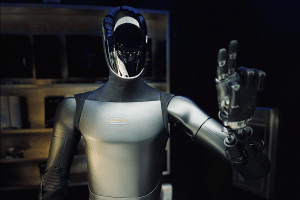
As the sun-kissed sands of Miami Beach buzzed with Formula 1 fervor during the Crypto.com Miami Grand Prix Fan Fest from April 29 to May 3, 2026, Tesla pulled off yet another masterstroke of marketing and messaging. Tucked into Lummus Park, the company’s “Autonomy Pop-Up” event turned heads with a Cybertruck dramatically towing a gleaming Cybercab encased in a transparent “Future is Autonomous” glass case. Visitors could meet Optimus, Tesla’s humanoid robot, and immerse themselves in visualizations of full self-driving tech. This wasn’t just a static display—it was a bold statement amid Tesla’s aggressive robotaxi rollout, perfectly timed for a city slated for expansion in the first half of 2026.

Tesla’s FSD Visualization Revolution: European Cab-Over Semis Arrive in 2026.14 – Paving the Way for Global Autonomy

As a seasoned Tesla enthusiast and autonomous driving analyst with over a decade tracking the evolution of Full Self-Driving (FSD), I’ve seen countless software updates come and go. But the subtle genius of Tesla’s 2026.14 Spring Update has me genuinely excited. Buried among flashy features like the new Self-Driving App and enhanced weather maps is a game-changing tweak: region-specific vehicle visualizations, kicking off with European-style cab-over semi-trucks. This isn’t just a cosmetic upgrade—it’s a masterstroke in localization that signals Tesla’s unyielding march toward unsupervised FSD and robotaxis worldwide.

Tesla’s Cybercab Rolls Off the Line at Giga Texas: Ushering in the Autonomous Robotaxi Revolution

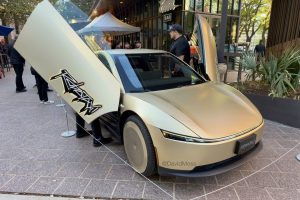
Imagine hailing a ride that’s cheaper than a bus ticket, completely driverless, and engineered for seamless urban navigation—no steering wheel, no pedals, just pure AI smarts. That’s no longer science fiction; as of April 2026, Tesla’s Cybercab has officially entered production at Gigafactory Texas. This two-passenger coupe marks a pivotal moment in Tesla’s Master Plan, shifting from personal vehicles to a scalable Robotaxi network that could slash transportation costs, emissions, and accidents. Drawing from recent sightings, executive confirmations, and spec reveals, this post dives deep into the Cybercab’s production ramp, groundbreaking features, efficiency feats, and the road ahead. As an EV enthusiast and tech blogger, I see this as Tesla’s boldest bet yet on Full Self-Driving (FSD)—one that could redefine city life.

Tesla FSD v14.3.2: Game-Changing Smart Summon Upgrades and the Road to Unsupervised Autonomy

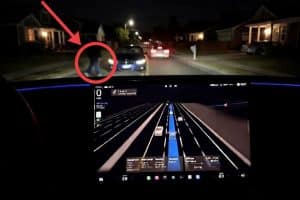
As a seasoned Tesla enthusiast and autonomous driving analyst with over a decade tracking Full Self-Driving (FSD) evolution, I’m thrilled to dive into the latest rollout: FSD v14.3.2. Delivered via software update 2026.2.9.8, this version isn’t just incremental—it’s a unification milestone that bridges customer vehicles, Actually Smart Summon (ASS), and the impending Robotaxi fleet. Early tester videos and release notes reveal smoother parking maneuvers, snappier responses, and smarter interventions, but not without some familiar hurdles like regional signage quirks. In this comprehensive breakdown, we’ll unpack the features, real-world performance, user feedback, persistent challenges, and what it means for Tesla’s unsupervised future.

Tesla Cybercab Ignites the Robotaxi Revolution: First Production Units Autonomously Roll Off Giga Texas Assembly Line

Imagine a sleek, wheel-less pod gliding silently off an assembly line, navigating tunnels and parking lots without a human touch—all on its own. This isn’t science fiction; it’s Tesla’s Cybercab in action, marking a pivotal moment in autonomous mobility. On the heels of its February debut, Tesla has shifted into high gear with volume production at Giga Texas, releasing jaw-dropping video footage that proves its vision-based Full Self-Driving (FSD) is production-ready. As a blogger who’s tracked Tesla’s EV odyssey for over a decade, I can say this: the Cybercab isn’t just a vehicle—it’s the dawn of a $10 trillion robotaxi economy, poised to upend urban transport, crush ride-hailing giants like Uber, and supercharge Tesla’s valuation.

Tesla’s Optimus Revolution: From Fremont Pilot to Giga Texas Mega-Factory – The Dawn of 10 Million Robots Per Year

As a seasoned tech blogger specializing in Tesla’s ambitious ventures into AI, robotics, and electric mobility, I’ve been tracking Optimus since its unveiling. The humanoid robot isn’t just a side project—it’s poised to be Tesla’s “biggest product ever,” as Elon Musk recently proclaimed during the Q1 2026 earnings call. Tesla’s latest Q1 2026 Update letter drops bombshells: production is ramping at Fremont, a massive Optimus factory is prepping at Giga Texas, and AI5 chips are taped out for inference. With aerial imagery, permits, and bold timelines, this isn’t hype—it’s happening. In this deep dive, we’ll unpack the details, analyze the strategy, and explore what it means for a robot-filled future. Buckle up; the robot apocalypse (the good kind) is here.

Tesla Roadster: Elon Musk’s Bold Bet on Manual Driving in a Full-Self-Driving World

In the ever-evolving landscape of electric vehicles, where autonomy reigns supreme, Tesla CEO Elon Musk dropped a game-changing revelation during the Q1 2026 earnings call: the highly anticipated new Tesla Roadster will be the only manually driven car in Tesla’s future lineup. This isn’t just a spec update—it’s a philosophical statement on the future of driving, blending blistering performance with a nod to purist enthusiasts. As Tesla pivots hard toward Robotaxi fleets and Optimus humanoid robots, the Roadster stands as a rebellious outlier. In this deep dive, we’ll unpack Musk’s comments, dissect the specs, timeline drama, pricing hurdles, and what this means for gearheads in an autonomous era.

Load more