
Elon Musk’s Boring Company Targets I-80 Gridlock: A Game-Changing Tunnel to Tesla’s Gigafactory Nevada?
Key Takeaways
- The Boring Company received $50,000 from EDAWN to study a potential 9-mile tunnel from Reno to Tesla Gigafactory Nevada.
- Study aims to address worsening I-80 congestion and accidents, amid growth in Tahoe-Reno Industrial Center housing Tesla and Panasonic.
- Tesla and Panasonic contacted Nevada Governor’s Office on transport solutions, including support for a separate commuter rail study.
- Peak-hour traffic on I-80 doubled Jan-Jul 2025; 22,000 daily commuters, with 8,000 at Tesla and 4,000 at Panasonic.
- Bill Thomas (Regional Transportation Commission) notes accidents every other day and supports private solutions like the tunnel to improve safety.
In the shadow of Nevada’s booming Tahoe-Reno Industrial Center (TRIC), a transportation revolution might be burrowing underground. Elon Musk’s The Boring Company has been tapped to explore a 9-mile tunnel project connecting Reno to Tesla’s Gigafactory Nevada, aiming to slash crippling congestion on Interstate 80 (I-80). Funded by a modest $50,000 from the Economic Development Authority of Western Nevada (EDAWN), this early-stage feasibility study signals a bold push for innovative infrastructure amid skyrocketing traffic and safety woes.[1][2]As a blogger who’s tracked Musk’s ventures from SpaceX rockets to Cybertrucks, This reads as prime example of private ingenuity tackling public pain points But will it drill through regulatory hurdles? Let’s dive deep.
The I-80 Nightmare: From Freeway to Parking Lot
Interstate 80, the vital artery snaking through Reno and Sparks to the TRIC, has devolved into a daily battleground for commuters. Home to over 130 companies on 107,000 acres, the industrial park employs titans like Tesla (8,000 workers) and Panasonic (4,000+), plus surging data centers.[2]
Key stats paint a grim picture:
- Peak-hour traffic doubled between January and July 2025 alone on key stretches.[2]
- 22,000 daily commuters flood the highway, exacerbating bottlenecks.[1]
- Accidents every other day: Bill Thomas, head of the Regional Transportation Commission of Washoe County, highlighted this alarming rate, linking it to rapid industrial growth.[1]
Nevada Department of Transportation (NDOT) data underscores broader trends: state highways carry 50% of all traffic despite comprising just 14% of roads.[3]Nationally, I-80 ranks among truck bottlenecks, with freight delays piling up.[4]For Tesla and Panasonic employees, the grind means hours lost, higher stress, and safety risks—issues that have persisted despite existing shuttles and vans.[5]
Insight: This isn’t just a local headache; it’s a microcosm of America’s infrastructure crisis. As remote work fades and manufacturing booms (thanks to CHIPS Act incentives), regions like Northern Nevada are ground zero. Without intervention, expect commuter rail backups and widening projects—like NDOT’s planned six-lane expansion east of Sparks—to fall short.[6]
The Boring Company’s Feasibility Gambit
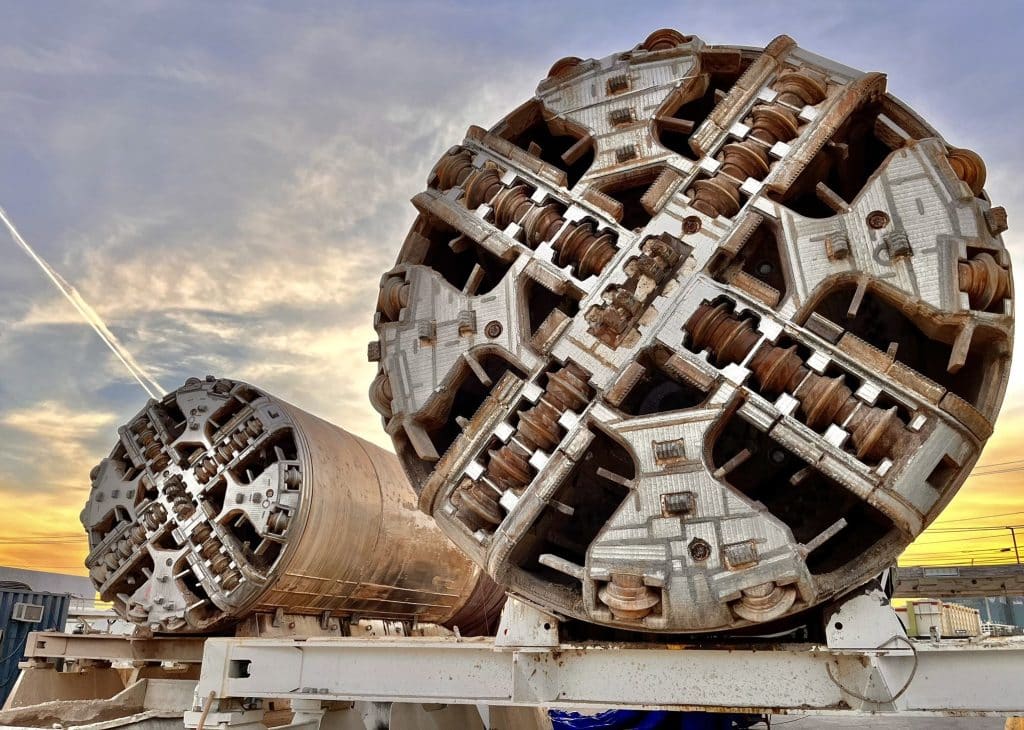
EDAWN, a nonprofit powerhouse in luring businesses to Western Nevada, shelled out $50,000 in October 2025 for conceptual designs and a feasibility report on a tunnel under the 9-mile I-80 stretch to Gigafactory Nevada.[2][7]The Boring Company expressed “extreme interest” in a Loop system—autonomous Teslas zipping at up to 150 mph in passenger pods—but it hinges on NDOT approval.[8]
Details remain scarce:
- Tunnel specs: 9 miles, subsurface to bypass surface chaos.
- Tech: Likely Vegas Loop-style, with electric vehicles in dual tubes.
- Status: Study ongoing or recently wrapped; no cost, timeline, or construction greenlights yet.[1]
Thomas’s stance? Pragmatic support: “If there’s a private solution that helps the problem and improves safety, more power to them.”[1]No public funds from his commission.
Opinion: At $50k, this is pocket change for Boring Co., but it’s a smart pilot. Past projects show tunneling costs plummeting—Vegas Loop averaged $47 million per mile initially, now lower with Prufrock-3 machines.[9]A full build could run $200-400 million, recouped via fares or Tesla subsidies.
Tesla and Panasonic Weigh In: Corporate Push for Solutions
Major players aren’t sitting idle. Tesla and Panasonic lobbied the Nevada Governor’s Office for fixes, backing a parallel commuter rail study on existing freight lines.[1]Gigafactory already runs 24/7 shuttles for commuter, last-mile, and intercampus routes.[5]
Yet, demand outstrips supply:
- Employees cram into Sparks apartments or endure 30-60 minute drives from Reno.[10]
- Past partnerships like My Ride to Work vans highlight reliance on buses.[11]
Advice for Gigafactory workers: Carpool via Tesla’s apps, bike-share for last-mile, or lobby for expanded shuttles. Long-term, a tunnel could cut commutes to 5-10 minutes.
Boring Company’s Playbook: Lessons from Vegas and Beyond
Don’t dismiss this as vaporware—Musk’s tunneler has deliverables:
- Vegas Loop: 4 miles operational, ferrying passengers in Teslas; airport integration Q1 2026, Robovan by 2028-29.[9][12]
- Music City Loop: Tunneling eyed for Q4 2025.[13]
- Tunnel Vision Contest: Free 1-mile tunnel for winners, showcasing speed.[14]
Challenges? Permits, geology (Sierra Nevada foothills), and NIMBYism. But Boring’s edge: 10x faster boring, minimal disruption.[2]
Insight: This aligns with Musk’s 3D urbanism vision—tunnels untapped capacity vs. surface sprawl. Environmentally, zero-emission Loops beat gas-guzzling traffic.
Alternatives on the Table: Rail, Widening, and Shuttles
The tunnel isn’t solo:
- Commuter rail: Tesla/Panasonic-backed, using freight tracks.[1]
- NDOT widening: Six lanes east of Sparks by late 2025+.[6]
- Shuttles: Tesla’s robust program, but scalable limits.[15]
Pros/Cons Comparison:
| Solution | Speed | Cost | Capacity | Disruption |
|---|---|---|---|---|
| Tunnel (Loop) | Minutes | Med-High | High (100s/hr) | Low |
| Commuter Rail | 20-30 min | Med | Med | Med |
| Highway Widen | Hours (peak) | High | Incremental | High |
| Shuttles | 30-60 min | Low | Low-Med | Low |
Hybrid wins: Tunnel + rail for redundancy.
Roadblocks, Opportunities, and My Prediction
Hurdles loom: NDOT buy-in, environmental reviews, funding (private? Tesla?). Boring’s Vegas wins bode well, but Reno’s politics differ.[16]
Investor angle: Watch Boring stock (if public) or Tesla infra plays. For Nevada, this cements TRIC as a logistics hub.
Prediction: Feasibility report drops Q1 2026; pilot tunnel by 2028 if greenlit. Musk’s momentum—Vegas expansions, contests—makes it plausible.
In sum, this tunnel could redefine Reno commutes, proving private tunnels trump taxpayer boondoggles. Stay tuned; the future’s underground.