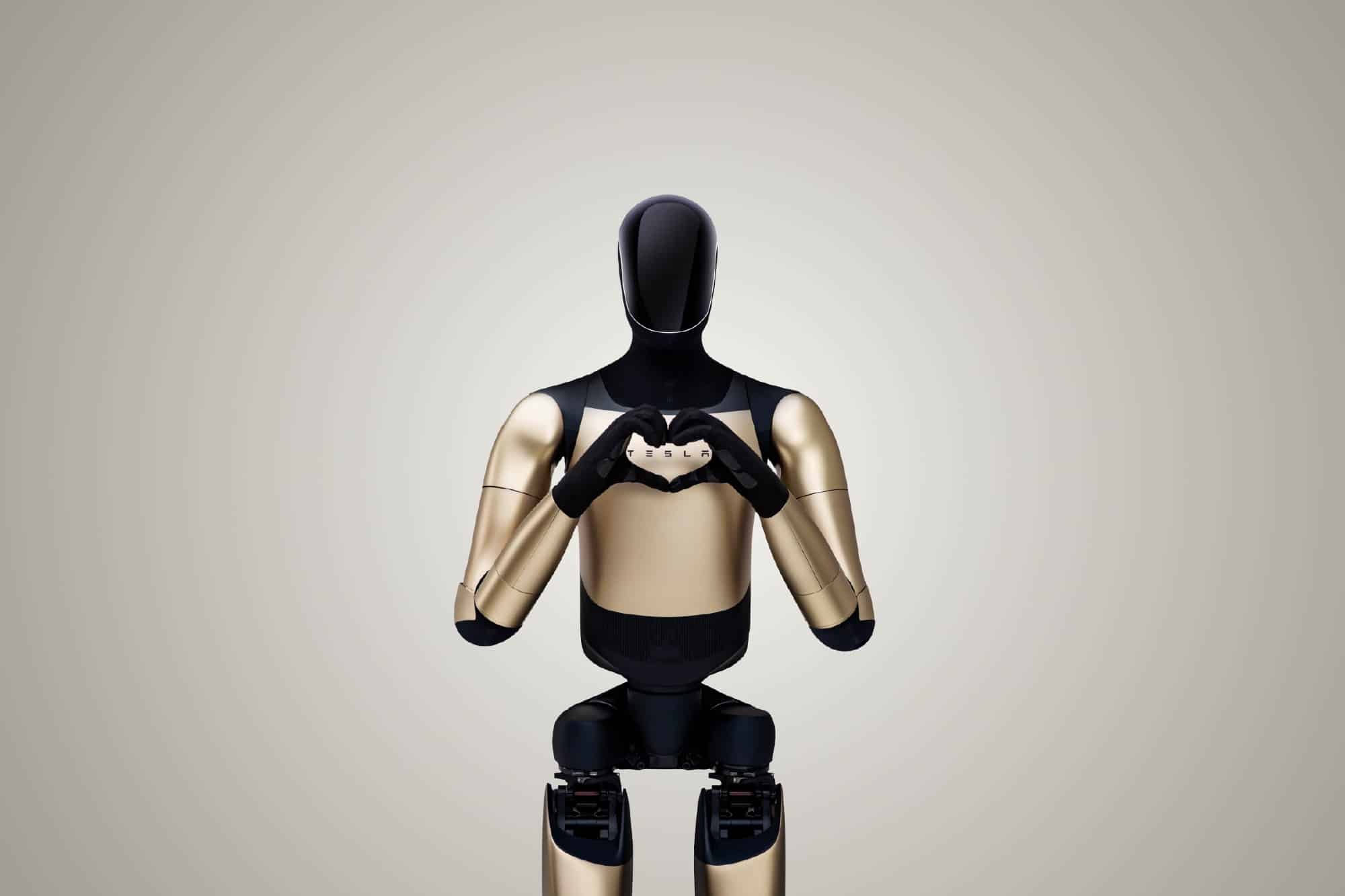
Tesla’s Optimus V3 Hands: The Tendon-Driven Breakthrough That Could Redefine Humanoid Robotics
Key Takeaways
- Tesla plans to reveal Optimus V3 soon, with new patents focusing on challenging hand and arm designs using tendon-driven architecture.
- Actuators relocated to forearm for lightweight hands, mimicking human muscle-tendon setup.
- Each finger has 4 degrees of freedom (DoF), wrist adds 2 more, totaling 22 DoF for human-like dexterity.
- Three flexible cables per finger route through wrist and guided channels in phalanges for precise, independent motion.
- Advanced wrist innovation shifts cables from lateral to vertical stack, minimizing friction, stretch, torque, and crosstalk.
- Companion patents cover “Robotic Appendage” assembly and “Joint Assembly” with curved surfaces for smooth, durable pivots.
- Elon Musk calls hands the “majority of engineering difficulty,” harder than Cybertruck, 60% of Optimus challenge; Tesla overcame key issues by early 2026.
- Designs emphasize high-volume manufacturing with simplified, stackable parts for production scalability.
- Patents position Optimus V3 hand as production-ready, giving Tesla edge in general-purpose robotics dexterity.
In the race to build general-purpose humanoid robots capable of tackling everyday tasks, one component has long stood as the ultimate engineering Everest: the hand. Tesla’s Optimus project has been no exception, with CEO Elon Musk repeatedly highlighting the hand’s complexity as the “majority of the engineering difficulty” – even tougher than designing the Cybertruck and accounting for about 60% of the overall Optimus challenge. ❶ ❷ Fast-forward to early 2026, and Tesla appears to have conquered this peak. Newly published international patents offer the clearest glimpse yet into Optimus V3’s revolutionary hand and arm design, featuring a tendon-driven architecture that’s lightweight, dexterous, and primed for mass production. ❸ ❹
These filings, including “Mechanically Actuated Robotic Hand,” “Robotic Appendage,” and “Joint Assembly for Robotic Appendage,” reveal a system that relocates heavy actuators to the forearm, mimics human muscle-tendon biology, and achieves human-like dexterity with 22 degrees of freedom (DoF) per hand. ❷ As Tesla gears up for an imminent Optimus V3 reveal – potentially in the coming weeks ahead of summer 2026 production – this isn’t just incremental progress. It’s a masterclass in bio-inspired robotics that could give Tesla an unassailable lead in the humanoid arms race. ❺ ❻
In this deep dive, we’ll dissect the patents, explore the innovations, compare them to human anatomy and competitors, and share insights on what this means for investors, engineers, and the future of labor.
The Patent Trifecta: Tesla’s Blueprint for Dexterous Hands
Tesla filed these patents around the October 2024 “We, Robot” event, but their international publication in April 2026 provides unprecedented diagrams and specs. ❼ Here’s a breakdown:
Mechanically Actuated Robotic Hand – The Tendon-Driven Core
At the heart is a cable- (or tendon-) driven system, where three thin, flexible control cables per finger originate from actuators in the forearm, not the hand itself. This bio-mimicry echoes human anatomy: muscles (actuators) in the forearm pull tendons through the wrist and into guided channels in the phalanges (finger bones) for precise, independent motion. ❷ ❽
- Degrees of Freedom Breakdown:ComponentDoF per UnitTotal ContributionEach Finger (4 fingers + thumb)4 DoF20 DoFWrist2 DoF2 DoFHand Total–22 DoF ❷
For context, the human hand has ~27 DoF, but Optimus V3’s 22 strikes an optimal balance for utility without overcomplicating control algorithms. ❾
A game-changer is the wrist redesign: Cables shift from a lateral (side-by-side) arrangement to a vertical stack, slashing friction, stretch, torque disturbances, and “crosstalk” (unintended motion in adjacent fingers). This isn’t theoretical – it’s a production-ready evolution addressing real-world wear in high-cycle tasks like factory assembly. ❷
Robotic Appendage – Integrated Forearm-to-Finger Assembly
This patent holistically covers the “appendage” from forearm to fingertips. The palm body couples movably to the forearm, with finger assemblies featuring phalanges linked by tensile members (tendons). Actuators nestle efficiently in the forearm, enabling a featherweight hand – crucial for speed, agility, and energy efficiency. ❷ ❿
Simplified, stackable parts scream high-volume manufacturing (HVM). Tesla’s playbook from EVs applies here: Design for robots that build robots, scaling to millions of units at sub-$20K cost. ❸
Joint Assembly for Robotic Appendage – Frictionless Pivots (WO 2026/080693)
Zooming microscopic, this filing details joints with curved contact surfaces on mating structures, paired with a composite flexible member. No traditional pins – instead, tension from tendons creates smooth, durable pivots that self-align under load. ❷ ⓫
Benefits:
- Reduced Wear: Curved geometry distributes stress evenly, extending lifespan in repetitive tasks.
- Precision: Minimizes backlash for fine manipulation (e.g., threading a needle or sorting delicate parts).
- Scalability: Fewer discrete parts mean faster assembly lines.
This is Tesla engineering at its finest: Physics-first simplicity over brute-force motors.
Bio-Inspiration: How Optimus V3 Mirrors – and Improves – the Human Hand
Humans evolved tendon-driven hands over millennia for unparalleled dexterity. Optimus V3 distills this:
- Similarities:
- Forearm actuators (muscles) → tendons → phalanges.
- 3 tendons/finger for flexion/extension/abduction.
- ~80% of human DoF, but optimized for AI control. ❽
- Superiorities:
- No fatigue; constant precision.
- Vertical wrist stack eliminates human tendon routing inefficiencies.
- Non-contact magnetic sensors for position feedback (per related patents). ⓬
Compared to rivals like Figure 01 or Boston Dynamics’ Atlas, Optimus prioritizes HVM over showy demos. Competitors cram actuators into palms, yielding bulky, power-hungry hands. Tesla’s forearm shift? Lighter, faster, cheaper. ❸
Elon Musk’s Candid Insights: Hands Were the Bottleneck
Musk has been brutally honest:
“The electromechanical hand represents about 60% of the overall Optimus challenge… harder than Cybertruck.” ❶
In 2025 interviews, he admitted struggles: “Struggling to finalize the design… biggest worry is hands and forearms.” ⓭ By Q1 2026, victory: “Solved the hardest problem.” ⓮ Demos? Often teleop, but V3 promises autonomy.
Opinion: Musk’s transparency builds trust. Unlike hype machines, Tesla iterates publicly – a lesson for robotics startups.
Overcoming Challenges: From Prototype to Production-Ready
Key hurdles solved:
- Weight: Hands now ultra-light.
- Durability: Low-friction design for millions of cycles.
- Control: 22 DoF managed via Tesla’s FSD AI stack.
- Cost: Stackable parts for gigafactory-scale output.
Timeline:
- Q1 2026: V3 reveal (slight delay for polish). ❺
- Summer 2026: Low-volume production in factories.
- 2027: High-volume sales. ❻
Advice for Engineers: Study tendon systems (e.g., NASA’s R2 hand). ⓯ Prioritize simulation – Tesla’s Dojo likely iterated thousands of designs.
Investor Insight: Optimus could eclipse EVs long-term ($10T market, per Musk). Patents fortify moat amid China competition.
Industry Implications: Tesla’s Edge in the Humanoid Revolution
These hands enable “general-purpose” tasks: Folding laundry, cooking, surgery. Factories first, homes by 2028?
Competitive Landscape:
| Robot | Hand DoF | Drive Type | Production Status |
|---|---|---|---|
| Optimus V3 | 22 | Tendon | Summer 2026 |
| Figure 02 | ~16 | Motor | Pilot |
| Atlas | 20+ | Hydraulic | Demo |
Tesla wins on scale. Prediction: By 2030, Optimus handles 30% of physical labor, slashing costs.
Ethical Note: Job displacement? Retrain via AI tutors – abundance mindset.
Grasping the Future
Tesla’s Optimus V3 hands aren’t just patents; they’re the dexterous dawn of robotics. Lightweight, smart, manufacturable – they’ve cracked the code Musk obsessed over. Watch for the reveal; it’s robotics’ iPhone moment.
Stay tuned for V3 demos. What tasks would you assign your Optimus?