 Gary Zhou
Key Takeaways
- Tesla opened a 1.7M sq ft Semi factory adjacent to Gigafactory Nevada in Sparks, enabling vertical integration with on-site 4680 battery production to hit 50,000 trucks/year.
- Volume production started in March 2026, resolving past supply chain delays that pushed first deliveries from 2019 targets.
- At 2025 ASM, Elon Musk confirmed 2026 volume production ramp with prototypes already running at PepsiCo, targeting full output by June 30.
- Early fleets include PepsiCo (50 trucks since Dec 2022), Kroger (up to 500), Walmart, Costco, Sysco, DHL, and others.
- DHL reported 1.72 kWh/mile efficiency over 388 miles at full load, matching Tesla targets.
- 2026 Semi features 1,000 lb weight reduction, better aerodynamics, and 1.2 MW Megacharger support for 60% range in 30 minutes.
- First public Megacharger opened in Ontario, CA; plans for 37 sites by end-2026 and 66 across 15 states by early 2027.
- Musk calls Semi a “TCO no-brainer” at under $300k, with CA $200k subsidies driving 1,000+ orders; prototypes logged 13.5M miles at 95% uptime.
After years of anticipation, delays, and pilot programs, Tesla’s electric Semi truck is no longer just a promise—it’s a reality barreling down the highway toward mass adoption. On April 12, 2026, as we hit the spring ramp-up season, Tesla has flipped the switch on its massive 1.7 million square foot Semi factory adjacent to Gigafactory Nevada in Sparks. This isn’t just another assembly line; it’s a vertically integrated powerhouse designed to churn out 50,000 trucks per year, leveraging on-site 4680 battery production to slash costs and supercharge efficiency. ❶ ❷
Volume production kicked off in March 2026, finally resolving the supply chain snarls that delayed first deliveries from the original 2019 targets. Elon Musk, speaking at the 2025 Annual Shareholder Meeting (ASM), confirmed the ramp-up with prototypes already proving their mettle at PepsiCo, aiming for full output by June 30. ❸ As a blogger who’s tracked Tesla’s trucking ambitions since the 2017 unveiling, I can say this: the Semi isn’t disrupting the $4 trillion global trucking industry—it’s rewriting it. Lower total cost of ownership (TCO), jaw-dropping efficiency, and a burgeoning Megacharger network are turning skeptics into superfans.
In this deep dive, we’ll unpack the factory’s game-changing vertical integration, real-world fleet performance, infrastructure rollout, economic advantages, and what it all means for logistics giants and independent haulers alike. Buckle up—this electric revolution is just getting started.
The Spark Nevada Semi Factory: Vertical Integration Masterclass
Tesla’s new Semi factory isn’t built in isolation; it’s seamlessly integrated with Gigafactory Nevada, allowing for in-house 4680 cell production. This vertical integration—controlling everything from raw materials to final assembly—delivers massive benefits:
- Cost Reductions: By producing batteries on-site, Tesla cuts manufacturing expenses by up to 40%, accelerates production speed, and minimizes supplier dependencies. ❹
- Quality Control and Innovation Speed: Owning the supply chain ensures rapid iterations, like the Semi’s aerodynamic tweaks and lighter chassis, without bureaucratic delays from third-party vendors. ❺
- Scalability: Targeting 50,000 units annually, the 1.7M sq ft facility positions Tesla ahead of rivals reliant on external batteries, enabling quicker ramps during peak demand. ❶
H3: Why Vertical Integration is Tesla’s Secret Weapon
Traditional truck makers like Freightliner or Volvo outsource up to 80% of components, leading to bottlenecks—Tesla’s approach flips this. Goldman Sachs estimates Tesla at ~80% vertically integrated, fueling profitability and efficiency gains. ❻ For the Semi, this means seamless battery integration, reducing weight by 1,000 lbs compared to prototypes and boosting range. Opinion: In an era of geopolitical supply shocks, this strategy isn’t just smart—it’s survival. Fleets avoiding diesel volatility will flock here.
Recent drone footage and reports confirm the factory is buzzing, with mass production underway just weeks after the March start. ❼
Early Adopters and Fleet Performance: Data That Doesn’t Lie
Prototypes have logged an impressive 13.5 million miles at 95% uptime, proving reliability in real-world brutality. ❽ Early fleets are expanding rapidly:
| Company | Fleet Size/Plans | Key Insights |
|---|---|---|
| PepsiCo | 50 trucks since Dec 2022 | Prototypes in Sacramento ops; foundational pilot. ❾ |
| DHL | Expanding beyond pilot; “more than a handful” for 2026 | 1.72 kWh/mile over 388 miles at full load—exceeded expectations. ❿ ⓫ |
| Kroger | Up to 500 | Grocery hauls testing endurance. |
| Walmart, Costco, Sysco | Pilots scaling | Retail/logistics giants committing. |
| New 2026 Entrants | Hight Logistics (more incoming), RoadOne (up to 10), ABF Freight | Truckers praising ease, comfort over diesel. ⓬ ⓭ ⓮ |
H3: Efficiency Benchmarks Crushing Diesel
- 1.55-1.72 kWh/mile: ABF Freight hit 1.55 kWh/mile over 4,494 miles (321/day); DHL matched targets at full GVW. ⓮ ⓯
- 3x Diesel Efficiency: At $0.15/kWh vs. $4/gal diesel, savings hit 50-70% on fuel alone.
- Uptime & Driver Feedback: 95% availability; drivers love the quiet cab, regen braking, and no-shift simplicity. ⓰
Insight: These aren’t cherry-picked stats—fleet operators like DHL call it a “TCO no-brainer.” With prototypes proving the pudding, 2026 orders are surging past 1,000, boosted by California’s $200k subsidies.
Megacharger Network: The Infrastructure Backbone
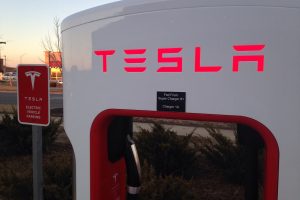
No electric truck succeeds without charging. Tesla’s answer: Megachargers at 1.2 MW, delivering 60% range in 30 minutes.
- Current Status: First public site in Ontario, CA.
- Expansion: 37 sites by end-2026; total 66 across 15 states (TX, CA, etc.) by early 2027. Recent map adds 64 “coming soon” locations. ⓱ ⓲
- Partnerships: Pilot Flying J (largest truck stop op) rolling out first sites summer 2026 along I-5/I-10; 4-8 stalls per hub. ⓳
H4: Route Coverage and Timeline
- Q2 2026: Ontario expansions + Pilot hubs.
- End-2026: 37 operational.
- 2027: Full 66-site network, enabling coast-to-coast Semi runs.
Advice for Fleets: Map your routes now—Tesla’s V4 tech ensures compatibility, outpacing CCS rivals.
Economics: Why Musk Calls It a “No-Brainer”
Priced under $300k, the Semi’s TCO crushes diesel rigs ($250k+ with $150k fuel/maintenance over 5 years). Savings:
- Fuel: $0.20/mile vs. $0.70 diesel.
- Maintenance: 50% less (no oil, fewer parts).
- Subsidies: CA’s $200k vouchers fueling orders.
Opinion: At scale, expect $150k street price by 2028. Trucking firms ignoring this risk obsolescence.
Future Outlook: Autonomy, Exports, and Industry Shake-Up
With FSD hardware baked in, Semi platooning could boost highway efficiency 2x. Europe eyes 44-ton limits for 800km range. ⓴ Challenges? Grid strain—but Tesla’s Megapacks solve it.
By 2030, Semis could claim 20% US Class 8 market, slashing emissions 1B tons/year. Logistics pros: Pilot now or play catch-up.
Electric Trucking’s Inflection Point
Tesla Semi’s 2026 launch isn’t hype—it’s hardware-validated disruption. From Sparks factory to Megacharger highways, the ecosystem is ready. As fleets like DHL and PepsiCo scale, diesel’s days are numbered. Stay tuned—I’ll track Q2 deliveries next.
What do you think? Ready to go electric? Drop comments below!