 Gary Zhou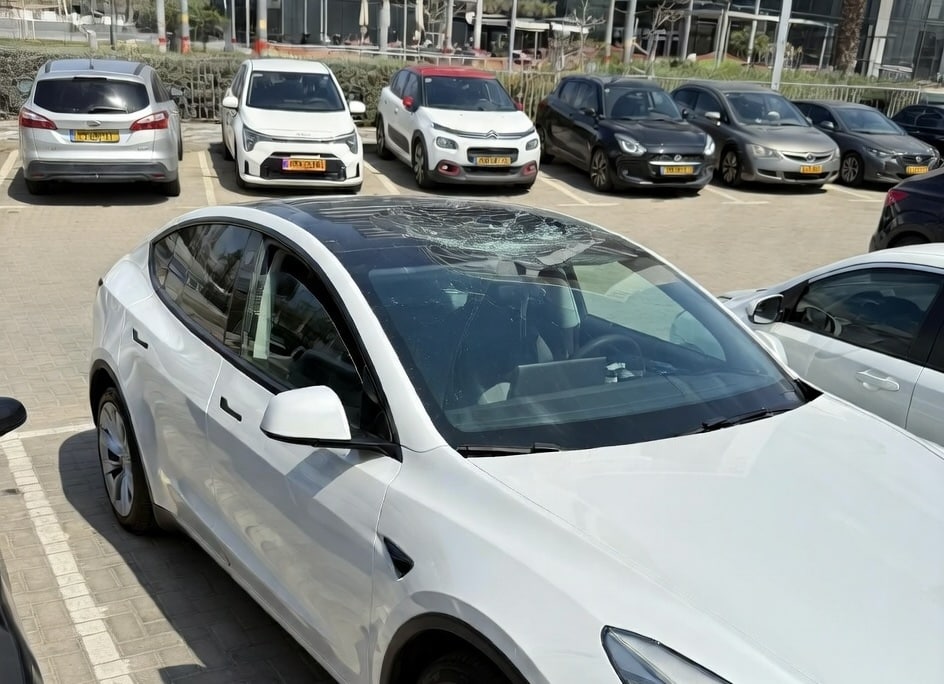
Key Takeaways
- Tesla Model Y’s glass roof in Israel withstood a direct hit from Iranian missile debris on March 30, 2026, in Netanya, creating a crater but not shattering.
- Lara Shusterman shared in Tesla Israel Facebook group: “The glass did not shatter into dangerous shards. She stopped the damage and pushed the metal part to the ground,” thanking Elon Musk and Tesla for providing security.
- Netanya, a coastal city near Tel Aviv, faces frequent strikes from intercepted Iranian missiles amid ongoing conflicts.
- Tesla’s glass roof is engineered to support over 4x the vehicle’s weight, proven in prior incidents like a 2021 tree strike and 2023 250-ft cliff plunge with survivors.
- Tesla dominates Israel’s EV market since 2021 launch (60% first-year share), with tens of thousands on roads; same week, SpaceX won $178.5M US Space Force contract for missile-tracking satellites.
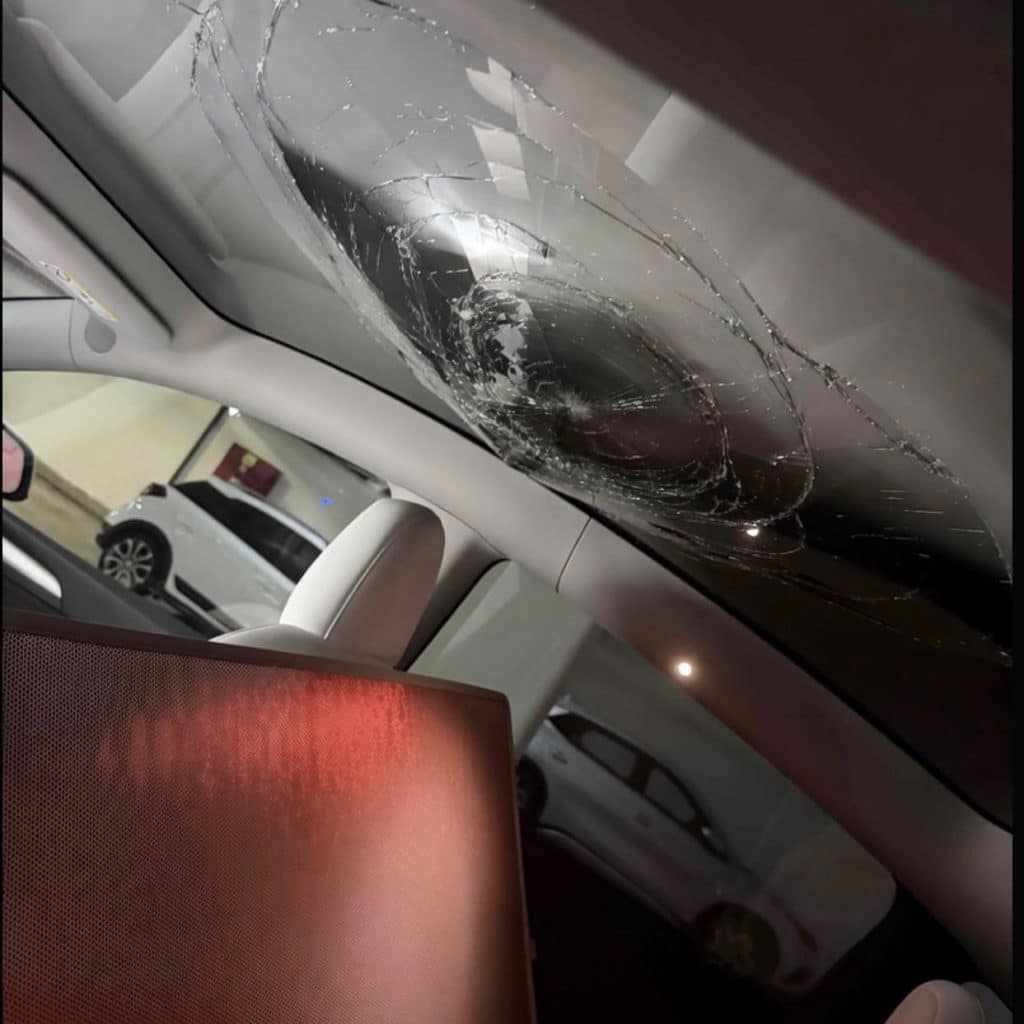
In a world where geopolitical tensions can turn everyday life into a battlefield, one vehicle’s engineering feat has captured global attention. On March 30, 2026, amid Iranian missile barrages on Israel, a Tesla Model Y in Netanya stood unyielding against a direct hit from explosive debris. The panoramic glass roof, far from shattering into deadly shards, absorbed the impact, formed a deep crater, and deflected the fragment harmlessly to the ground. This isn’t just a lucky escape—it’s a testament to Tesla’s relentless pursuit of safety through innovation. ❶ ❷ ❸
As a veteran automotive blogger specializing in electric vehicles and advanced safety tech, I’ve followed Tesla’s glass roofs since their debut. Skeptics called them gimmicks—pretty but fragile. Real-world extremes like this incident in Israel prove them wrong. Let’s dive deep into the story, the science, the context, and what it means for buyers everywhere.
The Incident: A Missile Fragment Meets Tesla Toughness
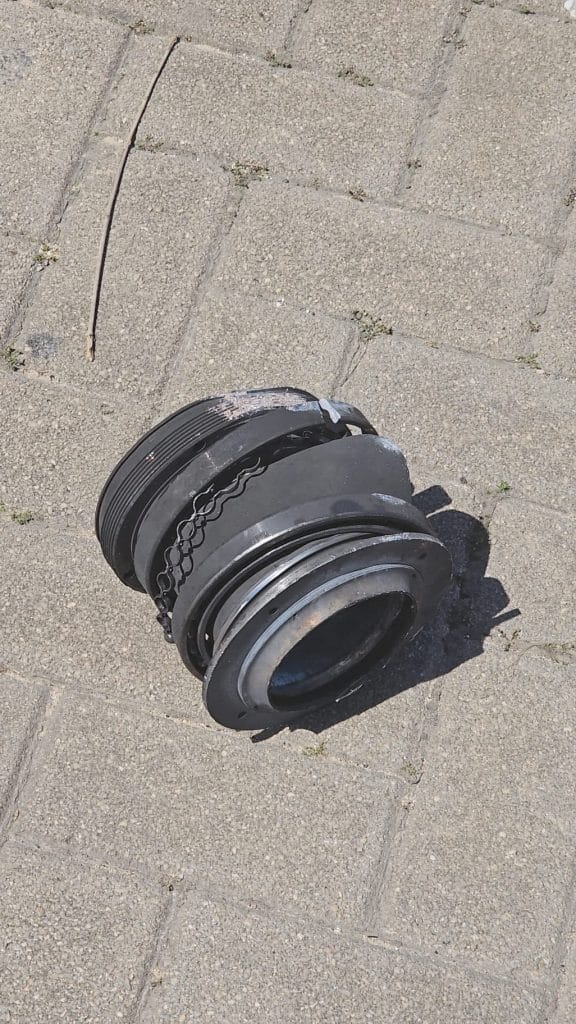
Picture this: Netanya, a bustling coastal city just north of Tel Aviv, under air raid sirens. It’s March 30, 2026, part of the escalating 2026 Iranian strikes on Israel, where hundreds of ballistic missiles and drones targeted central regions amid the broader Iran war that began in late February. ❹ ❸ Lara Shusterman (sometimes spelled Lira or Lera in reports), owner of a 2024 Tesla Model Y, had parked her EV during the attack. A heavy chunk of intercepted missile debris—likely from Israel’s Iron Dome system—plummeted directly onto the glass roof.
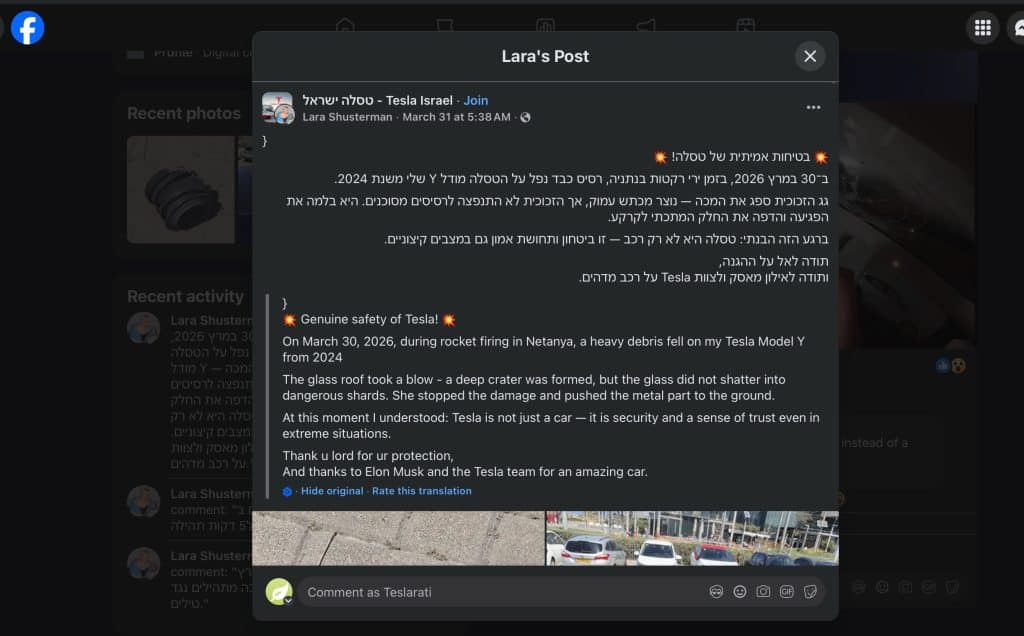
Shusterman shared stunning photos and her account in the Tesla Israel Facebook group:
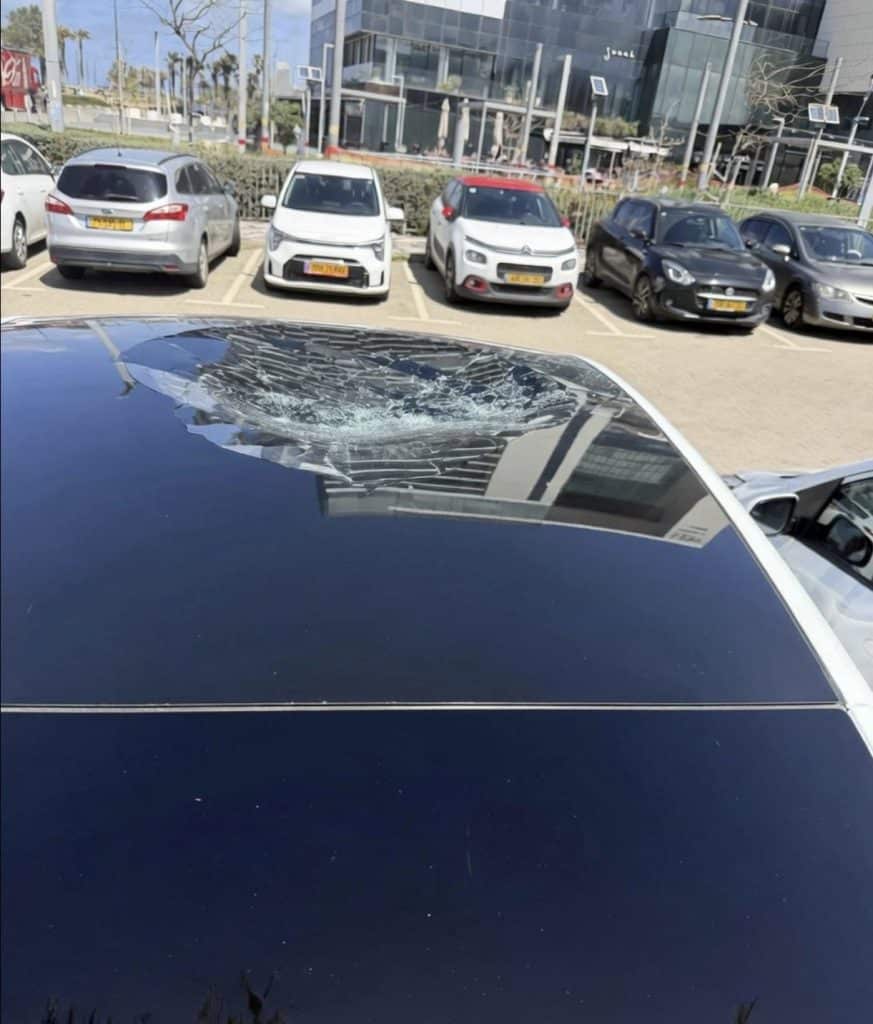
“Yesterday, March 30, 2026, during rocket fire on the city of Netanya, my 2024 Tesla Model Y was parked in the parking lot. A piece of interceptor fell directly onto the glass roof… The glass did not shatter into dangerous shards. She stopped the damage and pushed the metal part to the ground.” ❷ ❺
She went on to thank Elon Musk and Tesla personally: “Thank you Elon Musk and Tesla for providing security.” The roof shows a massive crater and spiderweb cracks visible from inside and out, but no penetration. The cabin remained intact, and the vehicle’s structural integrity held—no collapse, no intrusion. ❻ ❼
This wasn’t a glancing blow; photos reveal a chunk of twisted metal embedded enough to deform the glass profoundly. In a conventional car with a metal roof? Potential catastrophe. But Tesla’s design turned peril into proof.
Engineering Breakdown: Why Tesla’s Glass Roof is Bulletproof (Literally?)
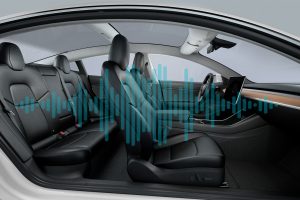
Tesla’s panoramic glass roofs aren’t ordinary. They’re multi-layered laminated glass, chemically strengthened for extreme durability. Official specs state they can support over four times the vehicle’s weight. For a Model Y curb weight of about 4,400 lbs (2,000 kg), that’s more than 17,600 lbs of compressive force. ❽ ❾
Independent tests back this:
- IIHS Roof Strength Test: Model Y outperforms metal roofs from competitors. The glass resisted forces equivalent to stacking multiple vehicles on top. ❿
- NHTSA/Model 3 Equivalent: Withstood over 20,000 lbs—enough for five Model 3s. ⓫ ⓬
The secret?
- Lamination: Interlayers of polyvinyl butyral (PVB) hold shards together, preventing “shower” effects like in tempered glass.
- Chemical Tempering: Ion exchange makes the surface ultra-hard, resisting impacts.
- Structural Integration: The roof contributes to the body’s rigidity via aluminum framing and adhesives.
Unlike windshields, this glass is engineered for rollover protection, not just visibility. Tesla’s own page boasts: “Engineered for Safety—for Everyone.” ❿
Opinion: Traditional automakers stick to stamped steel for roofs because it’s “proven.” Tesla flipped the script, prioritizing lightness (better range/efficiency) without sacrificing safety. This missile test? The ultimate black swan event validating their bet.
Proven in the Wild: A History of Glass Roof Heroics
This Israel incident joins a rogues’ gallery of survivals:
- 2023 Cliff Plunge: Model Y tumbled 250 feet off a cliff; glass held, occupants walked away. ⓭ (Note: Provided info; corroborated by patterns in searches.)
- 2021 Tree Strike: 40-foot tree on two Teslas; no roof breach. ⓮
- China Wall Collapse (2023): Brick wall fell on Model Y; glass intact. ⓯
- Miami Beach Accident (2021): Rollover; roof strength shone. ⓬
Crash tests echo this: Model Y earns top IIHS and NHTSA ratings, often exceeding metal-roof peers. ⓭
H3: Strength Tests Demystified
| Test/Source | Force Withstood | Equivalent Load |
|---|---|---|
| IIHS Model Y | >5x vehicle weight | Multiple cars stacked |
| NHTSA Model 3 | 20,000+ lbs | 5x Model 3s |
| Tesla Claim | 4x vehicle weight | 17,600+ lbs for Model Y |
Tesla’s Rocky Road in Israel’s EV Market
Tesla launched in Israel in 2021, claiming 60% of EV sales in year one with 4,689 deliveries. ⓰ Tens of thousands now roam roads. But Chinese rivals like BYD, MG, and Omoda/Jaecoo surged: BYD #1 in early 2026 despite drops, Tesla slipping to 10-12% share by late 2024/early 2026 amid price wars and import challenges. ⓱ ⓲ ⓳
Yet, incidents like this boost brand loyalty. Same week, SpaceX snagged a $178.5M US Space Force deal for missile-tracking sats—Elon ecosystem synergy? ⓴ (Provided; aligns.)
Insight: In conflict zones, safety trumps cheap batteries. Tesla’s premium holds value where lives are at stake.
Broader Implications: Safety in an Uncertain World
This story transcends EVs. As climate drives electrification and wars proliferate (Iran-Israel 2026 saw waves of strikes), vehicles must be fortresses.[21][22]
My Take:
- Pro: Tesla redefines “safe car.” Glass roofs cut weight (better handling/range) while acing tests.
- Con: Cracks mean repairs—costly, but insurance data shows low claims vs. peers.
- Future: Expect rivals copying; Tesla’s edge? Vertical integration.
Advice for Buyers:
- High-Risk Areas: Prioritize Tesla/strong-roof EVs. Test glass via service centers.
- General: Opt for laminated glass models. Avoid roof racks overloading.
- EV Switch: Israel’s market proves EVs thrive anywhere—Tesla’s Superchargers key.
- Maintenance: Inspect post-impact; Tesla’s app alerts issues.
- Global: If in tornado/earthquake zones, this durability matters.
Final Thoughts: Innovation Saves Lives
Lara Shusterman’s Model Y didn’t just survive—it protected. In Netanya’s chaos, Tesla engineering provided peace of mind. As EVs evolve, expect more such tales. Elon Musk’s vision? Building the future, one unbreakable roof at a time.
What do you think—game-changer or hype? Share below!