Tesla Model X Stranded in the Atacama Desert: Solar Panels to the Rescue on the Pan-American Highway Adventure
Key Takeaways
- YouTuber Sandro van Kuijck drives modified Tesla Model X “Beluga” from Canada to Argentina on Pan-American Highway, country 14 in Chile.
- Ran out of battery in Atacama Desert with 37 km range left, 42 km to nearest Copec charger after elevation climb and headwinds.
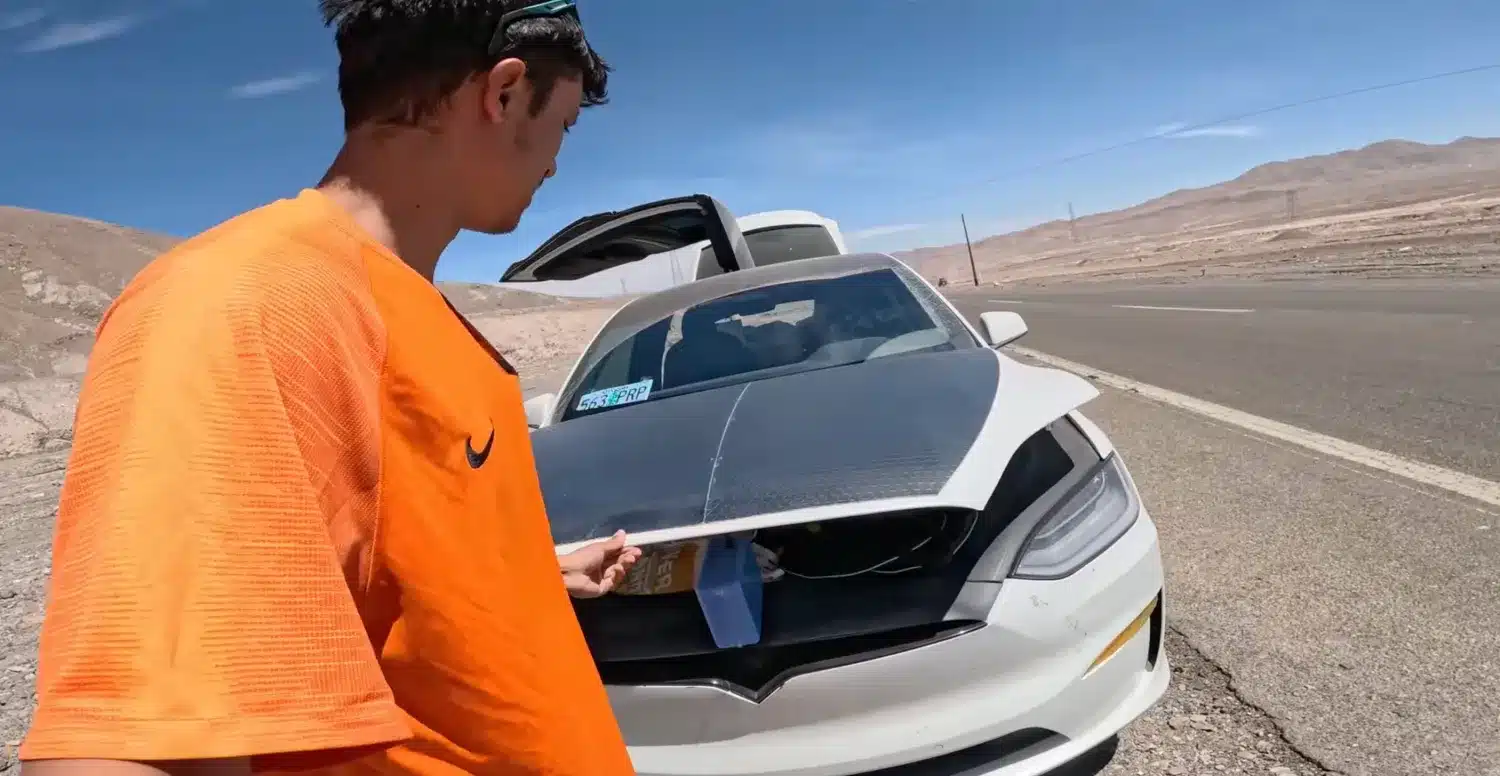
- Deployed 287W solar panels on hood, feeding EcoFlow Delta 2 battery, adding 1-2 km range per hour at 180-200W input.
- Construction crew shared industrial generator for 6A trickle charge to prevent full HV battery shutdown; EcoFlow drained to 0%.
- Towed 30 km to Calama Copec charger for $135, recharged at 36-40 kW in 2 hours.
- Highlights sparse EV infrastructure in South America; Tesla Superchargers new in Chile 2024, Copec growing but gaps remain.
Imagine cruising through the world’s driest desert in a fully electric Tesla Model X, with nothing but endless sand, scorching sun, and a ticking battery clock. This is exactly what happened to YouTuber Sandro van Kuijck during his audacious solo expedition along the Pan-American Highway—from the icy shores of Tuktoyaktuk, Canada, to the windswept tip of Ushuaia, Argentina. By the time he hit Chile (country #14 on his route), his modified Tesla Model X, affectionately named “Beluga,” ran critically low on juice in the Atacama Desert. What followed was a masterclass in EV improvisation, highlighting both the vulnerabilities and triumphs of electric overlanding in remote regions.❶ ❷
Sandro’s story stands out. It’s not just about survival—it’s a wake-up call on South America’s evolving EV infrastructure, the game-changing potential of solar backups, and essential tips for anyone dreaming of electrifying the Pan-Am. Let’s dive into the drama, dissect the tech, and explore what it means for the future of long-haul EV travel.
The Epic Setup: Meet Beluga, the Overland Tesla Beast
Sandro van Kuijck, a 27-year-old adventurer from Oregon, has transformed his 2023 Tesla Model X Long Range into a self-sufficient overlanding rig. Beluga boasts:
- Custom slide-out kitchen with induction cooktop and running water.
- Refrigerator and sleeping quarters for wild camping.
- All-terrain tires for rugged Pan-Am detours.
- 287-watt solar array mounted on the hood, wired to a 2 kWh EcoFlow Delta 2 portable power station.
This setup powers daily living without draining the high-voltage (HV) battery, preserving range for driving. Sandro’s channel,Everyday Sandro, documents the three-year journey, blending hypermiling hacks, charging deserts, and boundary-breaking feats—like a 14-hour single-charge run from the Atacama to Santiago.❶ ❷
But even the best rigs face Mother Nature’s wrath.
The Stranding: A Perfect Storm in the Atacama
Here’s the blow-by-blow of the incident south of Calama, Chile:
- Full Charge, False Security: Sandro tops up to 95% at a Copec fast charger in Antofagasta. Confident, he hits the road. ❶
- Desert Drain: Climbing to 3,000 meters amid brutal headwinds, consumption skyrockets. Range plummets to 37 km remaining, but the nearest Copec charger is 42 km away (about 18 miles). ❸
- Emergency Pull-Over: Parked on the Pan-Am shoulder near a eerie desert cemetery, Sandro deploys the solar panels. Under intense Atacama sun, they pull 180-200 watts, trickling 6 amps into the EcoFlow Delta 2—adding a meager 1-2 km of range per hour. He kills the fridge and vents for efficiency, but the house battery hits 0%. ❶ ❷
- Construction Crew Lifeline: Nearby road workers share their industrial generator for a 6A trickle charge, buying time to avert full HV shutdown. “These guys are the MVPs of this trip,” Sandro says. ❶
- The Tow: Five tow companies ghost him due to remoteness. Friends arrange one for $135 USD, hauling Beluga 30 km to Calama’s Copec station.
- Recharge and Resume: Plugged in, it pulls 36-40 kW, hitting 80% in two hours. Back on track to San Pedro de Atacama at sunset. ❸
Tesla’s navigation glitch—thinking he was in Mexico—exacerbated the mess, failing to route to Chilean chargers properly.❶
Solar Tech Deep Dive: Lifeline or Gimmick?
Sandro’s hood-mounted 287W panels shine (pun intended) as anEV-exclusive emergency tool. Unlike gas cars, where you’re dead in the water, solar keeps the 12V system alive, preventing brick-mode. Electrek nails it: “A genuine lifeline unique to EVs… it worked as intended.”❹
Pros:
- Zero-fuel backup in sun-drenched deserts.
- Multi-use: Campsite power + trickle charge.
- Proven: Added hours of viability here.
Cons & Critiques:
- Slow: 1-2 km/hour won’t save daily drives. Top commenter vibes (echoed in YouTube): More panels (400W+ foldables) or mylar reflectors could hit 5-10 km/hour. ❹ ❷
- Weight/Drag: Hood panels might sap range slightly (debated in comments).
- Not Full Solution: EcoFlow drained fast; needs bigger bank.
My Opinion: Brilliant for overlanders. Pair with Jackery 2000 or Bluetti for 5-10 kWh buffer. In Atacama’s 300+ sunny days/year, it’s gold.
EV Infrastructure on the Pan-Am: Gaps and Gains in Chile
South America’s charging “deserts” are real. Chile leads withCopec’s 90+ fast chargers(36-150 kW), but Atacama stretches expose holes. Tesla’sfirst South American Superchargerslaunched late 2024, mostly Santiago-centric.❶
Game-Changer Alert: In Feb 2026, Tesla partnered with Copec for a1,500 km Supercharger corridorfrom La Serena to Puerto Montt:
- Every 200 km at Copec stations.
- Four V3 stalls @ 250 kW each, renewable-powered.
- Rollout: Throughout 2026—perfect timing for Pan-Am pilots. ❺
Yet, 60% of Chilean municipalities lack chargers. Pan-Am EVing demands hypermiling (Sandro’s 14-hour feats) and apps like A Better Routeplanner (ABRP).
Copec vs. Tesla:
| Feature | Copec | Tesla Superchargers |
|---|---|---|
| Network Size | 90+ nationwide | Expanding (2026: 1,500 km) |
| Speeds | 36-150 kW | Up to 250 kW |
| Availability | Gas stations, widespread | highways, Copec-integrated |
| Cost | ~$0.25-0.40/kWh | Subscription perks |
Copec wins accessibility; Tesla speed/reliability.❺
Lessons Learned & Pro Tips for Pan-Am EV Adventurers
Sandro’s saga isn’t failure—it’s education. Common pitfalls:
- Over-reliance on Nav: Use PlugShare + ABRP; cross-check.
- Efficiency Killers: Headwinds/elevation > AC (though Sandro disputes some critiques).
- Post-0% Myth: Teslas limp 10-20 km at 0%, but don’t risk it.
My Top 7 Advice:
- Solar Stack: 500W+ portable (e.g., Renogy foldables) + 5 kWh station.
- Backup Genny: Honda EU2200i for 2 kW output.
- Tire Pressure: 45 PSI for efficiency.
- Apps Arsenal: ABRP, Zapmap, Tesla app.
- Community: Join Pan-Am EV groups on FB/Reddit.
- Insurance: Covers tows in remotes.
- 2035 Goal: Chile bans new ICE sales—infra will boom.
Opinion: EVs conquer Pan-Amnowwith prep. Gas? Stuck without fuel drops. Solar tips the scale.
Future Outlook: Electrifying the Americas
By 2026, Latin EV sales tripled, but infra lags. Tesla-Copec accelerates Chile’s lead; expect Brazil/Argentina follows. Sandro nears Ushuaia—follow for hypermiling to Patagonia winter.
This isn’t “EV fail”—it’s proof: With ingenuity, electrics rule extremes.
What’s your craziest charge story? Drop below!