Tesla Cybercab Fleet Masses at Giga Texas: Drone Footage Reveals Crash Testing Ramp-Up and Production Surge
Key Takeaways
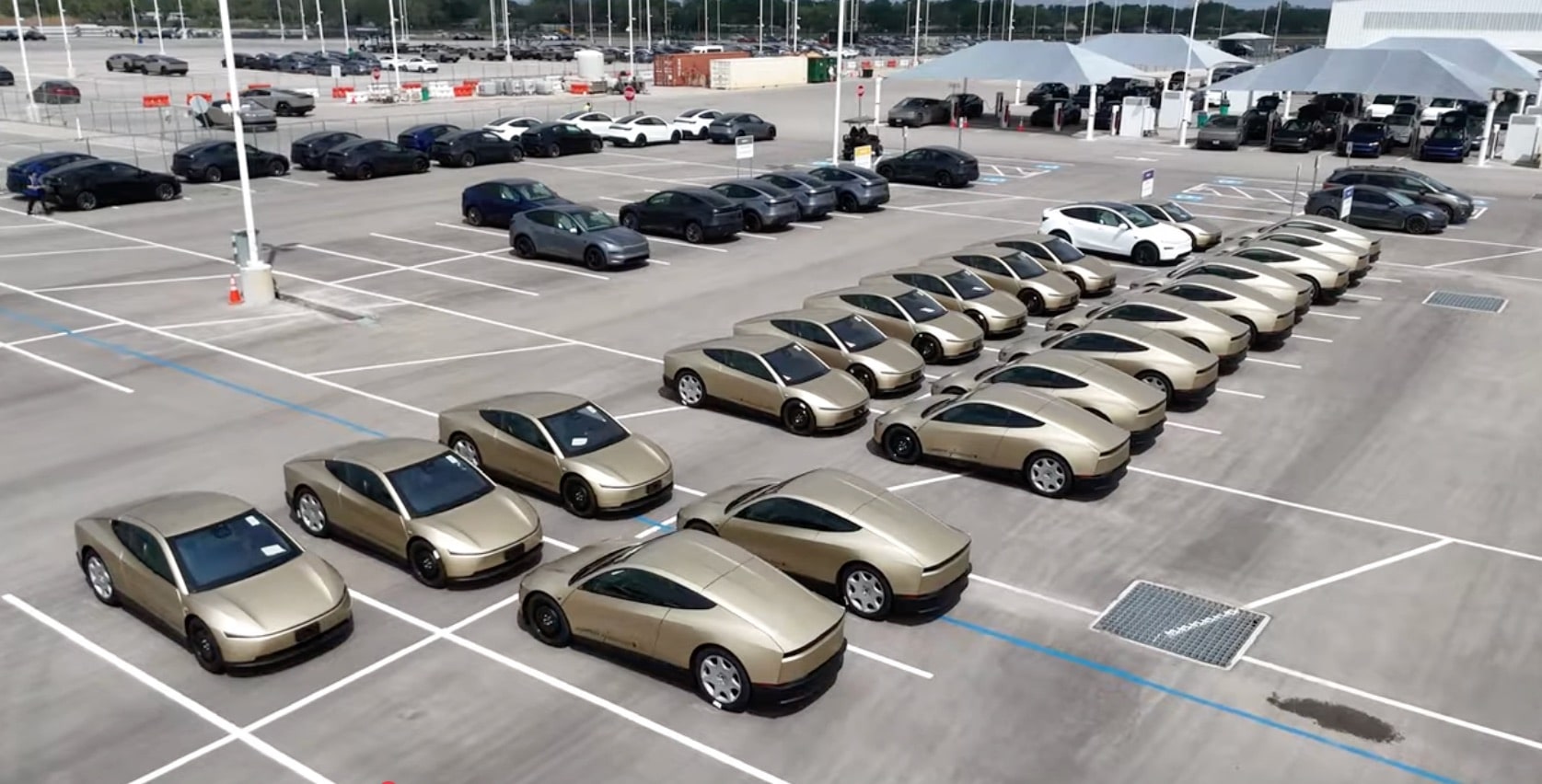
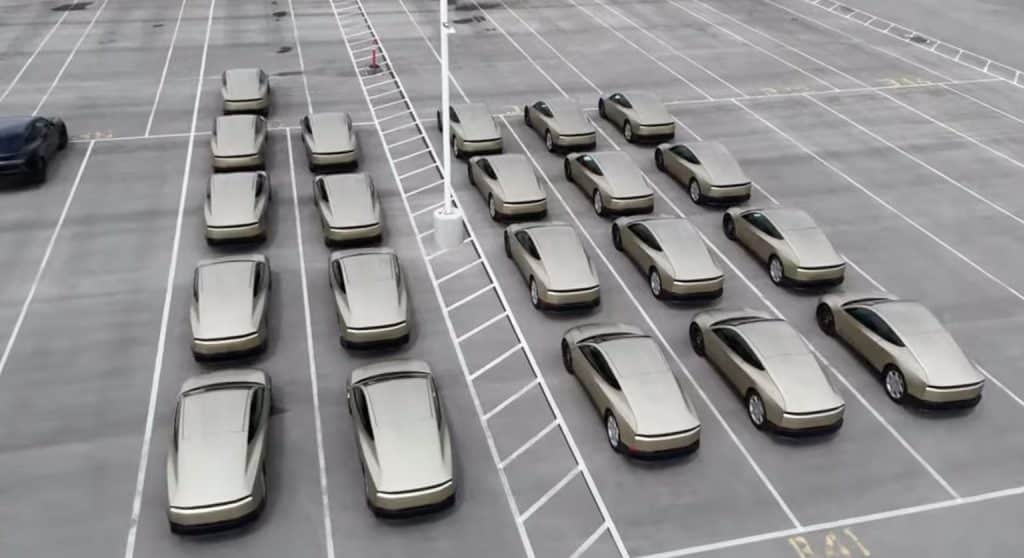
- Drone footage by Joe Tegtmeyer reveals over 50 Tesla Cybercab units parked at Giga Texas, clustered near the crash testing facility.
- Outbound lot serves as staging area for finished vehicles, mixing Model Y, Cybertruck, and growing Cybercab fleet.
- Roughly 50 Cybercabs parked in organized rows, most equipped with temporary steering wheels and pedals for regulatory data collection.
- Tesla’s dedicated Crash Labs at Giga Texas and Fremont; intensive crash testing typically starts 1-2 months before volume production, mirroring Cybertruck timeline.
- First production Cybercab rolled off line on February 17, 2026; volume production targeted for April 2026.
- Elon Musk states early production will be “agonizingly slow” then “insanely fast,” aiming for at least 2 million units per year.
- Commercial robotaxi service in Austin planned for late 2026.
Imagine peering down from the skies over Tesla’s sprawling Giga Texas factory in Austin, witnessing rows of sleek, futuristic Cybercabs lined up like soldiers ready for battle. That’s exactly what drone pilot and Tesla enthusiast Joe Tegtmeyer captured in his latest footage, shared across YouTube and X (formerly Twitter). As of early April 2026, over 50 Cybercab units—some reports even peg it at 60—have been spotted parked in organized rows on the outbound lot, strategically clustered near the crash testing facility.❶ ❷ ❸This isn’t just a parking lot overflow; it’s a clear signal that Tesla is accelerating toward volume production of its steering-wheel-less robotaxi, with intensive safety validations underway.
As a professional blogger specializing in electric vehicles and autonomous tech, The story of Tesla’s progress goes back to the Cybercab unveiling at the “We Robot” event in October 2024. These sightings confirm that Tesla is executing on its ambitious timeline, blending innovative “unboxed” manufacturing with rigorous testing. But let’s dive deeper—what does this mean for investors, early adopters, and the broader mobility landscape?
The Man Behind the Lens: Joe Tegtmeyer’s Drone Chronicles
Joe Tegtmeyer isn’t your average drone hobbyist. With Tesla’s explicit permission from CEO Elon Musk himself, he conducts regular flights over Giga Texas, documenting everything from Semi prototypes to factory expansions.❹ ❺His YouTube channel, boasting over 44,000 subscribers, has become a go-to source for unfiltered Giga Texas intel. Recent videos like “53 Cybercabs, N Campus GeoPier & Slab Work” and “36+ Cybercabs, Test Track Emerges” show the Cybercab fleet growing week by week—from 25 units in late March to 50+ now.❻ ❼
Key observations from Tegtmeyer’s footage:
- Outbound Lot Staging: The lot mixes Model Ys, Cybertrucks, and Cybercabs, serving as Tesla’s final quality checkpoint before customer delivery or further testing. ❽
- Temporary Controls: Most Cybercabs sport add-on steering wheels and pedals—likely for regulatory data collection during validation drives, as the production model is fully autonomous without them. ❾
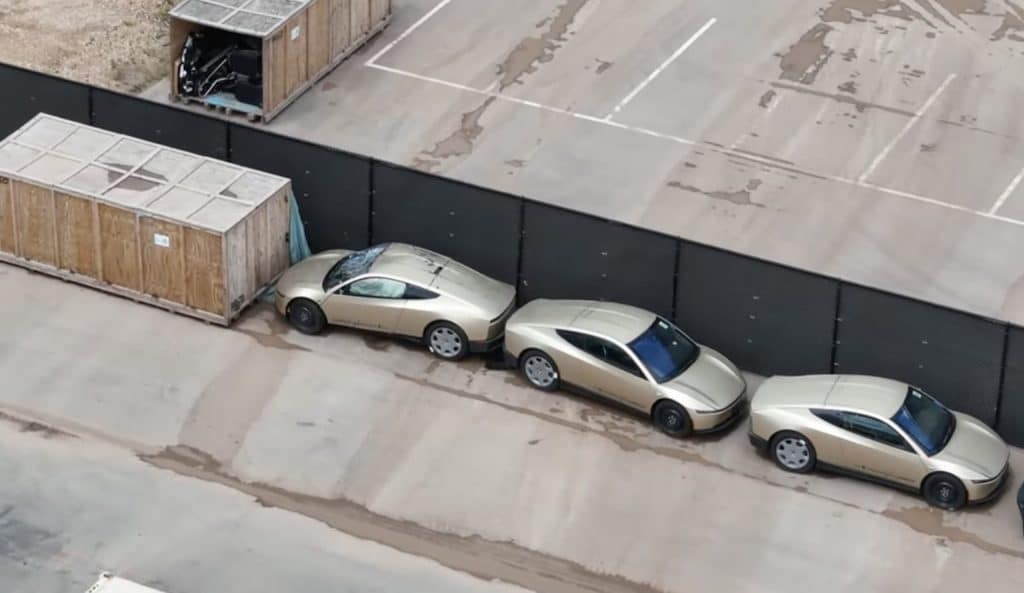
- Crash Lab Proximity: Units are parked suspiciously close to Giga Texas’s dedicated Crash Labs, hinting at imminent structural integrity tests. ❿
Tegtmeyer’s work provides invaluable transparency in an industry often shrouded in secrecy. For enthusiasts, it’s like having a front-row seat to history unfolding.
Production Timeline: From First Roll-Off to “Insanely Fast” Ramp
Tesla’s Cybercab journey hit a milestone onFebruary 17, 2026, when the first production unit rolled off the Giga Texas line—Tesla even posted about it on X.⓫ ⓬This was no prototype; it was built using Tesla’s revolutionary unboxed manufacturing process, where vehicle sections are assembled in parallel like giant Lego bricks, slashing build times dramatically.⓭
Early Production Phase (February-March 2026)
- Initial output was low: Around 25 units by early March, focused on internal validation. ⓮
- Sightings escalated quickly, with 36+ by late March and 50+ by April. ❻
Volume Production Kickoff (April 2026 Onward)
Elon Musk has repeatedly reaffirmed: Volume production startsthis month (April 2026) at Giga Texas. ⓯ ⓰Long-term goal? At least2 million units per year, scaling across factories worldwide.⓱
Opinion:Tesla’s track record with Cybertruck (agonizing ramps followed by surges) suggests Cybercab will follow suit. The unboxed process could make it Tesla’s fastest ramp yet, but supply chain hiccups—like AI5 chip delays—remain risks.
Crash Testing Deep Dive: Safety First in the Autonomous Era
No vehicle ships without surviving the crash gauntlet, and Cybercab is no exception. Giga Texas’s Crash Labs (mirroring Fremont’s) are buzzing, with footage showing damaged units exposing under-hood details like frunk motor bays.⓲ ⓳
Testing Timeline and Details:
- Pre-Volume Push: Intensive crash work typically begins 1-2 months before volume prod, aligning perfectly with now. ❿
- FMVSS Compliance: Even sans wheel/pedals, Cybercabs must ace frontal, side, and rollover tests. Some units are wrapped for validation drives off-site. ⓴
- Test Track Action: Emerging tracks at Giga Texas for dynamic handling and FSD integration.[21]
Insights:Tesla’s data advantage (billions of FSD miles) will shine here, but regulators like NHTSA demand zero compromises. Expect public test videos soon to build hype.
Advice for Buyers:If eyeing a Cybercab lease (~$30K price tag), prioritize markets with robotaxi approvals first—Austin leads.
Elon Musk’s Candid Outlook: “Agonizingly Slow” to “Insanely Fast”
Musk doesn’t sugarcoat. In January 2026 earnings calls and X posts, he warned: Early Cybercab/Optimus production will be“agonizingly slow”due to all-new processes, but will explode to“insanely fast” rates.[22][23][24]He reiterated the April start on February 16.[25]
Investor Takeaway:TSLA stock dipped on “slow” talk, but history (Model 3 ramp) proves Musk right. With robotaxi revenue potential ($ trillions?), patience pays.
The Road Ahead: Austin Robotaxi Launch and Beyond
Commercial service? Late 2026 in Austin, expanding city-by-city.[26]Paired with FSD v14+, Cybercab could undercut Uber/Lyft by 5-10x on cost/mile.
Challenges and Opportunities:
- Regulatory Hurdles: Full autonomy needs federal nods; pedal-equipped early units bridge the gap.
- Competition: Waymo leads, but Tesla’s scale wins long-term.
- Market Impact: 2M/year floods rideshare, deprecates personal cars.
My Prediction:By 2027, Cybercabs dominate Austin streets, validating Tesla’s vision. Watch Tegtmeyer’s drones for the next clue.
In summary, Giga Texas sightings scream “on track.” Tesla’s blending manufacturing innovation with safety rigor positions Cybercab as the mobility disruptor we’ve awaited.