SpaceX set to launch NASA laser satellite, in-space manufacturing demo, and more
SpaceX appears to be on track to launch its fifth dedicated Falcon 9 rideshare mission as early as 2:27 pm EDT (18:27 UTC) on Wednesday, May 25th, carrying a wide variety of interesting payloads into Earth orbit.
SpaceX has reportedly assigned Falcon 9 B1061 to the mission and Transporter-5 will be its seventh launch and landing attempt since November 2020 and third launch this year. While of no particular consequence, B1061 will also become the first Falcon 9 booster to launch two Transporter missions back to back after supporting Transporter-4 less than two months ago. Falcon 9 is scheduled to lift off from SpaceX’s Cape Canaveral Space Force Station (CCSFS) LC-40 facilities and boost the Transporter-5 payload and upper stage most of the way out of the atmosphere, while the booster will return back to the Florida coast to land on a concrete pad just a few miles to the south.
Like Transporter-4, which launched with just 40 deployable payloads on April 1st, Transporter-5 appears to be another very small rideshare mission relative to SpaceX’s first three Transporter launches, demonstrating the company’s continued commitment to operating the service a bit like public transit. A public bus will still happily carry just a single passenger – efficiency, while important, comes second to dependability. For many of SpaceX’s individual Smallsat Program customers, that may help to alleviate some of the downsides of massive multi-dozen-satellite rideshares, which can often make individual customers feel forgotten and unimportant when they’re forced to swallow delays caused by payloads other than their own.
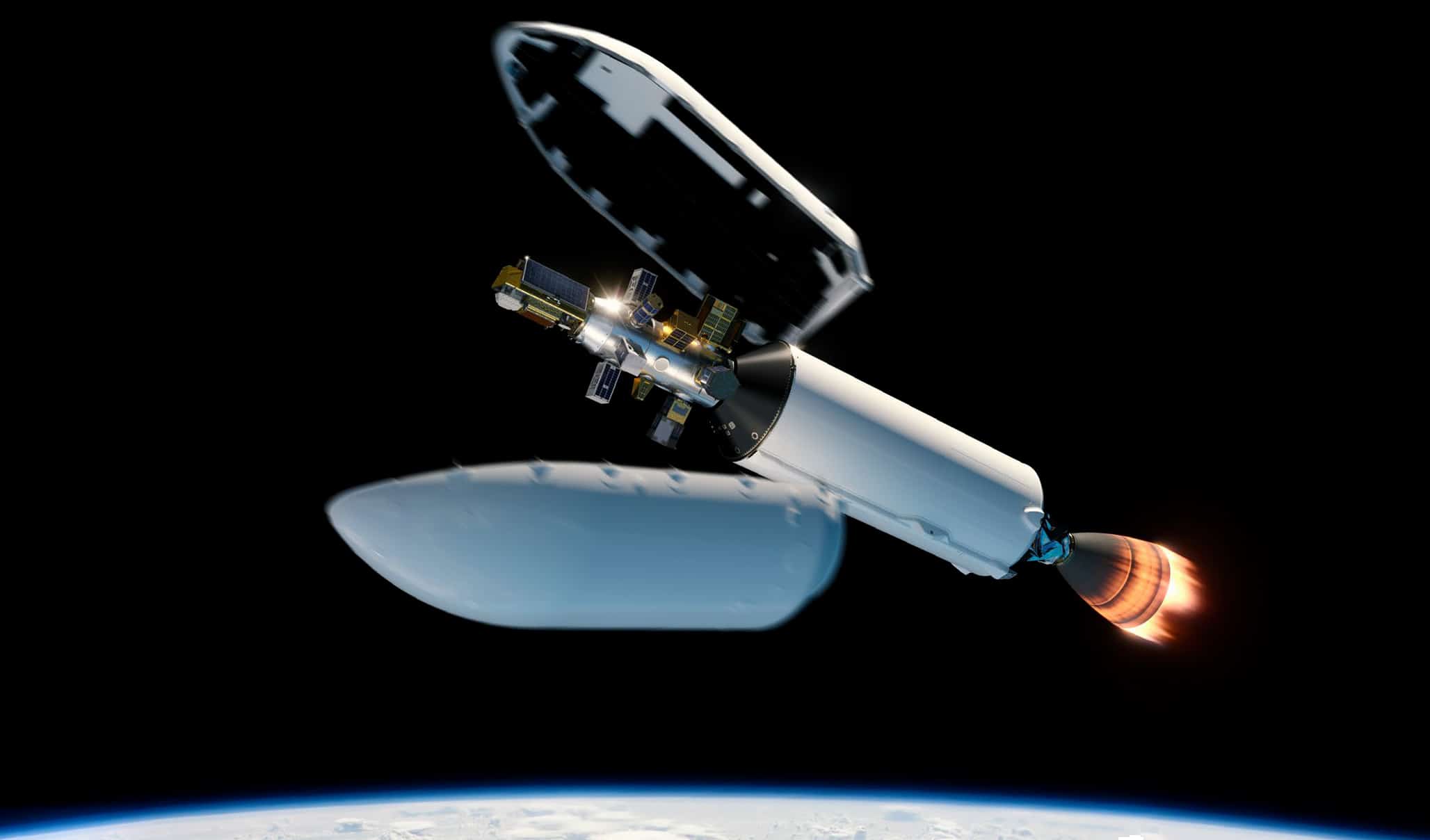
Based on official information provided by SpaceX on May 24th, Falcon 9 is scheduled to deploy only 39 payloads during Transporter-5. However, the real number of satellites deployed during the mission will likely be a bit higher due to the presence of three or four different vehicles that are designed to host or carry some of those payloads to different orbits. Spaceflight’s ‘Sherpa-AC1’ won’t have significant propulsion but it will carry several hosted payloads (‘hosted’ in the sense that the payload is not a free-flying satellite of its own) after deploying from Falcon 9.
The other two or three are true orbital transfer vehicles (OTVs), meaning that they have some kind of propulsion and are designed to deploy smaller satellites in customized orbits. The ultimate goal of the many startups trying to develop high-performance OTVs is to extract the best of both worlds from large rideshare missions and small rockets, combining ultra-cheap prices and orbits that are heavily optimized for each payload. Transporter-5 may carry Exolaunch’s “Reliant” OTV (unconfirmed) but is definitively scheduled to launch with D-Orbit’s “ION SCV-006” OTV and startup Momentus Space’s first ‘Vigoride’ OTV. Vigoride carries the unique distinction of being propelled by a first-of-its-kind “microwave electrothermal thruster” that turns water into a superheated plasma propellant.
Vigoride’s first true launch will be treated mainly as a test flight but it will also carry up to eight different small satellites. D-Orbit’s ION OTV only has one confirmed satellite on its manifest but will likely launch with at least a few more. All told, the number of satellites deployed as a result of Transporter-5 will likely be closer to 50 – a decent improvement over Transporter-4.
Several of those 50 or so payloads are particularly intriguing. Momentus Space’s first Vigoride OTV, if successful, could pave the way for the most capable commercial space tug currently available, with up to 2000 meters per second of delta V (dV) – a way to measure the stamina of rocket propulsion. NASA has also manifested its small Terabyte InfraRed Delivery (TBIRD) technology demonstrater satellite on Transporter-5 and will attempt to prove that it’s possible to use small, high-power lasers as extremely high-bandwidth downlinks. NASA hopes the tiny satellite will be able to transmit at up to 200 gigabits per second (Gbps), allowing it to downlink terabytes of data during a single pass over an Earth-based ground station.
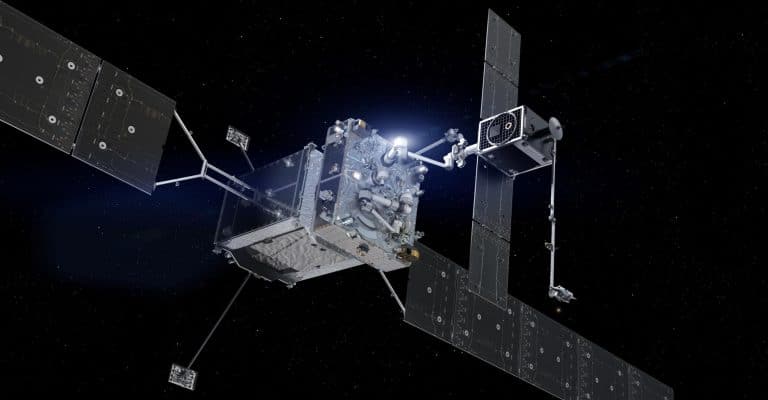
AISTECH Space will launch an Earth observation satellite prototype outfitted with a first-of-its-kind high-resolution thermal imager. Last but certainly not least, Nanoracks and Maxar are scheduled to launch the first of multiple planned demonstrations and technology maturation missions for in-space manufacturing and construction technologies. The hosted payload is relatively simple by many measures and will only operate for about an hour, but it aims to demonstrate the first structural metal cutting in space.
Parent company Voyager Space ultimately wants to use the expertise it gains from the ‘Outpost Program’ to convert expended rocket upper stages into orbital ‘Outposts’ that will host customer payloads and support the continued development of in-space harvesting, recycling, construction, and more.
As of 5 am EDT (09:00 UTC), SpaceX still hasn’t officially confirmed via Tweet or website update that Transporter-5 is ‘go’ for launch. If it is, an official webcast available here will likely begin around 2:10 pm EDT (18:10 UTC).