 Gary Zhou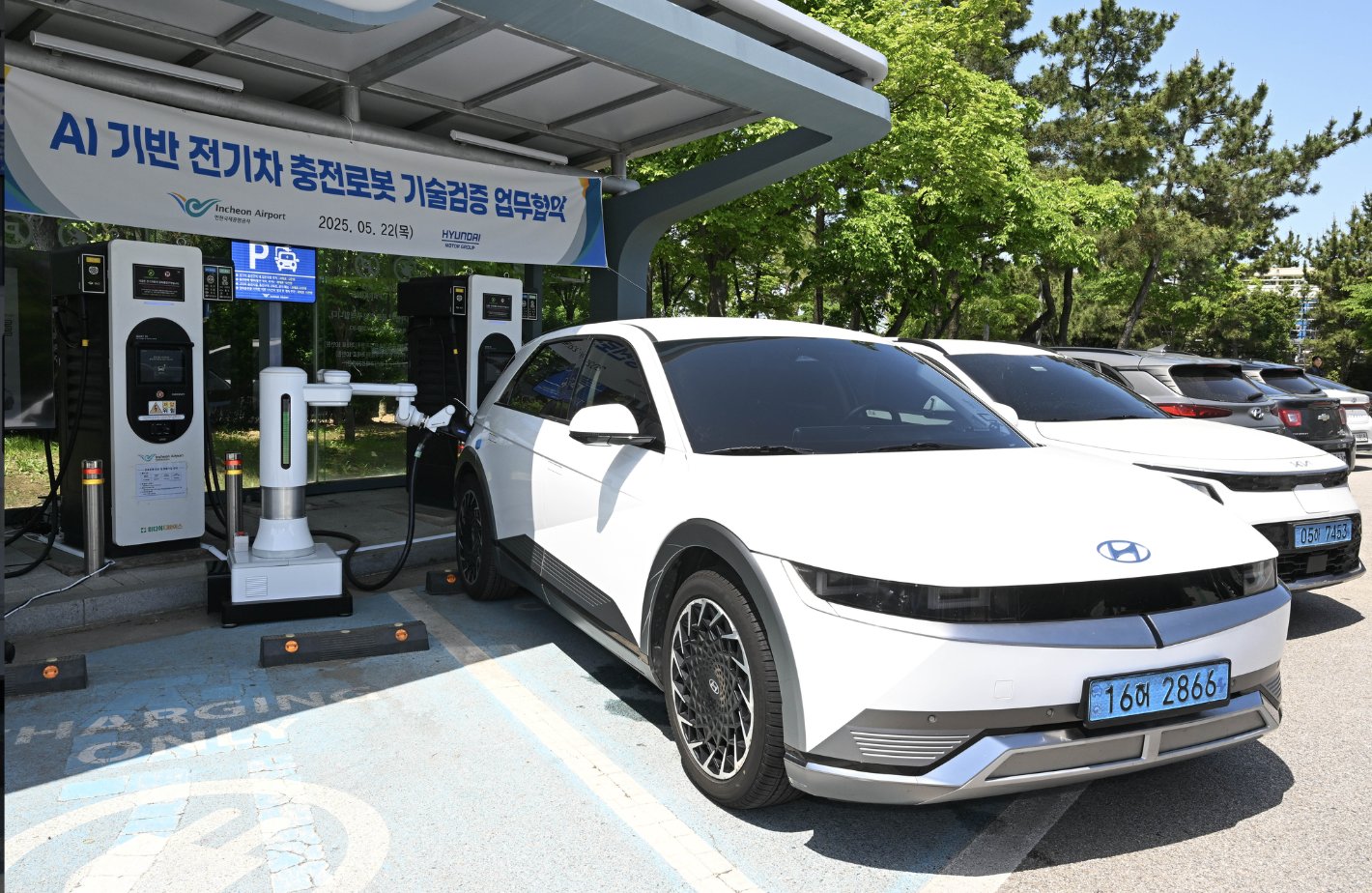
Key Takeaways
- Hyundai has begun real-world testing of its AI-powered EV charging robot, named the ACR.
- The testing involves a partnership with Kia and Incheon International Airport, backed by a memorandum of understanding (MOU).
- Incheon International Airport, known for its eco-friendly vehicle infrastructure, is an ideal location for this pilot program.
- Kia’s Robotics Lab is collaborating to provide essential hardware and software solutions for the early stages of the project.
- Yan Hee-won, President of Hyundai Motor’s R&D Division, highlights the initiative as a significant milestone in future mobility technologies, aiming to enhance mobility experiences.
- Initially, the charging robot will only be available for a fleet of eco-friendly airport vehicles, not public users.
- The eventual goal is to enable vehicles parked at airports to be charged while owners are traveling.
- Tesla previously explored a similar concept but pivoted towards wireless induction charging due to its efficiency and future compatibility with their Robotaxi fleet.
As electric vehicles (EVs) continue to surge in popularity globally, the demand for innovative charging solutions is escalating. Hyundai has taken a bold step in addressing this need by launching real-world testing of its AI-powered EV charging robot, known as the ACR. This initiative, backed by a strategic partnership with Kia and Incheon International Airport, signifies a transformative era in EV infrastructure. Let’s delve deeper into this development and what it implies for the future of mobility.
Hyundai’s Vision for AI-Powered Charging
Hyundai’s ACR represents a cutting-edge advancement in the automation of EV charging. This robot is designed to bring efficiency and convenience to EV users, especially in high-traffic areas like airports. Here’s why this development is so revolutionary:
- Automated Efficiency: The ACR, powered by artificial intelligence, aims to provide seamless and quick charging for electric vehicles without the need for human intervention.
- Enhanced User Experience: By automating the charging process, Hyundai aims to reduce common frustrations associated with traditional charging, such as availability and wait times.
Strategic Partnerships and Technological Synergy
The real-world testing of the ACR wouldn’t be possible without collaborative efforts between key industry players:
- Partnership with Kia and Incheon International Airport: With a memorandum of understanding (MOU) in place, these entities have combined resources to create a robust testing environment at a location known for its eco-friendly vehicle infrastructure.
- Kia’s Robotics Lab: Essential hardware and software for the ACR’s early rollout are being developed in collaboration with Kia’s robotics specialists. This collaboration highlights a synergy that drives technological innovation.
The Role of Incheon International Airport
Incheon International Airport is renowned for its commitment to sustainability and use of eco-friendly technology. This reputation makes it an ideal testing ground for Hyundai’s ACR:
- Pilot Program: The airport’s infrastructure supports the wide-scale use of a fleet of eco-friendly vehicles, providing a practical setting for real-world testing.
- Future Outlook: Hyundai envisions an eventual expansion beyond just airport vehicle fleets. The ultimate aim is to offer travelers the convenience of having their parked vehicles charged while they are away, turning idle time into efficient charging time.
Industry Comparisons and Future Possibilities
Hyundai isn’t the only player in the EV charging innovation space. Tesla, a well-known leader in the EV industry, has also explored automated charging concepts:
- Tesla’s Approach: While Tesla initially ventured into robotic charging, the company has shifted focus towards wireless induction charging. This method promises fewer moving parts and better compatibility with future autonomous fleets, such as their anticipated Robotaxi service.
What Does This Mean for the Future?
The introduction of AI-powered EV charging robots represents a significant leap forward in automotive tech. The potential benefits include:
- Increased Charging Availability: Automated systems could transform underutilized spaces, like airport parking lots, into efficient charging hubs.
- Reduced Environmental Impact: Greater EV adoption, facilitated by more accessible charging options, translates to reduced reliance on fossil fuels.
- Augmented User Convenience: Future implementations aim to enhance user experience by minimizing downtime and eliminating the need for manual charging.
Potential Challenges
While the prospects are promising, several hurdles must be addressed:
- Cost and Implementation: Deploying AI-powered charging robots will require considerable investment in infrastructure and technology.
- Technical Challenges: Ensuring the reliability and safety of such systems in various conditions remains critical.
A Look Ahead
Hyundai’s endeavor to pioneer AI-powered EV charging robots could reshape the landscape of electric mobility, making sustainable transportation more accessible and convenient. The collaboration with Kia, bolstered by Incheon International Airport’s eco-friendly ethos, exemplifies how strategic partnerships can drive technological progress.
As this innovative pilot program unfolds, it paves the way for the widespread adoption of smarter, greener, and more efficient mobility solutions, bringing us a step closer to a sustainable future.