Elon Musk’s Galactic Payday: SpaceX Links CEO Compensation to Mars Colony and 100TW Space Data Centers
Key Takeaways
- SpaceX board approved Elon Musk’s compensation tied to Mars colonization and space-based data centers.
- Pay includes 200M super-voting shares at valuation milestones, full unlock at $7.5T valuation, 1M Mars residents, and 100TW space computing power.
- Details revealed via Reuters review of SpaceX’s confidential SEC filing ahead of public offering.
- Musk’s Mars vision dates to 2001; founded SpaceX in 2002 with colonization as long-term goal.
- In 2017 IAC presentation, Musk outlined self-sustaining Mars city needing 1M people, now in comp package.
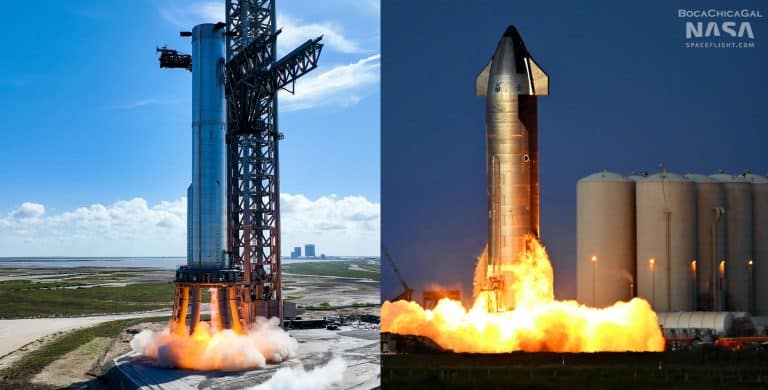
- Starship designed for Mars with <$100K/ton cost target for mass migration feasibility.
- Compensation package formalizes valuation on Mars goals for first time.
- SpaceX eyes IPO around June 28 at ~$1.75T valuation, highlighting contracts like Mars rover and Space Force launches.
In a move that blends audacious ambition with corporate incentives, SpaceX’s board has approved a compensation package for Elon Musk that ties his potential payout—potentially worth trillions—to some of the most futuristic goals imaginable: establishing a self-sustaining city of 1 million people on Mars and deploying massive space-based data centers with 100 terawatts (TW) of computing power. ❶ ❷ This isn’t just motivational rhetoric; it’s formalized in a confidential SEC filing reviewed by Reuters, revealed ahead of SpaceX’s anticipated public offering. ❶ As SpaceX eyes an IPO around late June 2026 at a staggering $1.75 trillion valuation, this package underscores how deeply intertwined Musk’s personal fortune is with humanity’s multi-planetary future. ❸ ❹
For years, Musk has preached the gospel of Mars colonization as insurance against Earth’s existential risks. Now, for the first time, SpaceX is putting real equity on the line to make it happen. But is this genius alignment of incentives or a high-stakes gamble? In this deep dive, we’ll unpack the details, historical context, technical feasibility, and what it means for investors, space enthusiasts, and the future of humanity.
Breaking Down the Compensation Package
Approved by the SpaceX board in January 2026, Musk’s pay structure grants him up to 200 million super-voting restricted shares—shares with enhanced voting power to maintain his control post-IPO. ❷ ❺ These vest progressively based on milestones, with full unlock requiring all conditions met. Here’s the breakdown:
Key Milestones for Vesting:
- Valuation Targets: Partial vesting at escalating company valuations, culminating in full access at a $7.5 trillion market cap. That’s over four times the projected IPO valuation and would dwarf Apple or Nvidia’s current giants. ❶
- Mars Colonization: Achieving 1 million residents on Mars in a self-sustaining city. This echoes Musk’s long-stated vision but now carries direct financial weight. ❶
- Space-Based Data Centers: Deploying infrastructure delivering 100 TW of computing power in orbit. With AI’s insatiable energy demands, this positions SpaceX at the forefront of orbital computing. ❶
- Base Salary Context: Musk’s official salary has been a nominal $54,080 since 2019, making this performance-based equity the real prize. ❻
- Super-Voting Shares: Ensures Musk retains board control even after IPO, similar to his Tesla structure but amplified for SpaceX’s scale. ❼
This isn’t your standard CEO bonus. It’s a celestial carrot, creating internal competition between SpaceX’s Mars dreams and Musk’s other ventures like Tesla. ❶
The Mars Colonization Milestone: From Vision to Verifiable Goal
Musk’s obsession with Mars dates back to 2001, when he began pondering humanity’s backup plan post-dot-com windfall. He founded SpaceX in 2002 explicitly for multi-planetary life. ❶ Fast-forward to his iconic 2017 International Astronautical Congress (IAC) presentation in Adelaide, where he unveiled plans for a self-sustaining Mars city of 1 million people—requiring 1 million tons of cargo annually. ❽ ❾
Why 1 Million?
- Critical Mass: Below this, the colony risks extinction from single failures (e.g., a solar flare). Musk likened it to a “tiny hanging garden in the void.” ❾
- Timeline: Uncrewed Starships to Mars by 2028-2030, humans shortly after, city by 2050-ish. ❿
Starship’s Role: The fully reusable Starship targets under $100,000 per ton to Mars surface—22x cheaper than historical missions. At that rate, shipping 1M tons costs ~$100 billion, feasible with high flight cadence (thousands annually). ⓫ ⓬
Challenges Ahead:
- Radiation shielding, life support, ISRU (in-situ resource utilization) for fuel/oxygen.
- Psychological toll of 6-9 month trips.
- My Insight: This milestone formalizes what was aspirational, pressuring SpaceX to prioritize Mars over lucrative Starlink/DoD contracts like Mars rovers and Space Force launches. ❶
Space-Based Data Centers: The 100TW Power Play
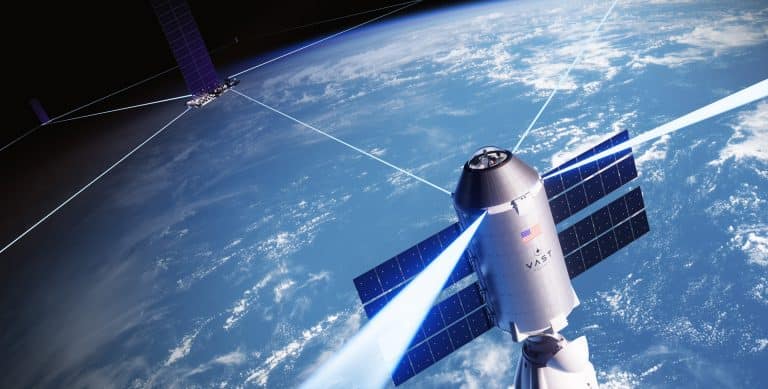
AI training guzzles power—data centers could consume 8% of global electricity by 2030. Enter orbital data centers: unlimited solar, no terrestrial grid limits. ⓭
- SpaceX’s Vision: Satellites with 100kW AI processors each, scaling to petawatts via Starship deliveries (100GW/year to orbit possible). ⓮ ⓭
- Feasibility: Starlink proves mass orbital ops; cooling via radiators, power from massive solar arrays. ⓯
- Competition: Bezos/Blue Origin eyes GW-scale; Schmidt invests in launches. ⓰
Opinion: This could eclipse Mars revenue short-term. Latency for global apps is viable; imagine xAI clusters in orbit. But radiation/heat challenges remain—watch for prototypes by 2028.
SpaceX IPO: Fueling the Rocket
Targeting June 18-30, 2026, at $1.75-2T valuation, raising $75B+. Roadshow early June; Nasdaq listing. ❸ ⓱
Investor Advice:
- Bull Case: Starlink subs exploding, Starship demos, DoD contracts. $1.75T implies 2x from Dec 2025 tender. ⓲
- Bear Risks: Regulatory hurdles (FCC spectrum), Starship delays, valuation froth (30% overpay?). ⓳
- Proxy Shares: Trade pre-IPO via CFDs if eligible. ⓲
Broader Implications and Expert Take
This package aligns Musk’s incentives perfectly—no payout without delivery. It signals to investors: SpaceX is all-in on disruption, not incrementalism.
Pros:
- Motivates moonshot focus.
- Attracts top talent chasing history.
Cons:
- Distraction from near-term profits?
- Ethical debates: Billionaire bonuses amid Earth issues.
My Verdict: Genius. In a world of short-termism, this bets on exponential progress. For space pros: Double down on Mars tech skills. Enthusiasts: Track Starship flights. Investors: Allocate 5-10% portfolio—volatility high, upside galactic.
To Mars and Beyond
SpaceX isn’t building rockets; it’s forging humanity’s destiny. Musk’s comp package cements that ethos, turning sci-fi into SEC filings. As the IPO looms, one thing’s clear: The stars are closer than ever.
Related Coverage
- SpaceX Starship V3 Flight 12: Historic Launch, Heat Shield Breakthrough, and the Road to Mars and Beyond
- SpaceX’s Star Turn in the Golden Dome: How Elon Musk’s Empire is Shaping America’s Next-Gen Missile Shield
- SpaceX ships 200th Falcon second stage, highlighting the flip-side of booster reuse
- SpaceX Starship V3: The Game-Changing Rocket Set to Redefine Human Spaceflight
- Starship V3: SpaceX’s Bold Leap Toward Fully Reusable Orbital Dominance – Maiden Flight Looms on May 19
- SpaceXAI and Anthropic Strike Historic Deal: Full Access to Colossus 1 Supercluster Ushers in a New Era of AI Compute Abundance