
Author: Gary Zhou

Elon Musk’s Strategic Pivot: SpaceX’s Moon City Race Before Mars – A Game-Changer for Multi-Planetary Life

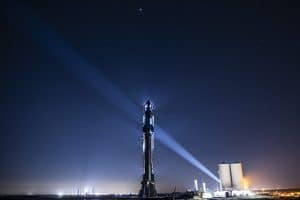
In a stunning revelation that’s sending shockwaves through the space community, Elon Musk has announced that SpaceX is shifting its immediate focus to building a self-growing city on the Moon. This isn’t a abandonment of the long-dreamed Mars colony—far from it—but a pragmatic acceleration toward humanity’s survival beyond Earth. Drawing from Musk’s recent posts on X (formerly Twitter), this pivot prioritizes speed, iteration, and risk mitigation. As a space exploration blogger with over a decade tracking SpaceX’s milestones—from Falcon 1 failures to Starship’s orbital triumphs—I’ll break down what this means, why it’s brilliant, and the challenges ahead. Buckle up; this could redefine our species’ timeline to becoming multi-planetary.

Starlink’s Epic Super Bowl Debut: SpaceX Goes Mainstream and Eyes Global Domination

In a move that signals a seismic shift for Elon Musk’s SpaceX, the company aired its first-ever Super Bowl commercial during Super Bowl LX on February 8, 2026. This wasn’t just any ad—it was a bold declaration that Starlink, SpaceX’s satellite internet powerhouse, is no longer a niche service for remote adventurers or enterprises. It’s gunning for your living room, your airplane seat, and every corner of the globe. As a space tech blogger who’s tracked Starlink since its beta days, I see this as the tipping point where satellite broadband becomes as ubiquitous as streaming services. Let’s dive deep into what this ad means, the explosive growth behind it, regional triumphs like Brazil, and what it spells for the future of connectivity.

Apple’s Project Titan Fiasco: When Unplugged Phones Killed the iCar Dream and Exposed Silicon Valley’s EV Delusions

Imagine this: Tesla engineers, the wizards behind the world’s most advanced EVs, facing a barrage of daily calls from Apple recruiters. Their response? Simply unplug the phones. This isn’t some urban legend—it’s straight from Elon Musk’s mouth in a recent podcast, revealing the desperate lengths Apple went to poach talent for its doomed “Project Titan.”

Tesla’s $100 Trillion Dream: Elon Musk’s “Not Impossible” Path to Dominance Through AI Convergence and Robotics

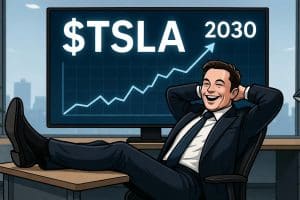
In the ever-evolving world of tech titans, few visions are as audacious as a $100 trillion market cap for Tesla. That’s not a typo—$100 trillion, nearly 65 times its current valuation of around $1.5 trillion, making it larger than today’s entire top 10 companies combined. Elon Musk himself called this “not impossible” on X, fueling speculation amid his companies’ accelerating “convergence.” As a tech investor and Tesla enthusiast with over a decade tracking Musk’s empire, I’m diving deep into Cathie Wood’s bold prediction, the latest convergence moves, Robotaxi/Optimus progress, and whether this sci-fi scenario could become reality by 2030 or beyond.

Seven Years On: The Tesla Roadster’s Cosmic Legacy and the Explosive Rise of SpaceX and Tesla

In the annals of space exploration, few moments capture the imagination quite like the Falcon Heavy’s maiden flight on February 6, 2018. Strapped atop this behemoth rocket wasn’t a satellite or scientific payload, but Elon Musk’s cherry-red Tesla Roadster, complete with a mannequin named Starman at the wheel, blasting David Bowie’s “Space Oddity” into the void. Critics called it a stunt; visionaries saw it as a declaration of intent. Fast-forward seven years to 2026, and that “stunt” has aged like fine wine, symbolizing the audacious risk-taking that propelled SpaceX and Tesla from precarious upstarts to trillion-dollar titans reshaping industries.

Tesla Cybertruck’s Powershare Grid Support: Turning Your Truck into a Grid-Saving Power Plant in Texas (and Soon California!)

Imagine your Cybertruck not just conquering off-road trails or hauling massive loads, but also stabilizing the electrical grid during peak demand—while padding your wallet with bill credits. That’s the promise of Tesla’s newly launched Powershare Grid Support program, a vehicle-to-grid (V2G) initiative kicking off in Texas. Announced just yesterday by the official Tesla Energy account on X, this “coming soon” feature builds on the Cybertruck’s existing bidirectional charging prowess, transforming it from a home backup beast into a community energy hero.

Elon Musk’s Masterclass in M&A: SpaceX Acquires xAI via Triangular Merger, Dodging Billions in Debt and Liabilities

As a tech and space industry veteran who’s tracked Elon Musk’s empire-building for over a decade, I can confidently say this week’s bombshell – SpaceX’s acquisition of xAI – isn’t just the largest M&A deal in history at $1.25 trillion; it’s a textbook example of surgical corporate strategy. Valuing SpaceX at $1 trillion and xAI at $250 billion, the deal consolidates Musk’s AI ambitions under his rocket powerhouse without the messy entanglements of debt, lawsuits, or taxes. But how? Enter the triangular merger – a structure so clever it feels like Musk pulled it from a sci-fi playbook. In this deep dive, we’ll unpack the mechanics, the wins, the risks, and what it means for SpaceX’s looming IPO and the future of orbital AI.

Elon Musk Crushes Starlink Phone Rumors: SpaceX Focuses on xAI Merger and Satellite Dominance

In the ever-buzzing world of Elon Musk’s tech empire, rumors of a “Starlink phone” have been swirling like satellites in low Earth orbit. Just yesterday, Reuters dropped a bombshell report suggesting SpaceX was gearing up to launch a direct-to-satellite mobile device to supercharge revenue ahead of a potential IPO. But true to form, Musk wasted no time shutting it down—twice—on X, declaring, “We are not developing a phone” and accusing Reuters of “lying relentlessly.” As a space tech blogger who’s tracked SpaceX’s meteoric rise for over a decade, this latest drama underscores a bigger picture: SpaceX is laser-focused on its core missions amid massive expansions like the recent xAI merger. Let’s dive deep into what really happened, why it matters, and what it means for the future of connectivity.

Will Tesla Be the Final Piece? Unpacking the SpaceX-xAI Mega-Merger and the Path to Musk’s “Trinity”

As a tech blogger who’s been tracking Elon Musk’s empire for over a decade—from Tesla’s early Roadster days to SpaceX’s Starship triumphs and xAI’s rapid Grok ascent—this week’s bombshell hits different. SpaceX has officially merged with xAI in a deal valuing the combined entity at a staggering $1.25 trillion, with SpaceX at $1T and xAI at $250B. This isn’t just corporate housekeeping; it’s the first domino in what could become Musk’s ultimate “Muskonomy”—a vertically integrated juggernaut blending AI, robotics, EVs, and space infrastructure. But the big question buzzing across Wall Street, X (formerly Twitter), and prediction markets: Is Tesla next?

Starlink Phone: SpaceX’s Game-Changing AI-Optimized Satellite Smartphone on the Horizon?

In the ever-evolving world of space technology, SpaceX continues to push boundaries beyond rockets and reusable spacecraft. The latest buzz from Reuters reveals that Elon Musk’s powerhouse is seriously considering a Starlink-branded phone – a dedicated mobile device designed to connect directly to the Starlink satellite constellation, bypassing traditional cell towers entirely. ❶ ❷ This isn’t just idle speculation; it’s a strategic pivot that could redefine global connectivity, especially as Starlink already dominates SpaceX’s revenue stream. As a space tech blogger who’s tracked Musk’s ventures for over a decade, I see this as the natural evolution of Starlink’s direct-to-device (D2D) ambitions – blending satellite internet with AI prowess in a handheld form factor.

Load more