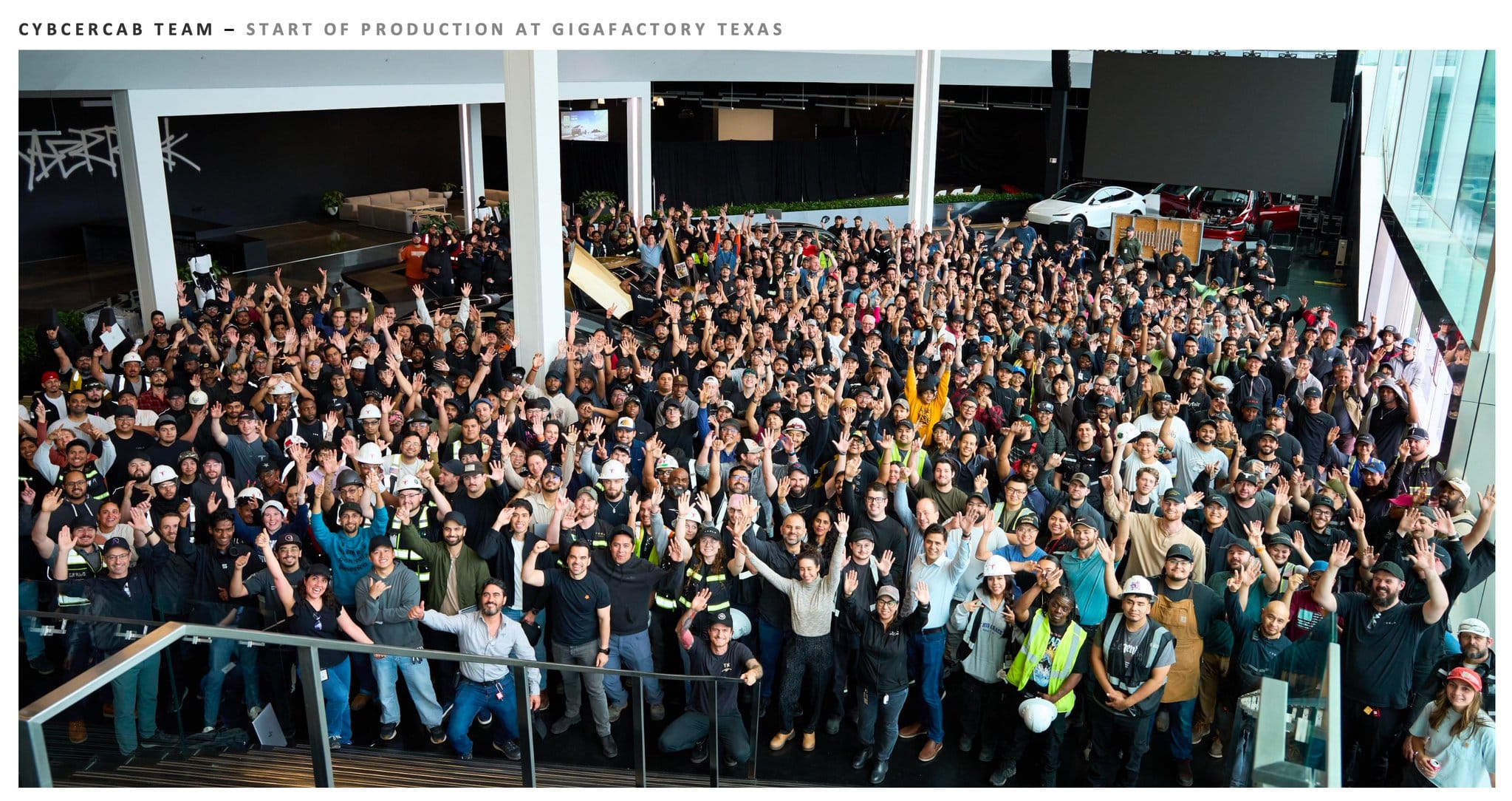
Tesla’s Cybercab Rolls Off the Line at Giga Texas: Ushering in the Autonomous Robotaxi Revolution
Key Takeaways
- Tesla’s Cybercab, a steering wheel-less and pedal-less autonomous vehicle, has entered production at Giga Texas.
- Engineered as a two-door, two-passenger coupe relying on vision-only Full Self-Driving with cameras and AI.
- Features a minimalist cabin with a large central display for passenger interface and comfort.
- Equipped with a 35 kWh battery offering 5.5 miles per kWh efficiency and 200-mile range.
- Supports inductive charging and lightweight aerodynamic design for optimal performance.
- Giga Texas ramps up dedicated production lines, building on 2026 prototypes alongside Model Y and Cybertruck.
- Dedicated platform strategy aims to minimize costs while enhancing safety through AI advancements.
- Enables Robotaxi network for affordable, driverless rides reducing accidents, emissions, and urban traffic.
- Includes accessibility for service animals and assistive devices.
- Faces challenges like regulatory approval and charging infrastructure, but signals strong FSD confidence.
Imagine hailing a ride that’s cheaper than a bus ticket, completely driverless, and engineered for seamless urban navigation—no steering wheel, no pedals, just pure AI smarts. That’s no longer science fiction; as of April 2026, Tesla’s Cybercab has officially entered production at Gigafactory Texas.❶ ❷This two-passenger coupe marks a pivotal moment in Tesla’s Master Plan, shifting from personal vehicles to a scalable Robotaxi network that could slash transportation costs, emissions, and accidents. Drawing from recent sightings, executive confirmations, and spec reveals, this post dives deep into the Cybercab’s production ramp, groundbreaking features, efficiency feats, and the road ahead. This reads as Tesla’s boldest bet yet on Full Self-Driving (FSD)—one that could redefine city life
Production Milestone: Giga Texas Fires Up the Cybercab Lines
Tesla’s Austin powerhouse, Giga Texas, is now the epicenter of autonomous vehicle manufacturing. Elon Musk confirmed during the Q1 2026 earnings call that production has begun, defying skeptics despite ongoing regulatory scrutiny.❶
Timeline: From Prototypes to Mass Output
- Early 2026 Kickoff: The first Cybercab unit rolled off the line on February 18, 2026, with pilot production scaling rapidly. ❸
- April Mass Production Target: Tesla hit volume production in April, aiming for an astonishing one vehicle every 10 seconds at peak efficiency. ❹ This builds on 2026 prototypes tested alongside Model Y and Cybertruck lines.
- Rapid Ramp-Up: By early April, observers spotted 60+ units staged at Giga Texas lots, signaling aggressive scaling. ❺ ❻
Dedicated lines use modular sub-assemblies, minimizing costs via Tesla’s next-gen platform.❼My take? This unibody design shaves 60% off parts compared to Model 3, turbocharging economies of scale.
On-Site Buzz: Drones and Sightings Confirm Momentum
Aerial footage shows Cybercabs autonomously driving off the line—glossy bronze-gold finishes gleaming under Texas sun.❷Dozens parked outbound hint at fleet testing in Austin, with expansions eyed for Dallas and Houston Robotaxi services.❽Challenges like NHTSA approvals persist, but no 2,500-unit cap applies yet.❶
Design and Engineering: Minimalist Autonomy Perfected
The Cybercab ditches legacy controls for a vision-only FSD system—cameras and AI handle everything, no lidar or radar crutches.
Cabin and User Experience
- Two-Door Coupe Layout: Sleek, low-profile for aero gains; seats two passengers comfortably.
- Central Command Screen: Massive display manages entertainment, climate, and ride controls—think Netflix on wheels.
- Indulgent Minimalism: No clutter, vegan leather, ambient lighting for a lounge-like vibe.
Accessibility Wins
Tesla prioritized inclusivity: wheelchair-height seats ease entry/exit, ample space for service animals and assistive devices.❾This isn’t an afterthought; it’s baked in for Robotaxi ubiquity, making mobility equitable.
Opinion: In a world of bloated SUVs, the Cybercab’s purpose-built ethos is refreshing. It proves less is more for robotaxis—safety surges as humans stay out of the loop.
Powertrain and Efficiency: Small Pack, Massive Range
Forget oversized batteries; Cybercab redefines efficiency.
Battery and Range Breakdown
| Spec | Details |
|---|---|
| Battery Capacity | 35 kWh (sub-50 kWh pack) ❿ |
| Efficiency | 5.5 miles per kWh—tops Lucid Air’s records ⓫ |
| Range | ~200-300 miles real-world ⓬ ⓭ |
Lightweight aero design and optimized motors hit ~6 mi/kWh targets.⓮For Robotaxi duty—short hops, frequent charges—this is ideal.
Inductive Charging Innovation
No plug-fumbling: Wireless inductive pads enable auto-parking recharge. FCC-approved outdoor ultra-wideband tech clears the path; full charges in <30 minutes.⓯ ❾A manual port sighting suggests hybrid flexibility during ramp-up.⓰
Insight: At $0.20-0.30 per ride, efficiency ensures profitability—Cybercab could undercut Uber by 5x.
Robotaxi Network: Tesla’s Urban Transformation Play
Cybercab powers Tesla’s fleet service, launching unsupervised FSD rides.
Expansion Roadmap
- Texas Launch: Austin live; Dallas/Houston scaling. ⓱
- National Rollout: Phoenix, Miami, Vegas, Orlando by late 2026. ⓲
- Global Ambitions: Bay Area safety-driver tests pave way.
Priced <$30k, owners can add to the network for passive income.⓳Projections: Millions deployed, cutting accidents 90% via AI.
Economic Model
- OpEx: <$0.20/mile vs. $1+ for humans.
- Fleet Scale: Giga Texas output feeds exponential growth.
Advice for investors: Watch Q2 earnings for ramp metrics—Robotaxi could eclipse auto sales.
Challenges and Realistic Hurdles
No revolution without friction:
- Regulatory Maze: NHTSA/FMVSS approvals for no-controls vehicles.
- Infra Gaps: Wireless pads need depots; Superchargers as backup.
- FSD Maturity: Winter tests passed, but edge cases loom. ⓴
Yet, Tesla’s data edge (billions of miles) breeds confidence.
Future Implications: My Bold Predictions
Cybercab isn’t just a car—it’s mobility-as-a-service. Expect:
- Traffic Melt: Shared fleets reduce vehicles 80%.
- Emission Plunge: EVs + efficiency = greener cities.
- Social Shift: Ownership fades; hailing rules.
As a blogger tracking Tesla since Model S, I opine: If FSD v14+ delivers, 2027 sees Robotaxi dominance. Buy in early—disruptors win.
What do you think? Will Cybercab kill rideshares? Drop comments below!
Related Coverage
- Tesla Cybercab Ignites the Robotaxi Revolution: First Production Units Autonomously Roll Off Giga Texas Assembly Line
- Tesla’s Autonomy Blitz: Miami Pop-Up, Robotaxi Surge, and Cybercab’s Road to Revolutionizing Mobility
- Tesla Semi Hauls Cybercabs: Iconic First Delivery Signals Robotaxi Revolution from Giga Texas
- Tesla’s Mysterious Model Y L Prototype at Giga Texas: A Game-Changer for American Families on the Horizon?
- Tesla’s Optimus Revolution: From Fremont Pilot to Giga Texas Mega-Factory – The Dawn of 10 Million Robots Per Year
- Tesla’s Secret Cybercab Car Wash in Las Vegas: Building the Ultimate Autonomous Fleet Hub