Elon Musk’s Brutal Honesty: Tesla Ditches Optimus Hand Patent That “Didn’t Actually Work” – A Deep Dive into Robotics’ Toughest Challenge
Key Takeaways
- Elon Musk revealed the Tesla Optimus hand patent from last week is already outdated, as the company has moved on to a new design.
- Musk’s direct quote on X: “We already changed the design. This one didn’t actually work,” shared late at night in response to a post.
- The rolling contact mechanism in the fingers failed real-world testing due to issues with durability, grip stability, and precision for delicate tasks.
- Replicating the human hand’s complexity—27 bones, tendons, and sensors—remains the biggest challenge in Optimus development.
- Patents often lag behind Tesla’s rapid iteration; by publication, the tech has evolved significantly.
- Tesla’s transparency about prototype failures builds trust with investors, engineers, and fans, emphasizing rigorous testing over hype.
- Admitting design flaws signals confidence in Optimus’s fast-paced progress toward reliable humanoid dexterity.
In the fast-paced world of humanoid robotics, few moments capture the raw reality of innovation like Elon Musk’s late-night X post on April 19, 2026. Responding to buzz around a freshly published Tesla Optimus hand patent, Musk dropped a bombshell: “We already changed the design. This one didn’t actually work.”❶ ❷Just days after the patent hit public view – detailed in international filings around April 16 – Tesla admitted the design bombed in real-world tests. This isn’t hype deflation; it’s a masterclass in engineering transparency from a company racing toward production-ready humanoid robots.
This reads as pivotal moment Patents are often yesterday’s news in Tesla’s iterate-or-die culture, but publicly torching one underscores the monumental hurdles in replicating the human hand. Let’s unpack the failed design, why hands remain robotics’ Achilles’ heel, and what this means for Optimus Gen 3 (V3) and the broader industry.❸
The Patent That Promised the Moon – And Fell Flat
The patents in question (including WO 2026/080701 and related filings) unveiled Tesla’s ambitious Optimus V3 hand: a tendon-driven marvel with25 actuators, 22 degrees of freedom (DoF), and innovative rolling contact mechanismsin the finger joints.❹ ❺This was no simple gripper. Diagrams showed:
- Heavy actuators relocated to the forearm for better weight distribution and wrist flexibility.
- Sophisticated cable routing through a pulley-less wrist, mimicking human tendons.
- Rolling joints connecting finger segments, designed for smooth, human-like motion without traditional hinges. ❻
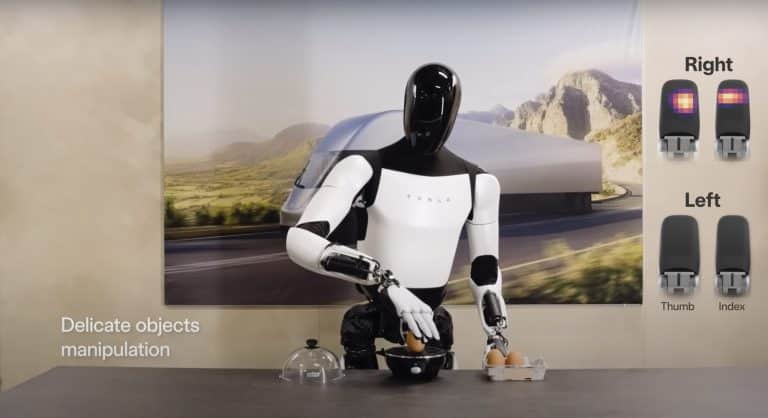
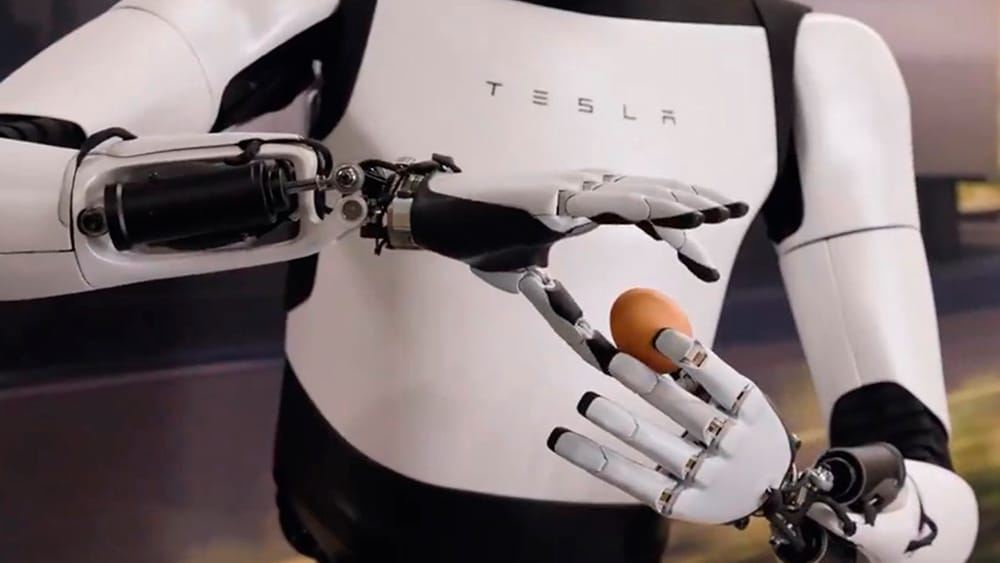
Tesla hyped it as a leap toward “human-level dexterity,” capable of threading needles or cracking eggs – feats demoed in earlier Optimus videos.❼With 22 DoF (vs. human hand’s ~27), it targeted precision tasks in factories and homes. But Musk’s quip revealed the truth: real-world testing exposed fatal flaws.
Why the Rolling Contact Mechanism Failed
The star feature – those rolling contacts – crumbled under pressure. Here’s what went wrong, based on engineering analysis and Musk’s indirect confirmation:
- Durability Issues: Rolling elements wear out fast under repeated stress, unlike rigid hinges. In dynamic robot tasks, friction and impacts caused premature failure. ❽
- Grip Stability: The mechanism lacked reliable force feedback, leading to slips during variable loads (e.g., picking fragile objects). ❹
- Precision Shortfalls: Delicate operations demanded sub-millimeter accuracy, but rolling play introduced variability – fine for prototypes, disastrous for production. ❾
Engineers iterated to a “new design” overnight, scrapping the roller for something more robust (details TBD, but likely hybrid tendon-servo setups).❿Patents lag Tesla’s velocity – by publication, the tech was obsolete.⓫
Hands: The Hardest Puzzle in Humanoid Robotics
Musk has long called the hand “the biggest unsolved problem” for humanoids.⓬Why? The human hand packs27 bones, 30+ muscles/tendons, and thousands of sensorsinto a compact, power-efficient package evolved over millennia. Robots must match this with off-the-shelf tech – no cheat codes.
Top Challenges Breaking Engineers
From my analysis of industry reports and Tesla’s journey:
- Dexterity vs. Strength Tradeoff: Hands need piano-finger finesse and lug-nut torque. Optimus aims for both, but actuators overheat or bulk up. ⓭
- Power and Heat: 25+ motors in a palm generate heat; forearm-housing helps, but cables snap. ⓮
- Sensory Feedback: Tactile sensors for “feeling” are nascent. Without them, robots crush eggs instead of cracking them. ⓯
- Cost and Scalability: Gen 2 hands cost thousands per unit. Mass production (Optimus target: millions/year) demands <$20/hand. ⓰
- Safety: Compliant materials prevent harm, but reduce grip. A warehouse bot can’t drop boxes or amputate fingers. ⓱
| Challenge | Human Hand | Current Robot Hands (e.g., Optimus Gen 2) | Gap |
|---|---|---|---|
| DoF | 27 | 11-22 | Precision motion |
| Power Density | Forearm muscles | Onboard/forearm motors | Size/heat |
| Sensors | 17,000+ touch points | <100 basic sensors | “Feel” |
| Cost | N/A | $1,000+ | Mass production |
Competitors like Figure AI and Boston Dynamics face identical woes – Atlas flips but fumbles objects; Figure 01 grips tools crudely.⓯
Tesla’s Fail-Fast Philosophy: Genius or Risky?
Tesla’s candor is refreshing. Unlike secretive rivals (e.g., China’s Unitree), Musk broadcasts flops, fostering trust.⓫Investors cheer: Q1 2026 earnings loom with Optimus pilots eyed for factories.❸
My Opinion: This builds a moat. Engineers worldwide study Tesla’s patents (even failed ones), accelerating the field. Fans get realism over vaporware. But risks abound – stock dips on delays? Competitors poach talent?
Advice for Robotics Builders:
- Prototype Ruthlessly: Test in real chaos (dirt, impacts), not labs.
- Hybrid Designs: Blend tendons (dexterity) + direct drive (power).
- AI Integration: Use vision/language models for “intent” over perfect sensors.
- Open-Source Wins: Share failures like Tesla to crowdsource fixes.
What’s Next for Optimus Hands – And Humanity?
Optimus V3 targets Q1 2026 rollout, with hands upgraded for 50+ actuators in some leaks (evolved from 22 DoF).⓲Expect demos soon: egg-cracking 2.0, maybe guitar strums. By 2027, factory swarms could slash labor costs 80%.
Broader impact? Humanoids could add $5T to GDP by 2050, per ARK Invest echoes.⓯But ethical pitfalls loom: job loss, dependency. Tesla’s transparency? A beacon.
This “failure” isn’t defeat – it’s progress. Stay tuned; Musk’s next tweet could unveil the hand that changes everything.