SpaceX’s Unrivaled Rise: Securing $178.5M Space Force Contract for SDA-4 Missile-Tracking Satellites Amid 60% NSSL Phase 3 Dominance
Key Takeaways
- SpaceX secured a $178.5M Space Force contract (SDA-4) for two Falcon 9 launches of missile tracking satellites in Q3 2027 from Cape Canaveral and Vandenberg.
- Satellites built by Sierra Space to enhance U.S. missile threat detection and tracking from orbit.
- Award under National Security Space Launch Phase 3 Lane 1 for faster, more competitive payload delivery.
- Col. Matt Flahive (SSC program director) emphasized Lane 1’s flexibility for quicker satellite orbits.
- Recent wins include four GPS III satellites shifted from ULA’s Vulcan (grounded by anomaly) to SpaceX Falcon 9.
- SpaceX sued Air Force in 2014 to break ULA monopoly, now set for 60% of Phase 3 launches worth ~$6B through 2032.
- Expanding to missile defense, GPS, comms, and recon payloads boosts investor interest ahead of SpaceX IPO.
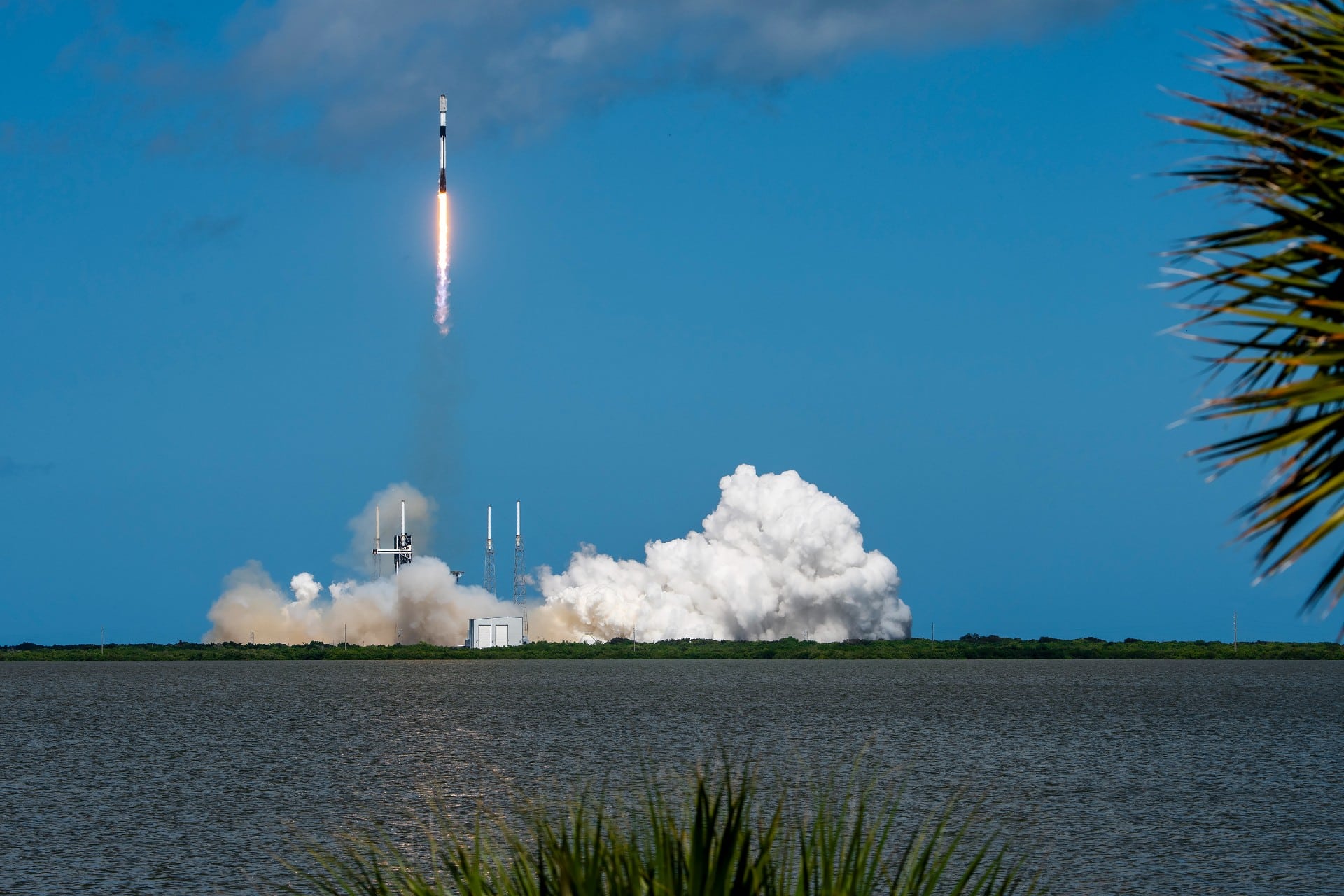
In the high-stakes arena of national security space launches, SpaceX continues to solidify its position as the undisputed leader. On April 1, 2026, the U.S. Space Force’s Space Systems Command (SSC) awarded SpaceX a $178.5 million task order under the National Security Space Launch (NSSL) Phase 3 Lane 1 program. This contract, dubbed SDA-4, will see two Falcon 9 rockets loft dozens of Sierra Space-built missile-tracking satellites into orbit starting in the third quarter of fiscal year 2027—one from Cape Canaveral Space Force Station in Florida and another from Vandenberg Space Force Base in California. ❶ ❷ ❸
This isn’t just another win for Elon Musk’s rocket company; it’s a testament to SpaceX’s reliability, cost-effectiveness, and rapid deployment capabilities in an era where missile threats demand swift orbital responses. As Col. Matt Flahive, SSC’s system program director for Launch Acquisition, aptly put it: “Delivery of national defense capabilities to the joint force is at the forefront of our mission and our dual-lane Phase 3 strategy ensures our ability to reliably deliver space capability to the warfighters when and where they need it.” ❶ In this deep dive, we’ll unpack the contract details, trace SpaceX’s journey from underdog to powerhouse, analyze its growing market share, and explore what this means for U.S. defense, investors, and the future of space launches.
Unpacking the SDA-4 Contract: Details and Deliverables
At the heart of this award is the Space Development Agency’s (SDA) SDA-4 mission, which aims to enhance America’s missile detection and tracking prowess from space. Sierra Space, a key player in the burgeoning New Space economy, is constructing “dozens” of these satellites under a prior $740 million SDA contract awarded in January 2024. ❹ ❸ These proliferated satellites will form part of the SDA’s Tracking Layer, contributing to a resilient architecture capable of spotting hypersonic and ballistic missile threats in real-time—a critical upgrade as adversaries like China and Russia advance their arsenals.
Key Contract Specs:
- Value: $178.5 million (firm-fixed price task order). ❶
- Launches: Two Falcon 9 missions.
- Launch 1: Cape Canaveral Space Force Station (Florida).
- Launch 2: Vandenberg Space Force Base (California).
- Timeline: Q3 FY2027 (second half of calendar 2027).
- Payload: Missile-tracking satellites by Sierra Space for SDA’s proliferated low-Earth orbit (LEO) constellation.
This Lane 1 award leverages SpaceX’s proven Falcon 9, which has revolutionized rideshare and dedicated missions with its reusability. Unlike more complex Lane 2 payloads, Lane 1 focuses on “commercial-style” missions that prioritize speed and affordability, allowing the Space Force to orbit capabilities faster amid evolving threats. ❺
NSSL Phase 3 Lane 1: Engineered for Agility and Competition
The NSSL program, managed by SSC, is the backbone of U.S. military space access, budgeted at a staggering $13.7 billion for ~54 missions from FY2025-2029 (with launches extending to 2032). ❺ Phase 3’s innovative dual-lane structure is a game-changer:
- Lane 1: For less-demanding missions like SDA-4, emphasizing rapid deployment. Only SpaceX and United Launch Alliance (ULA) are certified, but ULA’s Vulcan Centaur is grounded pending anomaly investigations. ❸
- Lane 2: High-priority, complex missions (e.g., NRO spy sats, GPS), where SpaceX dominates as “Requirement 1” provider.
Col. Flahive highlighted Lane 1’s edge: “Our Lane 1 contract affords us the flexibility to deliver satellites for our customers, like SDA, more easily and faster than ever before to all the orbits our satellites need to reach.” ❶ ❷ This flexibility is vital for proliferated constellations like SDA’s, which aim for hundreds of satellites to overwhelm adversaries’ anti-satellite weapons.
Why Lane 1 Matters for SDA’s Vision
SDA’s strategy—pioneered under Frank Calvelli—relies on cheap, mass-produced sats launched frequently. SpaceX’s $89.25M per launch here undercuts traditional costs, enabling the Tranche 3 Tracking Layer (72 sats across vendors). ❻
SpaceX vs. ULA: A David-vs-Goliath Saga
SpaceX’s path to this contract is a masterclass in disruption. In 2014, facing ULA’s monopoly (backed by Boeing and Lockheed Martin), SpaceX sued the Air Force, alleging unfair sole-source deals worth billions. The settlement opened competition, slashing prices by 50-60%. ❷
Milestones in the Rivalry:
- Phase 2 (2019-2027): ULA won 60% initially, but SpaceX surged with flawless Falcon 9/Heavy records. ❼
- Vulcan Setbacks: ULA’s Dec 2024 anomaly grounded it; four GPS IIIF launches shifted to SpaceX. ❷
- Recent Wins: SpaceX snagged $714M for five FY2026 Lane 2 missions vs. ULA’s two ($428M). ❺
Today, SpaceX boasts ~60% of Phase 3 missions (~28 of 54), valued at ~$6B through 2032, while ULA clings to 19 and Blue Origin eyes 7 (post-New Glenn cert). ❺ ❷
| Provider | Phase 3 Share | Est. Missions | Recent FY2026 Awards |
|---|---|---|---|
| SpaceX | ~60% | ~28 | 5 ($714M) |
| ULA | ~35% | 19 | 2 ($428M) |
| Blue Origin | ~5-13% | Up to 7 | 0 |
Strategic Insights: Elevating U.S. Missile Defense
This contract bolsters the Proliferated Warfighter Space Architecture (PWSA), integrating tracking with transport layers for end-to-end kill chains. Opinion: In a multipolar threat environment, SpaceX’s cadence (100+ launches/year) outpaces legacy providers, ensuring deterrence. Advice for defense analysts: Watch SDA’s Tranche 3 ($3.5B awards)—SpaceX’s role could expand to 18+ sats via Rocket Lab parallels. ❽
For startups like Sierra Space, partnering with SpaceX validates vertical integration, but risks over-reliance on one launcher.
Investor Angle: Fueling the Pre-IPO Fire
With Starship nearing military cert and this adding GPS/comms/recon to the manifest, SpaceX’s valuation (rumored $350B+) surges. The IPO filing buzz amplifies: Stable revenue from NSSL (~$1B+ annually) de-risks commercial bets like Starlink. Tip: Track FY2027 manifests—more Lane 1 wins could push shares 20-30% post-IPO.
The Road Ahead: Starship, Blue Origin, and Beyond
By 2032, Phase 3 ends, but Phase 4 looms with Starship as the heavy-lifter. Challenges: ULA’s Vulcan recovery, Blue Origin’s delays. Optimistically, competition drives innovation—expect sub-$50M/launch norms.
In conclusion, SDA-4 cements SpaceX’s era. From 2014 lawsuit to 60% dominance, it’s reshaped U.S. spacepower. Warfighters win, taxpayers save, investors cheer. Stay tuned—space is heating up.