Category: Starship

SpaceX’s Meteoric Shift: Rockets to AI Supremacy with xAI Merger, Orbital Supercomputers, and a $60B Cursor Gambit

In the ever-accelerating world of technology, few companies embody disruption like SpaceX. Founded in 2002 with the audacious goal of making humanity multi-planetary through routine spaceflight, SpaceX has long been synonymous with reusable rockets, Starship megalaunches, and Starlink’s global internet constellation. But as of April 2026, Elon Musk’s flagship enterprise is undergoing a profound transformation—mirroring Tesla’s pivot from electric vehicles to AI and robotics dominance. SpaceX is no longer just a space company; it’s morphing into the ultimate AI infrastructure juggernaut, leveraging orbital real estate to sidestep Earth’s terrestrial bottlenecks.

Elon Musk’s Unbreakable Control: Decoding SpaceX’s Dual-Class IPO Strategy and the $1.75 Trillion Launch

As a veteran tech and space industry blogger with over a decade tracking Elon Musk’s ventures—from Tesla’s electric revolution to Neuralink’s brain-machine dreams—I’ve seen founder-led companies redefine industries. But SpaceX’s impending IPO stands apart. Valued at a staggering $1.75 trillion and poised to raise $75 billion, this could eclipse every public debut in history, including Saudi Aramco’s 2019 record. At its core? A dual-class share structure that locks in Musk’s dominance, granting him 79% voting control even after public markets flood in. Is this a masterstroke of visionary leadership or a red flag for investors? Let’s dive deep into the prospectus details, Starlink’s profitability surge, historical context, and what it means for your portfolio.

SpaceX’s Unrivaled Rise: Securing $178.5M Space Force Contract for SDA-4 Missile-Tracking Satellites Amid 60% NSSL Phase 3 Dominance

In the high-stakes arena of national security space launches, SpaceX continues to solidify its position as the undisputed leader. On April 1, 2026, the U.S. Space Force’s Space Systems Command (SSC) awarded SpaceX a $178.5 million task order under the National Security Space Launch (NSSL) Phase 3 Lane 1 program. This contract, dubbed SDA-4, will see two Falcon 9 rockets loft dozens of Sierra Space-built missile-tracking satellites into orbit starting in the third quarter of fiscal year 2027—one from Cape Canaveral Space Force Station in Florida and another from Vandenberg Space Force Base in California.

Revolutionizing Global Connectivity: SpaceX Unveils Starlink Mobile V2 – 5G Speeds from the Stars

Imagine a world where your smartphone seamlessly switches from a terrestrial cell tower to a satellite orbiting 550 kilometers above Earth, delivering Netflix-quality streaming in the middle of the Sahara Desert or during a hurricane blackout. That’s no longer science fiction—it’s the promise of SpaceX’s newly previewed Starlink Mobile V2 satellites. Rebranded from the previous “Direct-to-Cell” moniker, Starlink Mobile is poised to transform how we stay connected, blending satellite tech with everyday mobile networks for unprecedented coverage.

Texas’ $84.6 Million Coastal Lifeline: How Starbase and SpaceX Are Leading the Charge in Gulf Beach Restoration

In a major win for Texas’ vulnerable Gulf Coast, the Texas General Land Office (GLO) has pumped $84.6 million into critical resilience projects across 14 counties, with Elon Musk’s burgeoning Starbase city—home to SpaceX’s revolutionary Starship program—emerging as a key beneficiary. This funding isn’t just about sand and dunes; it’s a strategic investment in protecting communities, wildlife, and even the future of space exploration from the relentless forces of erosion, storms, and climate change. As a blogger specializing in the intersection of space innovation, environmental sustainability, and coastal policy, I’ve been tracking Starbase’s evolution from a remote rocket pad to a full-fledged city. This announcement underscores a rare harmony between high-tech ambitions and ecological stewardship—let’s dive deep into what it means.

Elon Musk’s Epic Pivot: SpaceX Swallows xAI, Bankers Tackle $18 Billion Debt Bomb Before Historic IPO

In the high-stakes world of Elon Musk’s empire, where rockets pierce the heavens and AI dreams challenge the stars, the latest bombshell is a game-changer. SpaceX has officially merged with xAI, ballooning into a colossal $1.25 trillion behemoth, but not without inheriting a staggering $18 billion debt pile from Musk’s AI venture. Now, Wall Street’s finest—led by Morgan Stanley—are scrambling to refinance that debt mountain ahead of what could be the largest IPO in history. Is this Musk’s masterstroke for interplanetary AI dominance, or a risky debt-fueled house of cards? As a blogger who’s tracked Musk’s ventures from Tesla’s early days to Starship’s fiery tests, I see this as a brilliant, if audacious, consolidation play. Let’s dive deep into the details, implications, and what it means for investors like you.

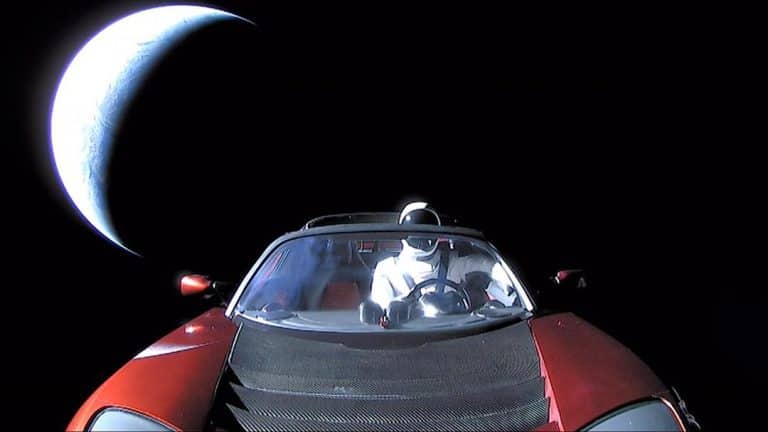
From Roadster to Asteroid: The Intriguing Journey of Elon Musk’s Space-Bound Tesla

In a world captivated by technological advancements and space exploration, few stories capture our collective imagination like Elon Musk’s audacious decision to launch a Tesla Roadster into space. Originally intended as a demonstration of SpaceX’s Falcon Heavy capabilities, this event transcended its technical ambitions, becoming a cultural milestone. But in a twist of cosmic irony, the vehicle was recently mistaken for an asteroid by astronomers, bringing it once again into the headlines. This blog post explores the nuances of this fascinating incident, the role of the institutions involved, and the technological advancements that have unfolded since the Roadster’s launch.

Load more