Elon Musk’s Audacious Claim: Tesla Optimus as the First Von Neumann Machine – Paving the Way for Interplanetary Civilization
Key Takeaways
- Elon Musk states Tesla’s Optimus will be the first real-world Von Neumann machine, capable of self-replicating and building civilization on any viable planet.
- In response to an X post pondering sci-fi timelines, Musk emphasized Optimus’s potential for autonomous large-scale tasks without intervention.
- Musk reiterates that Optimus will be Tesla’s biggest product ever.
- A Von Neumann machine is a theoretical self-replicating system proposed by John von Neumann, using local materials to create copies for interstellar tasks.
- Musk’s vision integrates Optimus with SpaceX efforts like Starship for interplanetary exploration and robotic production beyond Earth.
In a recent post on X that sent ripples through the tech and space communities, Elon Musk declared: “Yes. Optimus will be the first Von Neumann machine, capable of building civilization by itself on any viable planet.” ❶ ❷ This isn’t hyperbole from a sci-fi novel—it’s Musk doubling down on Tesla’s humanoid robot, Optimus, as not just a factory worker, but a self-replicating pioneer that could terraform other worlds. As a blogger who’s followed Musk’s ventures from SpaceX’s early Falcon 1 failures to Starship’s orbital triumphs, this vision blends Tesla’s AI prowess with SpaceX’s rocketry in ways that could redefine humanity’s future. But is it feasible, or just another Musk moonshot? Let’s dive deep into the tech, timelines, challenges, and transformative potential.
Understanding the Von Neumann Machine: From Theory to Tesla Reality
The concept of a Von Neumann machine traces back to mathematician John von Neumann in the mid-20th century. He envisioned self-replicating systems—devices that could use local resources to duplicate themselves, perform tasks, and expand exponentially without human intervention. ❸ In space exploration contexts, these are often called Von Neumann probes: spacecraft that land on a planet, mine asteroids or regolith for raw materials, manufacture copies of themselves, and dispatch those replicas to new star systems. The result? A galactic network of explorers and builders in mere millennia, solving the Fermi Paradox (“Where is everybody?”) by suggesting advanced civs might already be probing silently. ❹
- Core Components of a Von Neumann Probe:
- Probe/AI Core: Advanced intelligence for navigation, resource analysis, and decision-making.
- Manufacturing Module: Factories to process materials into parts (e.g., 3D printing solar panels from lunar dust).
- Replication Blueprint: Universal constructor that builds identical copies. ❺
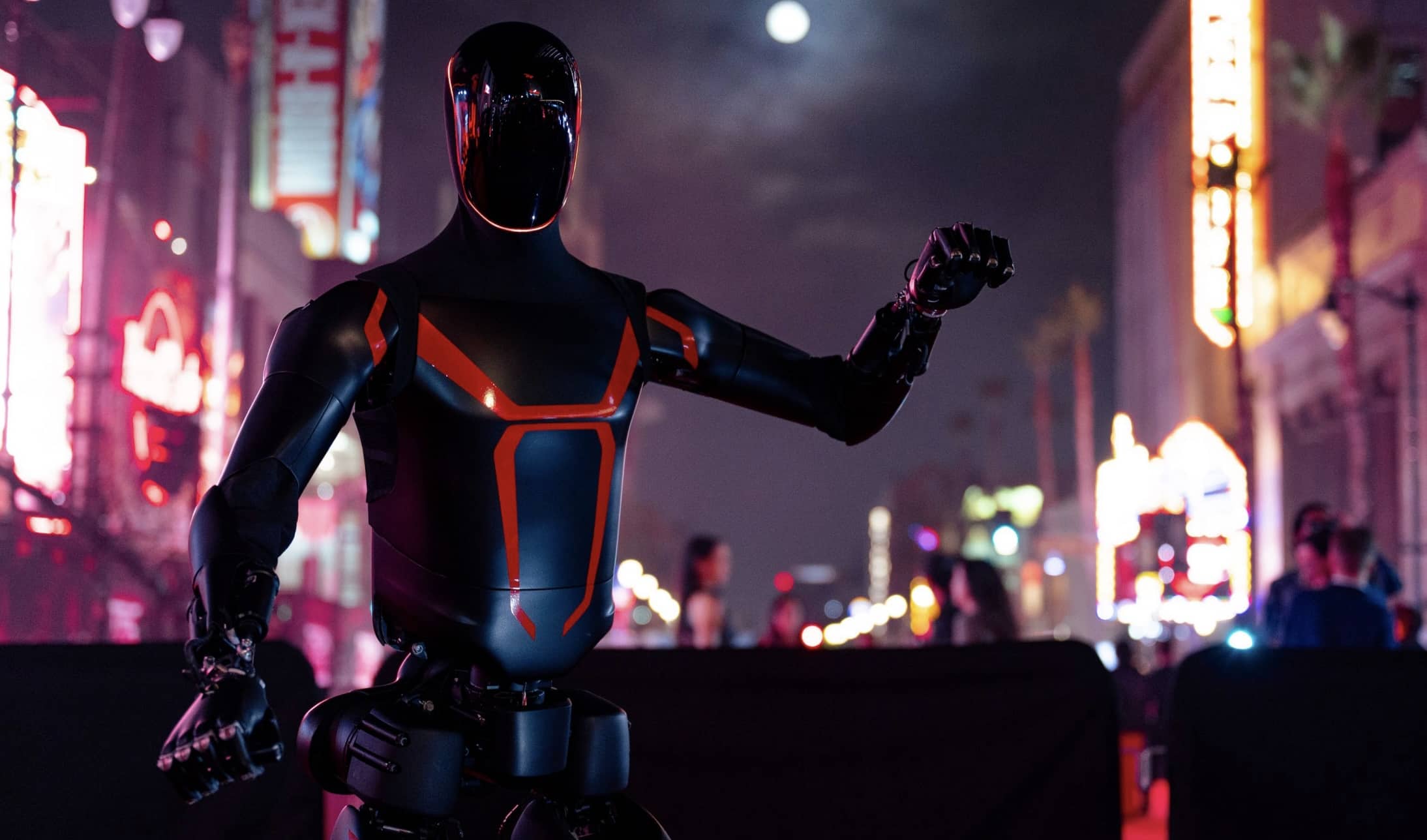
Musk’s twist? Optimus isn’t a probe—it’s a humanoid robot optimized for Earth’s factories first, then adapted for extraterrestrial harshness. Imagine legions of Optimus bots landing on Mars, mining iron from regolith, smelting it into actuators, and bootstrapping robot factories. No humans needed. This shifts Von Neumann from abstract math to tangible hardware.
Musk’s Sci-Fi Shoutout: The X Post That Sparked It All
The statement came in reply to an X user pondering if sci-fi timelines were accelerating into reality. Musk’s full response elevates Optimus beyond tools: “Tesla’s biggest product ever.” ❻ Tesla Owners Silicon Valley and others amplified it, fueling speculation. ❼ Musk has echoed this “biggest product” line before, but tying it to Von Neumann amps the stakes—Optimus could eclipse EVs in revenue, potentially trillions if scaled interplanetarily.
This isn’t isolated. Musk has long fused Tesla and SpaceX: Optimus for Mars base-building, powered by Starship cargo hauls.
Optimus Today: From Prototypes to Production Ramp-Up
Tesla’s humanoid journey started at AI Day 2021 with a wobbly actor in a suit. Fast-forward to 2026: Optimus is iterating rapidly.
Current Capabilities and Gen 3 Hype
- Gen 2 Milestones: Folding laundry, sorting Legos, drilling screws—rote tasks in labs. ❽
- Gen 3 Reveal: Q1 2026 (Feb/March), with “major upgrades” like advanced hands (22+ degrees of freedom for human-like dexterity) and FSD AI integration. ❾ ❿
- Production Timeline:
Tesla’s hiring spree (110+ Optimus jobs) and Chinese actuator orders signal seriousness. ⓮ ⓯ Early bots handle kung fu balance, 3D environment mapping via cameras/sensors.
SpaceX Synergy: Starship to Mars by Late 2026
Musk confirmed Starship Mars missions end-2026, carrying Optimus robots for surface ops. ⓰ ⓱ Picture it:
- Starship lands 10-100 Optimus units.
- Bots mine water ice, build solar farms, replicate using in-situ resources.
- Von Neumann bootstrap: One bot becomes thousands, erecting habitats for human follow-ups.
This “interplanetary ecosystem” leverages Tesla’s manufacturing (gigacasting for robot parts) and SpaceX’s logistics.
Why Optimus Dwarfs Tesla’s EVs: Economic and Strategic Moonshot
Musk calls it “Tesla’s biggest product ever” for good reason:
- Market Size: Labor shortages in factories/homes; GDP boost via “incredibly capable” bots. ⓲
- Revenue Potential: At $20K/unit, 1B bots = $20T market (global labor equivalent).
- Strategic Edge: Dojo supercomputer trains on FSD data; synergies cut R&D costs.
Investor Advice: Watch Q1 2026 reveal—slippage could tank stock, but hits unlock 10x upside. Diversify into suppliers (actuators, batteries).
Challenges: Sci-Fi Hype vs. Engineering Reality
Skeptics abound:
- Self-Replication Hurdles: Mining/冶炼 on Mars? Efficiency losses per generation limit to ~1,000 copies before degradation. ⓳
- AI Safety: Unsupervised civ-builders risk “grey goo” scenarios or misalignment.
- Timeline Risks: Musk’s history (FSD delays); 2026 CapEx $20-40B strains balance sheet. ⓫
- Competition: Figure AI, Boston Dynamics; Chinese firms scaling fast.
My Take: Feasible in decades, not years. Optimus excels at dexterity Earth tasks; space needs radiation-hardened variants. Prioritize hybrid human-bot teams first.
| Challenge | Mitigation Strategy | Timeline Risk |
|---|---|---|
| Resource Processing | In-situ demos via Starship uncrewed | High (2028+) |
| Replication Fidelity | Iterative AI via Dojo | Medium |
| Regulatory/Ethics | FAA/NASA approvals | Low |
The Bigger Picture: Humanity’s Multi-Planetary Leap
If Optimus nails Von Neumann, we crack Kardashev Type 1+. Mars bases self-sustain; probes seed exoplanets. Downsides? Job displacement (advice: upskill in AI oversight); existential risks (align AI now!).
Societal Prep Tips:
- Workers: Learn robot programming—hybrids win.
- Policymakers: Universal basic services for abundance era.
- You: Follow Tesla earnings; invest ethically.
Musk’s vision isn’t just robots—it’s evolution. Optimus could be the seed of stellar civilization. 2026 is crunch time; buckle up.