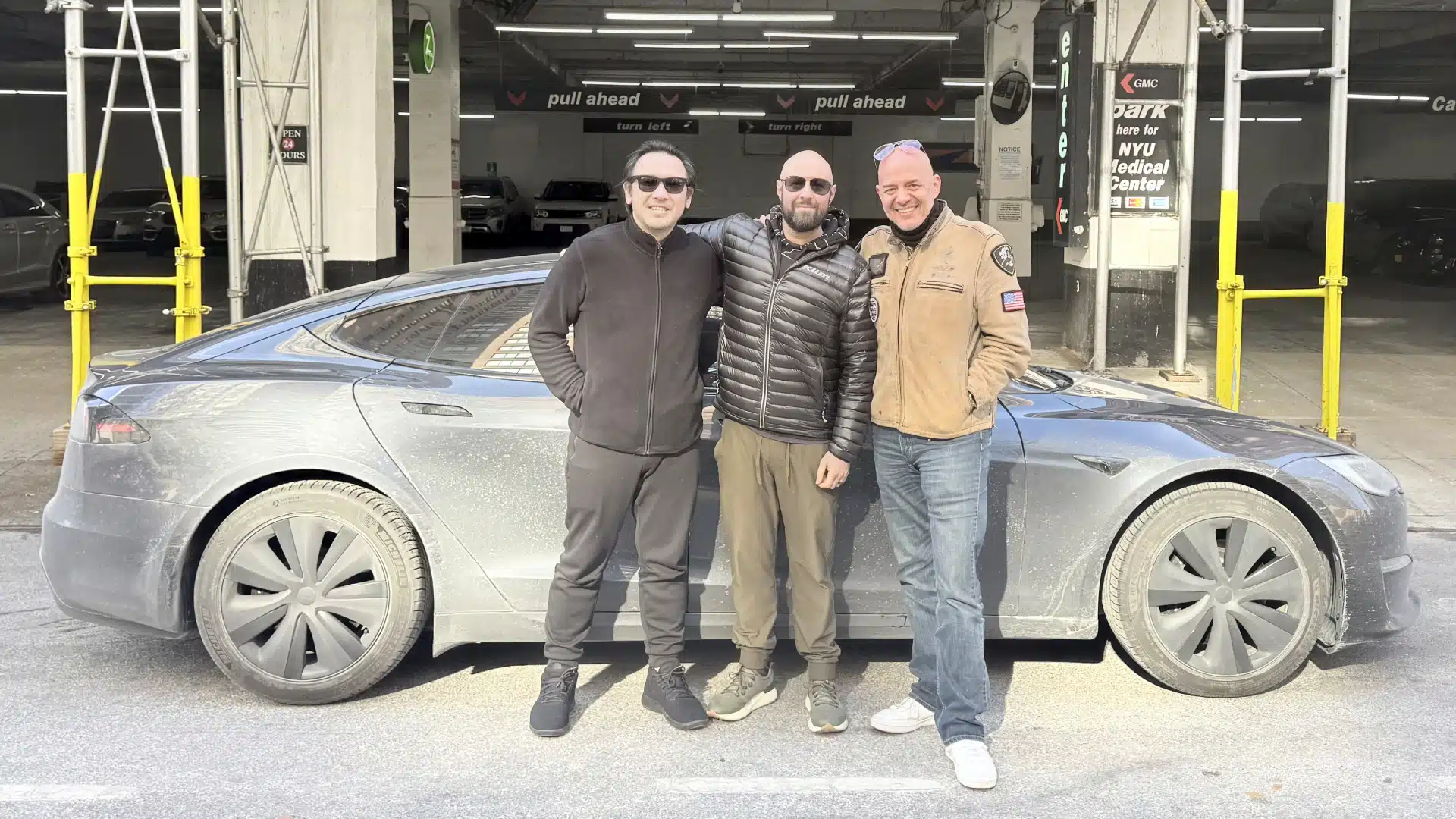
Tesla Model S Conquers First Zero-Intervention FSD Cannonball Run from LA to NYC in Brutal Winter Conditions
Key Takeaways
- A 2024 Tesla Model S with AI4 and FSD v14.2.2.3 completed the first-ever zero-intervention Cannonball Run from LA to NYC (3,081 miles).
- Trip took 58 hours 22 minutes at 64 mph average, with 10 hours spent charging.
- Led by Alex Roy and autonomy experts; FSD handled all driving, including highways, lane changes, navigation, and winter weather (snow, ice, slush, rain).
- Team cleaned cameras during stops to optimize FSD performance.
- Completed in mid-winter conditions, showcasing FSD’s robustness.
- Alex Roy on X: FSD outperformed humans; prior attempts in Dec 2024 & Feb 2025 had interventions; human errors added time/miles.
bold promises turn into incremental progress has unfolded over the years But this? A 2024 Tesla Model S completing the iconic 3,081-mile Cannonball Run from Redondo Beach, Los Angeles, to midtown Manhattan, New York City—entirely on FSD v14.2.2.3 with zero interventions—is nothing short of revolutionary.❶ ❷Led by automotive legend Alex Roy and a crack team of experts, this mid-winter feat through snow, ice, and storms validates Elon Musk’s long-standing vision of coast-to-coast autonomy. Let’s dive deep into the details, context, and what it means for the future of self-driving cars.
What is the Cannonball Run Challenge?
The Cannonball Run isn’t just a drive—it’s an underground legend born in the 1970s as the “Cannonball Baker Sea-to-Shining-Sea Memorial Trophy Dash,” a protest against speed limits and a celebration of America’s Interstate Highway System.❸
- Traditional Route: Typically from NYC’s Red Ball Garage (or nearby Darien, CT) to the Portofino Hotel in Redondo Beach, CA—about 2,813 miles. This run reversed it (LA to NYC), but the spirit remains: non-stop, high-stakes transcontinental sprint. ❶
- Records: The outright speed record stands at 25 hours 39 minutes (avg. 112 mph) by an modified Audi S6 in 2020—illegal, evasion tactics galore. ❸
- EV Milestones: Teslas have set EV records before, like a 58-hour 55-minute Model S in 2015 (96% Autopilot) and Alex Roy’s own 55-hour 2016 run (97.7% autonomous). ❸
This FSD run prioritizesautonomy over speed, clocking 58 hours 22 minutes at 64 mph average (10 hours 11 minutes charging)—proving reliability trumps recklessness.
The Run: Specs, Team, and Jaw-Dropping Execution
Picture this: Departing LA on a crisp winter day, the Model S battles Midwest blizzards, Northeast snow squalls, and slushy interstates—all hands-off.
Vehicle and Software
- Car: 2024 Tesla Model S with Hardware 4 (AI4/HW4), factory 19” Tempest wheels, Continental ProContact RX tires (8,367 miles post-run). ❷ ❶
- FSD Version: v14.2.2.3 (update 2025.45.8), excelling in:FeatureImprovementParking/AutoparkSingle-maneuver precision in tight spots, self-correcting 3-point turns. ❹Highway/CanyonSmoother overtakes, merges, spirited “Mad Max” mode on technical roads.Vision/NetworkHigher-res encoders for emergency vehicles, roadwork; weather-resilient (key for this run).
FSD nailed highway cruising, lane changes, navigation—even a 90-minute detour to rescue a stranded teammate—without a single disengagement (one accidental wheel touch by Roy doesn’t count).❶
The Dream Team
- Alex Roy: Endurance driver, ex-The Drive contributor, NIVC investor—not a Tesla shill, adding credibility.
- Warren Ahner: AI exec, ex-automaker autonomy lead.
- Paul Pham: Self-driving aficionado.
They cleaned cameras at stops for optimal performance, a smart hack underscoring vision system’s sensitivity.❷
Braving Winter Hell: FSD’s Ultimate Stress Test
Mid-winter timing was no accident—this crushed Musk’s 2016 promise of LA-NYC autonomy “in extreme weather.”❶
- Conditions: Snowstorms, ice, slush, rain, extreme cold. FSD recovered flawlessly from squalls; Roy tweeted: “CRAZIEST events in snow – but FSD did it! Holy s**t.” ❶
- Human vs. Machine: Roy admitted on X: “Elon Musk was right. Once an autonomous vehicle is mature, most human input is error. A comedy of human errors added hours and hundreds of miles, but FSD stunned us with its consistent and comfortable behavior.” ❷
Detours from weather/human slips extended the trip, but FSD never faltered.
Alex Roy’s Journey: From Interventions to Perfection
Roy’s no newbie:
- Dec 2024 (Autonorun #1): First FSD coast-to-coast record on v12.5.6.4. ❺
- Feb 2025: Another attempt, interventions galore.
- Aug 2025 (Run #2, v13.2.2): 14 disengagements over 1,997 miles—mostly rain-induced camera failures, HW4 limits exposed (DNF in storm). ❻
v14’s refinements turned the tide.Insight: Software iteration + meticulous prep (camera cleans) bridged hardware gaps.
Why This Matters: Insights and Implications
This isn’t hype—it’s proof-of-concept forLevel 4 autonomy on diverse U.S. roads.
- Tesla’s Edge: Outpaces Waymo/Cruise (geo-fenced) in end-to-end capability. Robotaxi unveil? This screams viability. ❼
- Safety Stats: Zero interventions > human errors; FSD’s “consistent behavior” could slash road deaths.
- Critiques: Still supervised (team monitored); charging passive but not autonomous. HW4 rain limits persist—HW5 incoming.
- Advice for Owners: Update to v14 ASAP. Test in rain/snow; clean cameras religiously. For road trips, enable “Hurry” mode.
My Take: Tesla’s data flywheel (billions of miles) is winning. Expect unsupervised FSD by mid-2026, slashing ride costs 5x vs. Uber.
Looking Ahead: More Runs, Robotaxis, and Revolution
Roy vows repeats as FSD evolves.❶With v15 looming, imagine empty Model S hauls at 100+ mph. This Cannonball isn’t the end—it’s the starting gun for mainstream autonomy.
What do you think? Ready for FSD-only cross-country? Drop comments below!