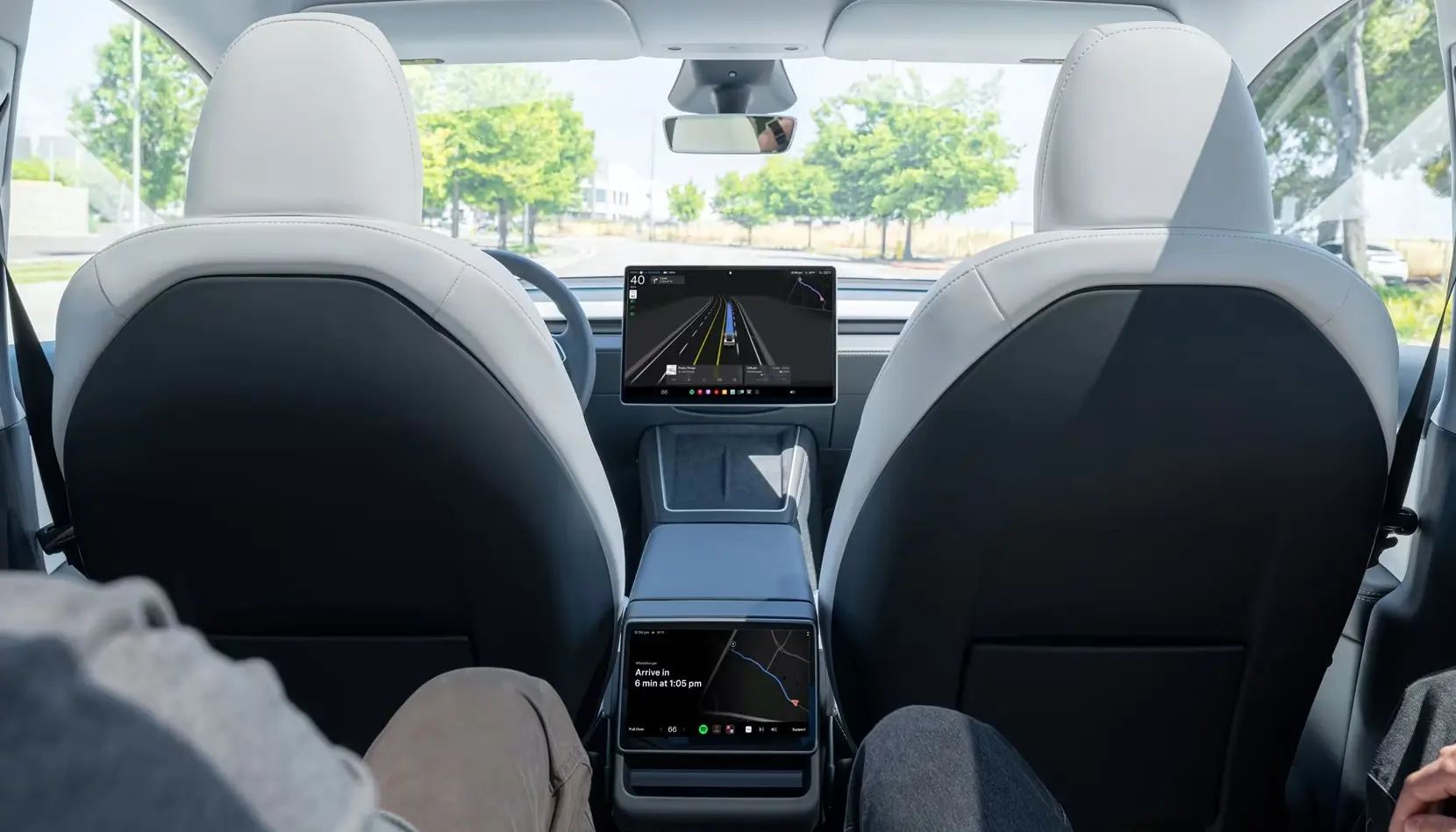
Tesla Opens Robotaxi Access to All Users, With a Key Limitation
Key Takeaways
- Tesla’s Robotaxi service is now available to everyone with an iPhone!
- Access to the service requires downloading the app on iOS devices.
- The service launched in Austin and the Bay Area, improving accessibility for rides.
- In Austin, Robotaxis operate without a driver unless on freeways; Bay Area taxis always have a driver present.
- Tesla aims to gather data to alleviate regulatory constraints and enhance service safety.
- Elon Musk plans to remove Safety Monitors from vehicles by the end of the year, increasing driverless capabilities.
In an ever-evolving world of technology, Tesla continues to lead the charge with groundbreaking advancements in autonomous transportation. Their latest endeavor, the Robotaxi service, is making waves by opening its doors to the general public. However, there’s a modern twist: access is currently limited to iPhone users. Let’s delve into how Tesla’s new initiative is set to reshape the landscape of autonomous ride-hailing, the challenges it faces, and what the future holds for those embracing this groundbreaking technology.
Embracing the Future: Tesla’s iPhone-Exclusive Robotaxi Access
The decision to initially launch Tesla’s Robotaxi services exclusively to iPhone users might come as a surprise to some. As technology pioneers often do, Tesla is taking a calculated risk by launching their service on a single platform to begin with. Here’s a breakdown of the key aspects:
- Platform Exclusivity: To access the Robotaxi service, users must have an iOS device. This requirement involves downloading the Tesla app, which now provides seamless access to this futuristic transportation option for those using an iPhone.
- Geographical Reach: The service has officially launched in Austin, Texas, and the Bay Area in California. These locations were chosen strategically to leverage their innovative and tech-friendly environments.
Autonomous Rides at Your Fingertips
Tesla’s Robotaxi service is all about accessibility, convenience, and safety. It has leveraged cutting-edge technology to ensure these rides are both efficient and reliable.
- Austin Operations: In Austin, the Robotaxis operate without a driver, deliver cutting-edge user experiences, and navigate busy streets skillfully until reaching freeways, where precautions see human intervention.
- Bay Area Operations: Conversely, in the tech-savvy Bay Area, Tesla adheres to traditional safety norms by maintaining a driver behind the wheel at all times. This approach caters to regulatory requirements and paves the way for more significant advancements.
Data Collection: Paving the Path for Innovation
Tesla’s vision for the Robotaxi service extends beyond just offering rides. The company aims to gather vital data to support regulatory adjustments and improvements.
- Regulatory Compliance: Tesla’s Robotaxi is not just a commercial venture but also a learning tool intended for amassing data to ease regulatory constraints and assure the public of its dependability.
- Safety Optimizations: Integral to the project is the data collected to ensure continuous improvement in terms of safety protocols for an eventual broader rollout.
Elon Musk’s Vision for a Driverless Future
Elon Musk, Tesla’s CEO, is not one to shy away from bold declarations, and with the Robotaxi service, his vision continues to evolve:
- Safety Monitors: Safety Monitors currently stationed within the vehicles are projected to be removed by the end of the year. This move underscores Tesla’s confidence in the reliability of their autonomous technology.
- Driverless Advancements: Removing Safety Monitors signifies a giant leap toward fully autonomous transport, where rides might soon be entirely driverless, yet still maintaining optimal safety standards.
Looking Forward: The Impact of Tesla’s Robotaxi
Tesla’s Robotaxi service is poised to revolutionize the transportation industry. With plans to eliminate Safety Monitors and expand accessibility, the service brings us closer to a future where autonomous vehicles are commonplace.
![Tesla Model Y showcases new tech that could revolutionize cabin designs [Feature]](https://ilovetesla.com/wp-content/uploads/2023/10/Tesla-model-y-treves-dirac-768x467.jpg)