Waymo’s Autonomous Taxi Has a Run-In with Tokyo Law Enforcement
Key Takeaways
- The Waymo robotaxi made headlines for getting a ticket from Tokyo traffic police, drawing significant social media attention.
- This event marks Waymo’s initial foray into international testing and data collection, specifically in Tokyo.
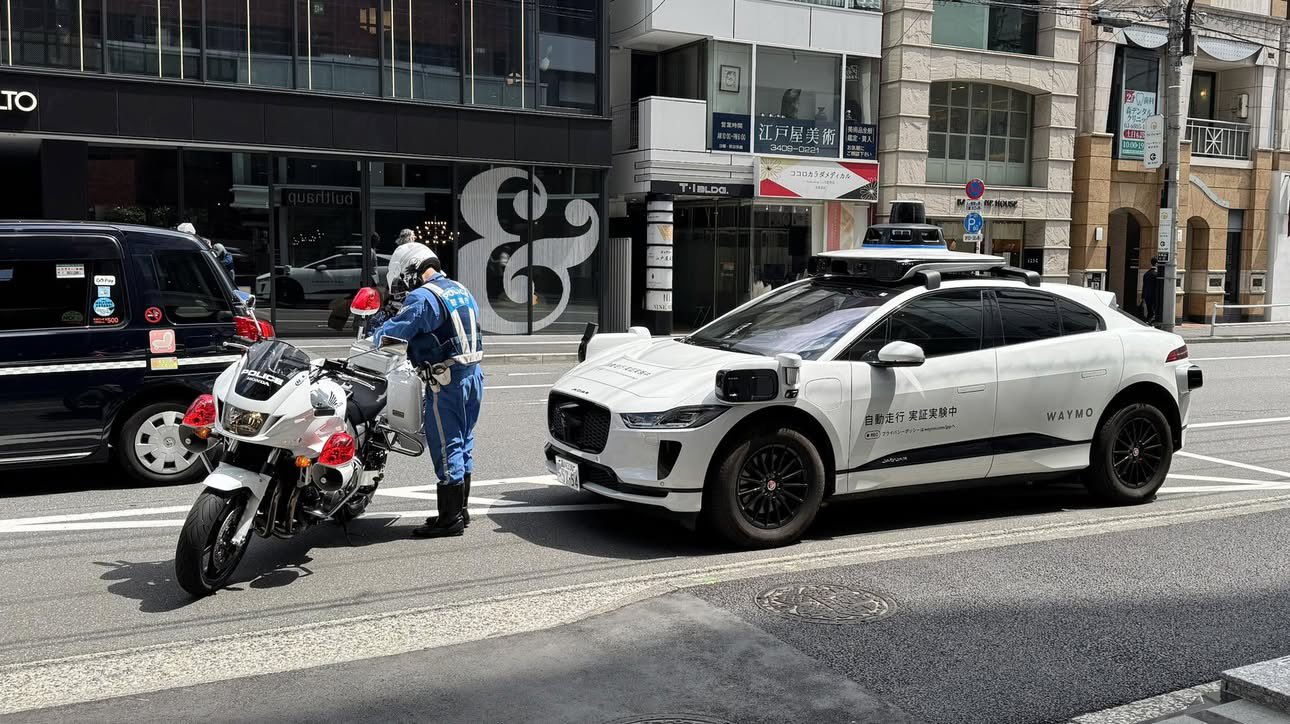
- An image of the incident shared by user @YukkuriMasa1225 went viral, amassing over 1 million impressions on social media platform X.
- Despite being autonomous, the robotaxi in Tokyo is operated by a human driver from Nihon Kotsu, explaining the traffic stop.
- Waymo’s operations in Tokyo target the central city’s seven wards, gathering data to refine its technology for the region.
- Statistics highlight Waymo’s safety potential, showing a significant reduction in crashes involving pedestrians, cyclists, and motorcyclists compared to human drivers.
The world of autonomous driving took an unexpected turn when a Waymo robotaxi found itself in a peculiar situation on the streets of Tokyo. The incident, which saw the driverless car pulled over by local traffic police, sparked a viral sensation on social media. This blog post delves into the nuances of Waymo’s international expansion, the challenges it faces, and the broader implications of autonomous vehicles in urban environments.
A Bumpy Start to Waymo’s Tokyo Adventure
Waymo’s recent journey into Tokyo is an attempt to push the boundaries of autonomous driving. However, this seemingly futuristic voyage encountered a mundane yet intriguing roadblock when a social media post revealed a Waymo robotaxi stopped by a traffic cop. The image, shared by user @YukkuriMasa1225 on platform X, quickly went viral, drawing over a million impressions.
Why the Stop?
Despite its advanced technology, the robotaxi was not at the technological helm during the incident. Instead, it was operated by a human driver from Nihon Kotsu, one of Tokyo’s largest taxi operators. This stop highlighted the transitional phase of driverless technology, where human oversight remains essential, especially in testing new territories.
Waymo’s Strategic Expansion into Tokyo
The incident marked Waymo’s initial foray into the bustling city of Tokyo, a choice location for testing autonomous technology due to its urban density and complexity.
Focus Areas
Waymo’s operations in Tokyo are concentrated within seven central wards:
- Minato
- Shinjuku
- Shibuya
- Chiyoda
- Chuo
- Shinagawa
- Koto
These regions serve as testing grounds for collecting vital data to adapt and improve Waymo’s technology for the Japanese market.
The Promise of Autonomous Technology
Despite the recent blip, the safety record and potential of Waymo’s autonomous technology are commendable.
Safety Advancements
Statistics from Waymo’s trials present an encouraging picture:
- 92% reduction in pedestrian injury crashes
- 82% fewer crashes involving cyclists
- 82% fewer crashes involving motorcyclists
These figures underscore the potential of autonomous vehicles to significantly enhance urban road safety compared to human-controlled counterparts.
Navigating Challenges Ahead
While the path forward is promising, several hurdles remain in the deployment of autonomous vehicles globally.
- Regulatory Frameworks: Countries must establish robust legal frameworks to govern autonomous vehicle operations.
- Cultural Adaptation: Understanding local driving norms and behaviors is crucial.
- Technological Limitations: Continuous advancements in AI and machine learning are required to handle complex driving scenarios.
The Road to Acceptance
Building public trust is paramount. Transparency about operational procedures and safety measures can allay fears and foster acceptance.
Waymo’s experience in Tokyo, marked by the traffic stop incident, exemplifies the intricate dance between cutting-edge technology and real-world application. As Waymo continues to refine its systems, the lessons learned from such episodes will play a crucial role in shaping the future of transportation.