 Gary Zhou
Key Takeaways
- Bloomberg’s report claims Tesla has a self-driving advantage over Waymo, but is criticized for misrepresenting data.
- Comparison of Tesla and Waymo’s data is misleading; Tesla aggregates different metrics while Waymo includes all incidents.
- Tesla’s Autopilot data can be misleading as it excludes minor accidents and only counts severe crashes.
- Tesla’s launch of the robotaxi service in Austin is seen as a “game of smoke and mirrors” by critics.
- Industry analysts express concern over safety, emphasizing the need for accurate data amid Tesla’s ambitions.
In the ever-evolving world of autonomous vehicles, two names frequently rise above the rest: Tesla and Waymo. Both companies have consistently been at the forefront of innovation, but a recent report by Bloomberg has stirred up significant controversy. This article dissects the main points of contention, examines the safety implications, and highlights the broader impact on the industry.
Bloomberg’s Report: A Misleading Perspective?
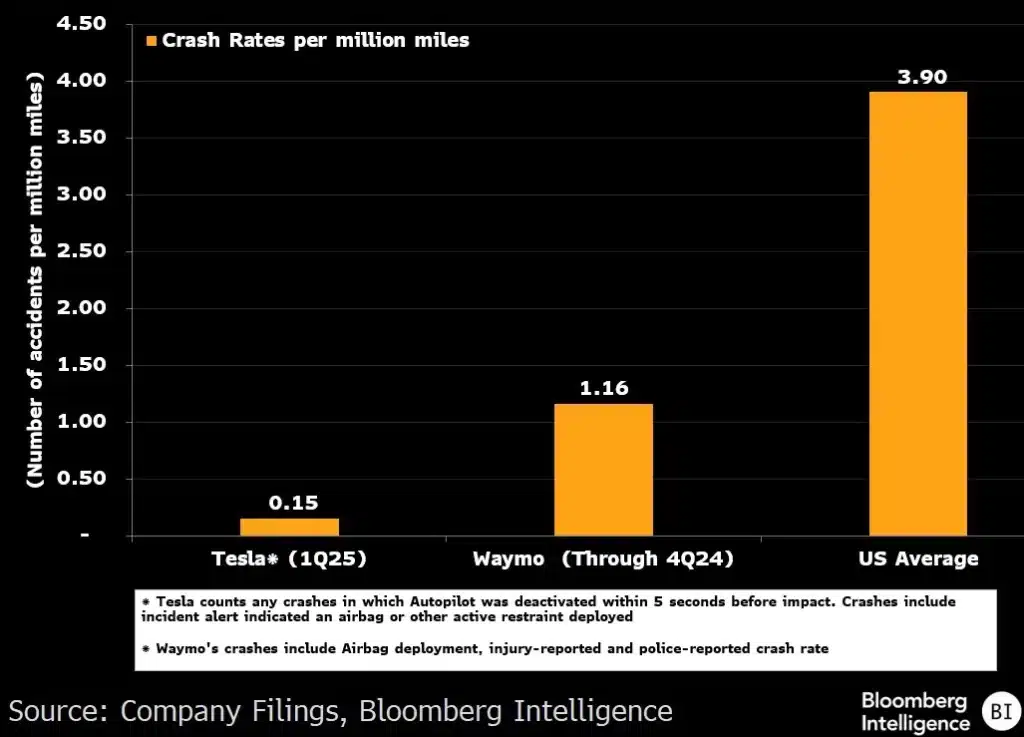
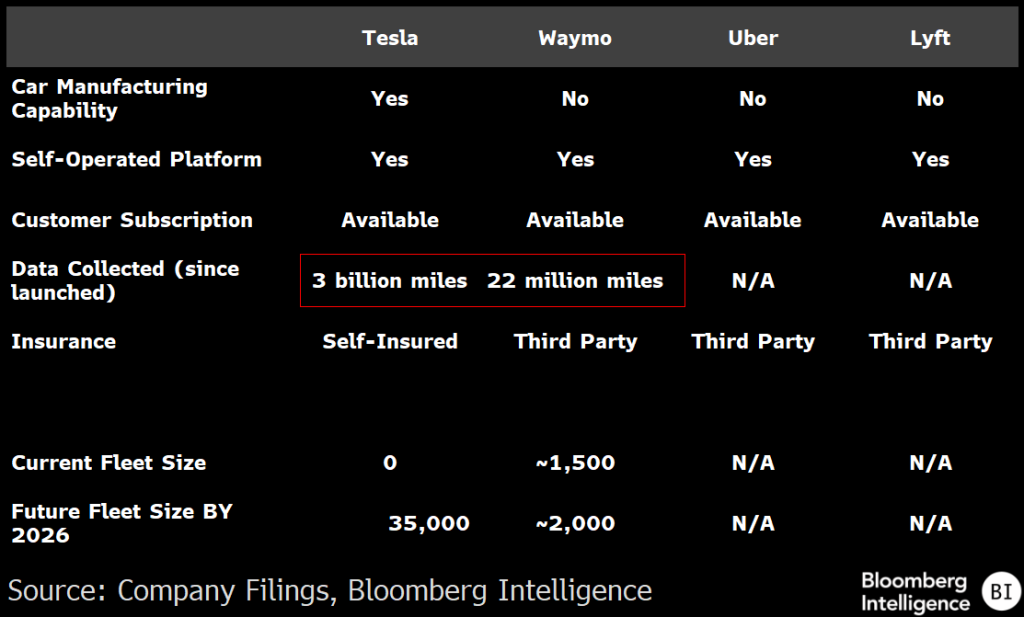
Bloomberg’s recent report proclaims that Tesla holds a distinct advantage over Waymo in the self-driving arena. This assertion, however, has been met with criticism from various quarters, indicating that the report might oversimplify or misrepresent critical data.
Key Criticisms of Bloomberg’s Report:
- Data Aggregation vs. Incident Reporting:
- Tesla’s Data: The report suggests Tesla has greater autonomy by aggregating data from all vehicles using Autopilot and Full Self-Driving (FSD) features. This includes only severe crash instances where airbags deploy.
- Waymo’s Data: In contrast, Waymo’s statistics incorporate all police-reported incidents, providing a more comprehensive overview of safety.
- Misleading Comparisons:
- Bloomberg’s claims of Tesla’s superiority fail to account for the nature and scope of data metrics used, leading to potentially skewed conclusions about safety and technological advancement.
Safety Concerns: Peeling Back the Layers
With Tesla’s impending robotaxi launch in Austin being touted as a “game of smoke and mirrors,” safety experts and industry analysts are sounding alarms.
Analyzing Tesla and Waymo’s Safety Data:
- Tesla’s Approach:
- Focus on major incidents might give an impression of lower accident rates.
- Utilizes driver supervision to ensure safety, which forms a part of their reported “mile-data.”
- Waymo’s Strategy:
- Records broader data by including all categories of incidents, giving a fuller picture of real-world performance and risks involved.
Scrutinizing Tesla’s Robotaxi Ambitions
The looming debut of Tesla’s robotaxi service in Austin, Texas has become a lightning rod for criticism. Analysts argue that highlighting selective data cannot mask genuine safety concerns.
Primary Safety Concerns:
- Lack of Full Autonomy:
- Tesla vehicles still require driver intervention, whereas Waymo’s systems lean towards fully autonomous operations.
- Economic Scalability:
- Questions arise about the readiness of Tesla’s systems to scale profitably and safely, compounded by potential teleoperation hurdles.
- Regulatory Oversight:
- Ensures that self-driving technologies adhere to safety protocols and provide transparent, accurate representations of their capabilities.
Summing It Up
The conversation around Tesla and Waymo highlights a pivotal moment in the journey towards fully autonomous vehicles. As Tesla prepares to launch new services, the focus must remain steadfast on genuine data representation and unwavering commitment to safety. Only then can the optimism surrounding self-driving technologies be truly justified.