 Gary Zhou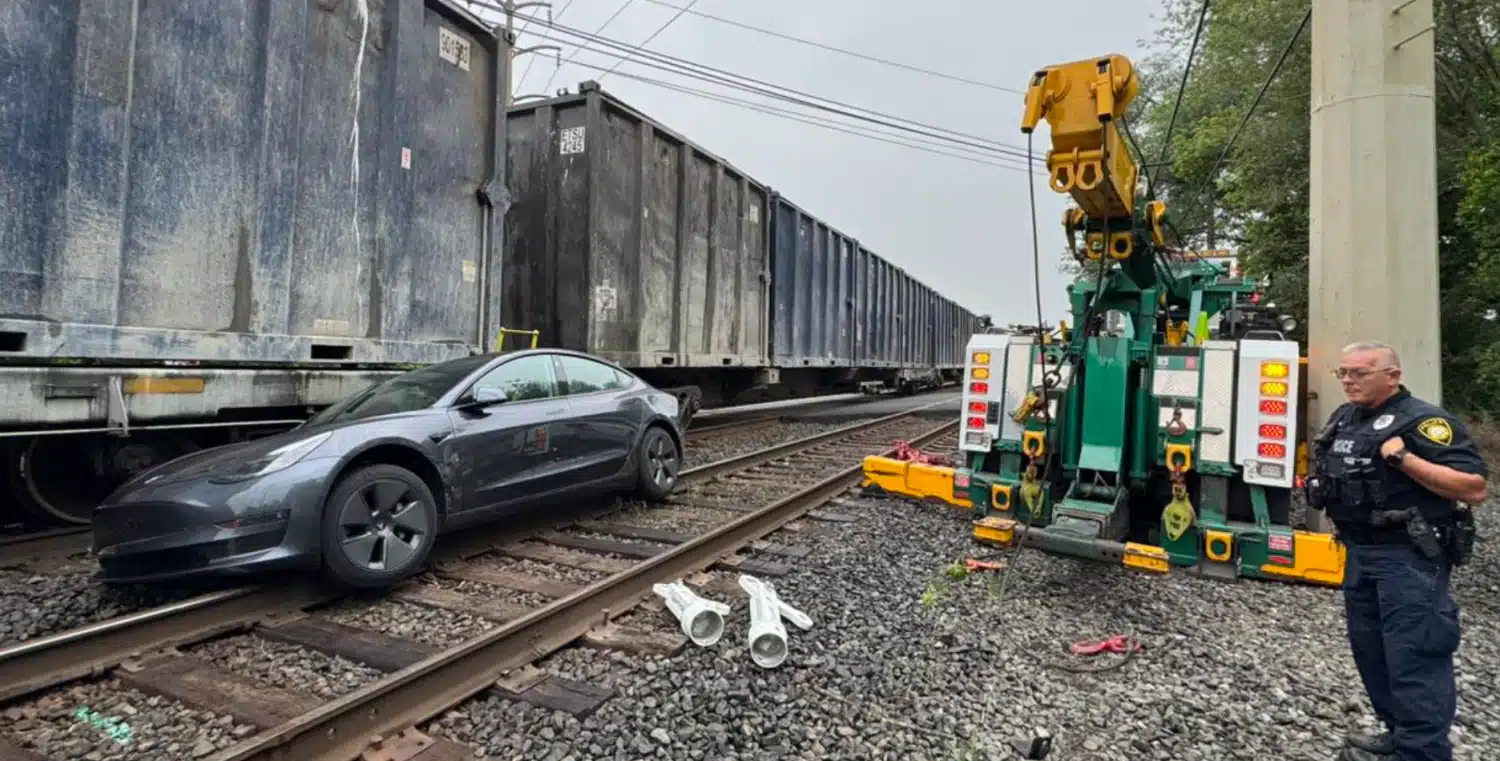
Key Takeaways
- A Tesla Model 3 was stuck on train tracks and hit by a train in Sinking Spring, PA.
- The driver claimed the vehicle was in “self-driving mode” at the time of the incident.
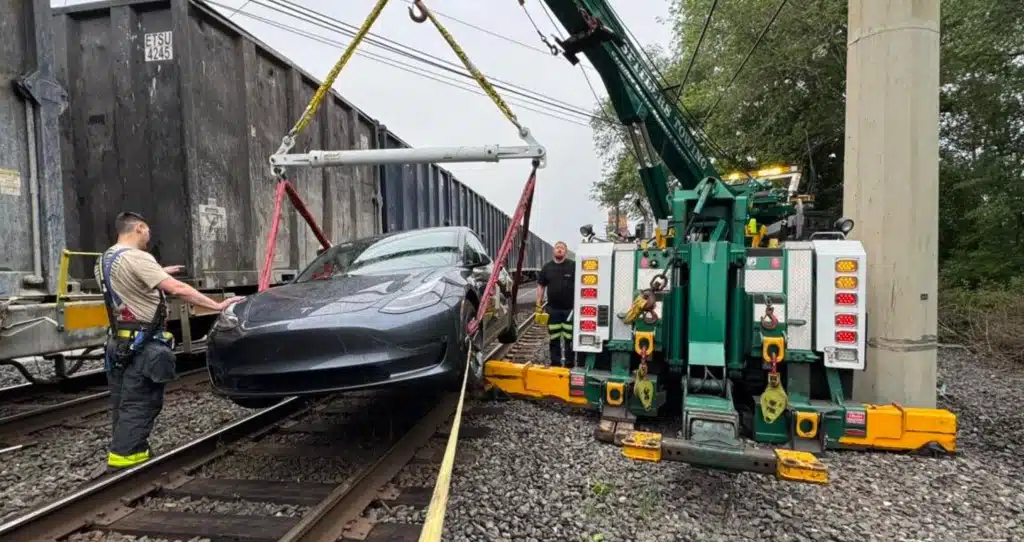
- Emergency services stopped train traffic to remove the Tesla from the tracks using a crane.
- Despite claiming unsupervised self-driving capabilities, Tesla’s “Full Self-Driving” package still requires constant driver supervision.
- Instances of reckless driver behavior linked to Tesla’s FSD features have been noted.
On a quiet day in Sinking Spring, PA, a Tesla Model 3 found itself caught between two massive forces: emerging technology and age-old infrastructure. The incident where a Model 3 was hit by a train while allegedly in “self-driving mode” raises important questions about the readiness and reliability of autonomous vehicle systems.
Understanding the Incident
In a startling event, a Tesla Model 3 was struck by a train after becoming stuck on the tracks. The driver claimed that the car was operating in “self-driving mode” at the time, igniting a widespread debate about the viability and safety of autonomous driving technologies. This event necessitated the intervention of emergency services, which halted train traffic to extract the vehicle, highlighting both the vulnerability and societal impact of current autonomous driving technologies.
Key Details of the Incident
- Location: Sinking Spring, PA
- Vehicle Involved: Tesla Model 3
- Circumstance: Allegedly in “self-driving mode”
- Action Taken: Train traffic stopped to remove the vehicle
Unpacking Tesla’s Full Self-Driving (FSD) Package
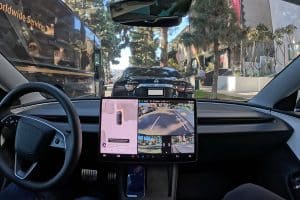
Tesla’s promise of “Full Self-Driving” capability has been a significant draw for its vehicles. However, this incident highlights a crucial aspect of the current state of this technology: the need for constant driver supervision.
How Does Tesla’s FSD Work?
- Navigation: Uses data from cameras, radar, and ultrasonic sensors to navigate.
- Driver Supervision: Despite advancements, Tesla’s FSD requires the driver to remain vigilant.
- Software Updates: All vehicles since 2016 have FSD hardware, awaiting software updates for full autonomy.
Safety Implications of Self-Driving Features
The incident in Sinking Spring serves as a stark reminder that while self-driving technology is rapidly advancing, it is not foolproof. The responsibility still lies with the driver to maintain control and ensure safety.
Critical Safety Considerations
- Driver Vigilance: Even with FSD, drivers must be attentive.
- System Limitations: Current technology cannot anticipate every scenario, such as railroad tracks or unexpected barriers.
- Reckless Behavior: Incidents of misuse or misplaced trust in technology can lead to dangerous outcomes.
The Road Ahead for Autonomous Vehicles
The future of self-driving technology is undeniably exciting, but incidents like these highlight the importance of cautious optimism. Continued improvements in technology, regulatory frameworks, and public understanding are necessary to ensure these systems can safely integrate into society.
Recommendations for Development
- Enhanced Sensor Technology: To better detect complex environments.
- Driver Education: Emphasizing the current limitations of FSD systems.
- Collaborative Regulation: Governments and companies must work together to set realistic, safe benchmarks.
The collision involving the Tesla Model 3 is more than just an isolated incident; it’s a reflection of the broader conversation surrounding the future of autonomous vehicles. As we stand on the precipice of a new era in transportation, careful consideration and responsible development will be key in navigating towards the true realization of autonomous driving.