 Gary Zhou
Key Takeaways
- Elon Musk announced on X that the Terafab Project launches March 21, 2026, as a vertically integrated chip fab for logic, memory, and advanced packaging.
- Confirmed on January 28, 2026 earnings call, Musk stated Tesla needs the fab to avoid chip supply constraints in 3-4 years; earlier AGM warning highlighted supplier shortages.
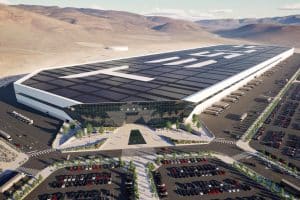
- Likely location: North Campus at Giga Texas, Austin, with massive construction spotted via drone footage by Joe Tegtmeyer.
- Projected output: 100-200 billion AI/memory chips yearly, 100,000 wafer starts/month, at $20B cost, using cutting-edge 2nm process.
- First product: Tesla AI5 chip, offering 40-50x more compute and 9x memory than AI4, optimized for FSD and Optimus robots.
- Game-changer: Enables in-house AI silicon production, potentially making Tesla a supplier/licensor beyond autos.
- Powers FSD, Cybercab Robotaxi, and Optimus; Musk’s volume needs exceed external suppliers, unlike competitors Waymo and Cruise.
- Launch signals Tesla’s commitment to owning the full AI stack from software to silicon.
In a single, cryptic post on X on March 14, 2026, Elon Musk dropped a bombshell: “Terafab Project launches in 7 days.” ❶ This isn’t just hype from the Tesla CEO—it’s the official kickoff to what could be the most ambitious semiconductor venture in history. Terafab is Tesla’s vertically integrated chip fabrication facility (fab), designed to produce logic chips, memory, and advanced packaging for AI applications at unprecedented scale. With a staggering $20 billion price tag, this project signals Tesla’s pivot from being a consumer of AI silicon to a producer—and potentially a supplier—to the world. ❷
As a tech blogger who’s tracked Tesla’s evolution from electric vehicles to AI powerhouse, I see Terafab as the linchpin in Musk’s master plan. It’s not just about securing supply; it’s about owning the entire AI stack. In this deep dive, we’ll unpack the announcement, specs, location, implications, and why this could catapult Tesla’s valuation into the trillions.
The Genesis: From Warnings to Action
Tesla’s chip ambitions didn’t start with a tweet. Back on January 28, 2026, during the Q4 2025 earnings call, Musk explicitly warned of impending chip supply constraints. “We need our own fab to avoid shortages in 3-4 years,” he stated, emphasizing that external suppliers like TSMC and Samsung couldn’t meet Tesla’s explosive demand for AI inference chips. ❸ ❹ This echoed earlier alerts at Tesla’s AGM, where Musk highlighted supplier bottlenecks threatening Full Self-Driving (FSD), Cybercab Robotaxi, and Optimus humanoid robots. ❺
Why the urgency?
- Geopolitical risks: U.S.-China tensions and export controls on advanced nodes (e.g., 2nm processes) make reliance on Taiwan-based TSMC precarious.
- Volume explosion: Tesla projects needing billions of chips annually for millions of vehicles and potentially tens of millions of Optimus units.
- Competitive edge: Unlike Waymo or Cruise, which scale modestly, Tesla’s robotaxi fleet and Optimus army demand teraflop-scale inference at consumer prices.
Musk’s vision? A “gigantic chip fab” rivaling TSMC’s output but optimized for Tesla’s Dojo supercomputers and edge AI. ❻
Location Confirmed: Giga Texas North Campus Takes Shape
Speculation about the site ended with drone footage from Tesla superfan Joe Tegtmeyer. Massive earthworks north of Giga Texas’ existing boundaries—off-property expansions—point to the North Campus as Terafab’s home. ❷ ❼
Key site advantages:
- Proximity: Adjacent to Giga Texas for seamless logistics to vehicle and Optimus production.
- Scale: Room for a facility dwarfing current fabs, with potential for 100,000+ wafer starts per month.
- Infrastructure: Texas’ energy grid, tax incentives, and talent pool from nearby UT Austin make it ideal.
Tegtmeyer’s videos show grading for foundations larger than football fields—clear signs of cleanroom-scale construction. ❽ If history repeats (e.g., Giga Berlin’s warp-speed build), Terafab could be operational by 2028.
Tech Specs: 2nm Process, AI5 as Flagship
Terafab isn’t building yesterday’s tech. It’s targeting cutting-edge 2nm nodes for logic and high-bandwidth memory (HBM), enabling:
- Projected output: 100-200 billion AI/memory chips per year—enough for 20-40 million vehicles/robots.
- First product: Tesla’s AI5 (HW5) inference chip, launching soon after. ❷
AI5 vs. AI4: A Quantum Leap
Musk has hyped AI5 relentlessly:
- Compute: 8x raw TOPS over AI4 (potentially 40-50x effective performance in FSD tasks via architecture optimizations). ❾ ❿
- Memory: 9-10x capacity and bandwidth, solving AI4’s bottlenecks. ⓫
- Power efficiency: Sub-100W for edge deployment in cars/robots.
| Feature | AI4 (Current) | AI5 (Terafab Debut) | Improvement |
|---|---|---|---|
| Compute (TOPS) | ~500 | ~4,000 | 8x |
| Memory (GB) | ~16 | ~144 | 9x |
| Process Node | 5nm/4nm | 2nm | 2-3x density |
| Target Apps | FSD v12 | FSD v13+, Optimus Gen3 | 40x tasks |
My take: AI5 isn’t just incremental—it’s the “monster” Musk promised, enabling unsupervised FSD and Optimus dexterity. ⓫
Powering the Ecosystem: FSD, Cybercab, and Optimus
Terafab’s chips fuel:
- FSD/Cybercab: 40x inference for robotaxi fleets scaling to millions.
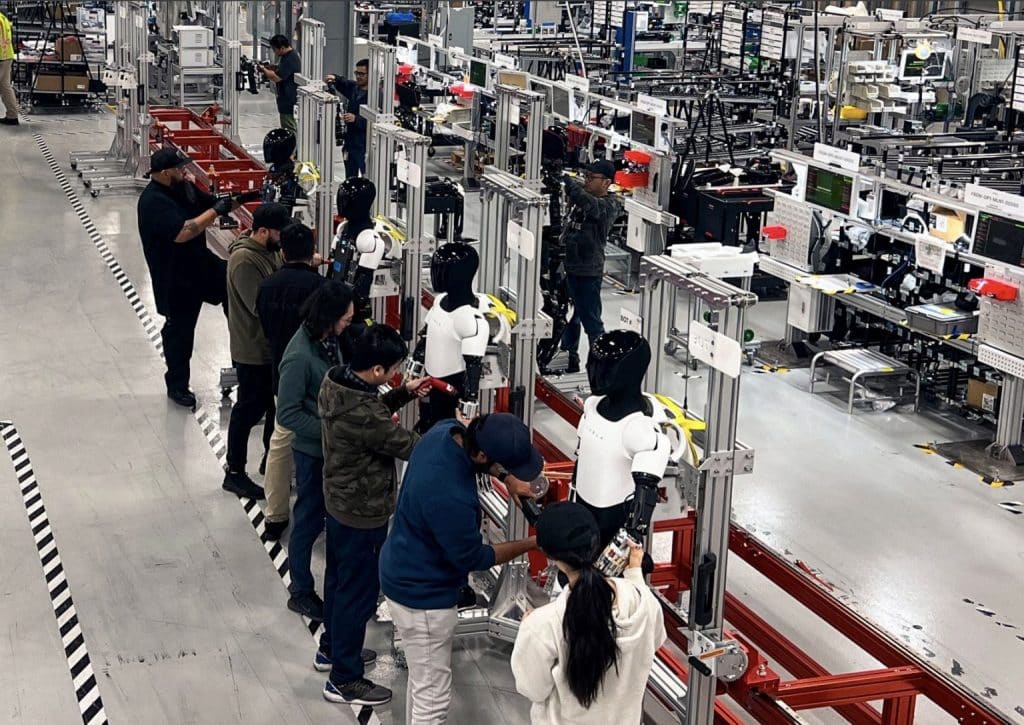
- Optimus: Gen3 robots need low-latency AI for factories/homes. Musk projects “thousands” by end-2026, millions later—volumes no supplier can match. ⓭
- Dojo: Exascale training for video-based neural nets.
Unlike competitors:
- Waymo/Cruise: Small fleets, Nvidia-dependent.
- Tesla: Vertical stack = 10x cost advantage.
Strategic Implications: From Auto to AI Titan
Game-changer alert: Terafab positions Tesla as:
- Supply chain sovereign: Immune to shortages.
- Licensor/supplier: Sell AI5 to xAI, others?
- Valuation booster: $20B capex pales vs. $1T+ AI/robotics TAM.
Risks to watch:
- Execution delays (fabs take 3-5 years).
- Yield ramps on 2nm.
- Capex dilution (but Tesla’s $30B+ cash hoard covers it).
Investor advice: Buy the dip. TSLA to $2,000+ by 2028 as Optimus revenue hits $100B/year. Diversify with SMCI/TSM for fab exposure.
The Bigger Picture: Tesla’s Full-Stack Mastery
Terafab completes Musk’s vision: software (FSD), silicon (AI5), robots (Optimus), energy (Megapacks). It’s Apple-level integration in AI/hardware. Launching days from now (March 21), expect groundbreaking footage soon.
What do you think—will Terafab make Tesla the next Nvidia? Drop comments below!