 Gary Zhou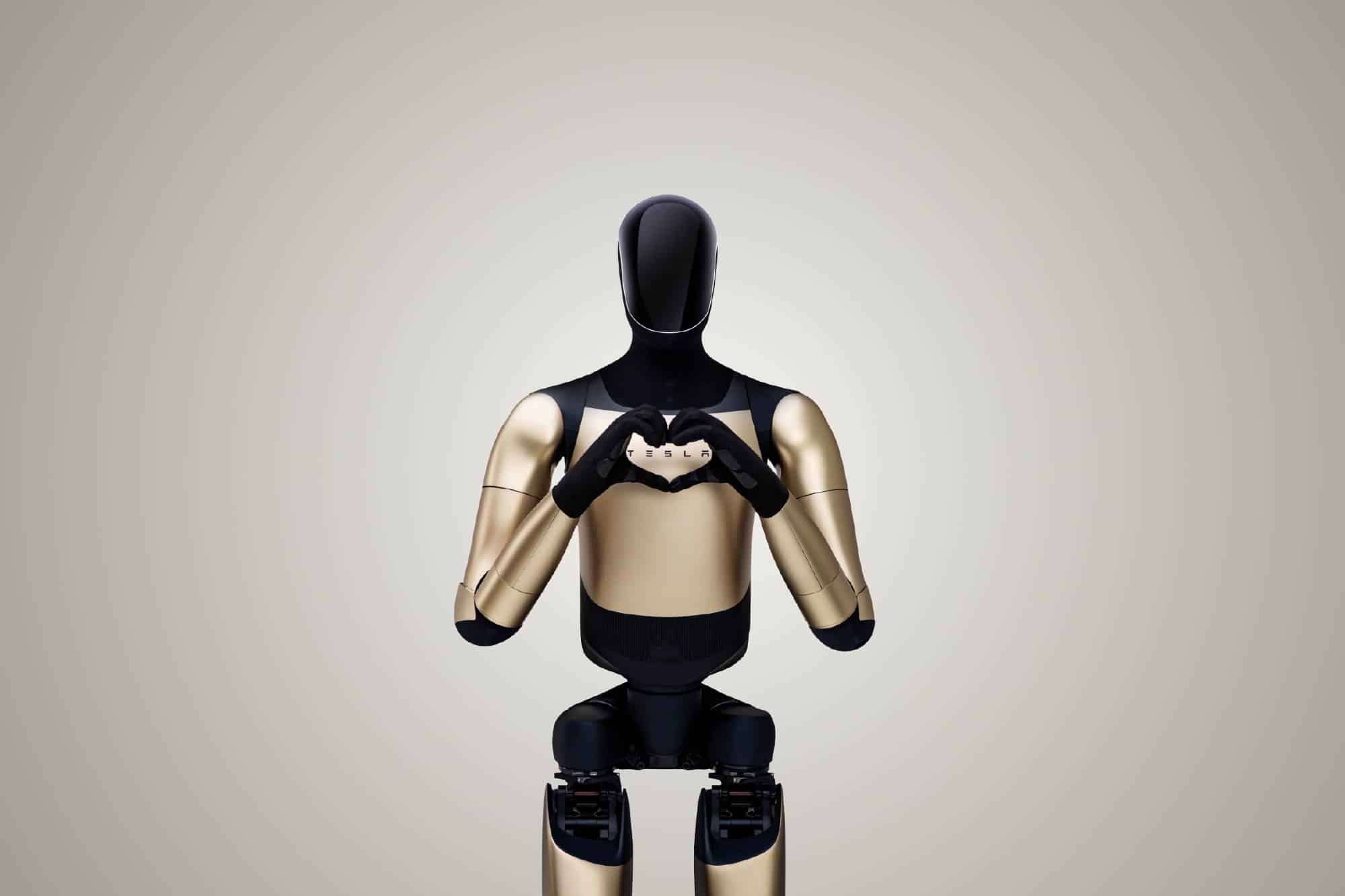
Key Takeaways
- Tesla China teases Optimus robot’s next-gen hands with strikingly human-like proportions and finger structures.
- Teaser image shared by Tesla AI on Weibo, reposted on X by community members.
- Ming (@tslaming) posts about Optimus v3’s new dexterous hands looking almost identical to human hands, calling it impressive.
- Advanced hands crucial for Optimus to handle complex manufacturing and household tasks.
- Elon Musk hails Optimus as Tesla’s most important long-term product.
- Musk describes Optimus as the first real-world Von Neumann machine, self-replicating using available materials.
- Musk states: “Optimus will be the first Von Neumann machine, capable of building civilization by itself on any viable planet.”
In a move that’s sent ripples through the tech and robotics communities, Tesla China has just dropped a bombshell teaser on Weibo, showcasing what appears to be the next-generation hands for the Optimus V3 humanoid robot. These hands aren’t just functional—they’re strikingly human-like, with proportions, finger structures, and subtle details that blur the line between machine and biology. ❶ ❷ Shared by Tesla’s official AI account and quickly reposted on X by enthusiasts like Ming (@tslaming), who called them “almost identical to human hands” and “honestly impressive,” this reveal has ignited feverish speculation. ❶ As a robotics blogger with over a decade tracking humanoid advancements, I can tell you: this isn’t hype. It’s a pivotal moment signaling Tesla’s leap toward robots that could redefine labor, exploration, and even civilization-building.
Optimus, Tesla’s ambitious humanoid project unveiled at AI Day 2021, has evolved rapidly. From clunky prototypes to fluid walkers, the focus has zeroed in on the hands—the “holy grail” of dexterity. Why? Because true humanoid utility hinges on manipulating the world like we do: picking eggs without cracking them, threading needles, or assembling intricate parts. Let’s dive deep into this teaser, its context, and what it means for the future.
The Teaser Breakdown: What Tesla China Revealed
Tesla AI’s Weibo post featured close-up images of a golden Optimus prototype, highlighting sleek, bionic hands with hidden joints for smoother, more naturalistic lines. ❸ ❹ The fingers exhibit realistic wrinkles, precise phalanges, and proportions mirroring human anatomy—far beyond the blockier designs of earlier gens. Though the posts were briefly deleted (classic Tesla tease-and-retract), screenshots captured by the community preserve the magic. ❸
Community reactions poured in:
- @tslaming: “BREAKING: TeslaAI just shared a photo on Weibo of what looks like Optimus v3’s new dexterous hands. It’s honestly impressive—they look almost identical to human hands now!” ❶
- Viral X threads and YouTube breakdowns amplified the buzz, with creators dissecting potential specs like 22+ degrees of freedom (DoF) and integrated sensors. ❺
This isn’t isolated—Tesla launched its Weibo presence in September 2025 to tap China’s booming humanoid market, posting early Optimus clips that garnered thousands of fans overnight. ❻ ❼ By early 2026, with Optimus V3 fever peaking, China ops are positioning as a global showcase.
Evolution of Optimus Hands: From 11 DoF to Human Mastery
Optimus hands have been Tesla’s Achilles’ heel—and breakthrough. Here’s a quick timeline:
- Gen 1 (2022): Basic 6-DoF grippers, rigid and limited to simple grasps. Impressive for a prototype but far from dexterous.
- Gen 2 (2024): Upgraded to 11 DoF, enabling folding laundry and egg-handling demos. Still, Elon admitted hands were “stumping” engineers. ❽
- Gen 3 Teasers (Late 2024-2025): 22 DoF hands revealed, with actuators rivaling human flexibility. Videos showed uncanny manipulation, like piano playing proxies. ❺ ❾
- V3 Now (2026): The Weibo glimpse suggests 50+ actuators, 4x more sensitive tactile sensors feeding neural nets trained on human data. “This bot got hands,” Musk quipped. ❿ ⓫
Why the obsession with DoF? Human hands have ~27. More DoF means nuanced grips: power (heavy lifts), pinch (tiny objects), and adaptive (soft items). Tesla’s edge? End-to-end neural networks from FSD tech, learning via video imitation rather than rigid programming.
Challenges Overcome
- Power Density: Miniaturized motors in slim fingers.
- Sensing: Tactile skins detect pressure/texture, enabling “feel” without vision.
- Durability: Waterproofing hints at factory/home versatility. ⓬
In my view, these hands position Optimus ahead of rivals like Figure’s 16-DoF or Boston Dynamics’ grippers—true multi-modal dexterity.
Elon Musk’s Grand Vision: Optimus as the First Von Neumann Machine
Elon didn’t mince words in February 2026: “Optimus will be the first Von Neumann machine, capable of building civilization by itself on any viable planet.” ⓭ Hailed as Tesla’s “most important long-term product,” surpassing EVs in value. ⓮
What’s a Von Neumann Machine?
- Coined by mathematician John von Neumann (1940s): Self-replicating systems using local resources (e.g., mining asteroids for parts).
- Sci-fi staple: Probes colonizing galaxies autonomously.
Musk envisions Optimus fleets:
- Earth: Factories (1M units/year target), homes (labor shortages).
- Mars/Stars: Mining, building habitats—exponential replication. ⓯
Opinion: Bold? Yes. Feasible? Hands are key—self-repair/replication demands ultimate dexterity. Tesla’s vertical integration (batteries, AI) gives an edge, but skeptics cite energy efficiency gaps. ⓰
Why Dexterous Hands Are the Make-or-Break for Humanoids
Across robotics:
- Advancements: Google DeepMind’s ALOHA (2024) mimics humans via teleop; Columbia’s tactile hands grasp blindly (2023). ⓱ ⓲
- Soft Robotics: Pneumatic hands for delicacy; biomimetic rigid-soft hybrids play piano. ⓳ ⓴
- Tesla’s Secret Sauce: Cloud-trained NN on vast video data, scaling to “human-level proficiency by 2026.”[21]
Advice for Investors/Developers:
- Watch Metrics: DoF >20, cycle time <1s/grasp.
- Risks: Overheating, cost (> $20K/unit goal).
- Opportunities: Partner for apps like eldercare.
Future Roadmap: Q1 2026 Reveal and Beyond
Tesla confirms Optimus Gen 3 Q1 2026 debut: Production-ready, factory deployment 2026, homes 2027.[22][23] Legs hit 8mph; full autonomy via FSD brain.
Predictions:
- V3 hands enable 80% factory tasks.
- China collab accelerates scaling.
- Von Neumann demo by 2030? Ambitious, but Musk timelines accelerate.
Ethical Insights: Job displacement? Mitigate via abundance. Safety? Asimov’s laws via AI alignment.
Hands That Build Worlds
Tesla’s Optimus V3 hands teaser isn’t just pretty pictures—it’s proof robotics is entering the human era. With Musk’s Von Neumann dream, expect disruptions from factories to stars. Stay tuned; Q1 2026 will redefine “possible.”