 Gary Zhou
Key Takeaways
- Elon Musk indicated that Tesla could reduce the number of Safety Monitors in Robotaxis within a month or two as safety improves.
- Tesla’s Robotaxi fleet launched in Austin and has operated safely with minimal need for human intervention.
- An unusual interaction occurred between a Tesla Robotaxi and a UPS truck, but it was deemed a human error rather than a vehicle issue.
- The Robotaxi experienced an unusual braking due to sun glare, which was managed by the car without significant issues.
- Tesla aims for an eventual reduction of Safety Monitors to zero while continuing to enhance the safety of its autonomous vehicles.
As Tesla pushes the boundaries of autonomous technology, its Robotaxi fleet in Austin represents a significant step forward in the journey towards driverless travel. Elon Musk, CEO of Tesla, has hinted at reducing the dependency on Safety Monitors within the coming months, signaling increased confidence in the effectiveness and safety of their autonomous systems.
Understanding Tesla’s Robotaxi Fleet in Austin
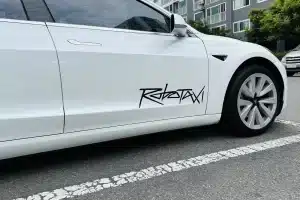
Tesla launched its Robotaxi fleet in Austin, Texas, allowing the vehicles to operate autonomously. These vehicles are currently overseen by Safety Monitors, Tesla employees who ensure the safety of passengers by intervening if necessary during the earliest stages of the ride.
A Promising Start
Within just eight days of the fleet’s launch, reviews and test runs have indicated that Tesla’s Robotaxi suite is both safe and reliable. Despite only a few interventions, primarily due to human error or unusual circumstances, the cars have shown that they can handle themselves impressively well.
The Role of Safety Monitors
Safety Monitors act as a precautionary measure, stepping in only when necessary. For example:
- UPS Truck Incident: A minor interaction occurred between a Tesla Robotaxi and a UPS truck vying for the same street parking space. It was identified as a human error without compromising safety.
- Sun Glare Braking Issue: In another instance, the Robotaxi braked unexpectedly due to sun glare. Yet, the scenario was handled adequately by the vehicle itself.
The Path to Full Autonomy
Elon Musk’s assertion that Safety Monitors could be reduced within a month or two underscores the progress Tesla is making toward achieving fully autonomous vehicle operation. The plan is to eventually phase out both Safety Monitors and Teleoperators completely, ultimately supporting Tesla’s goal of creating a driverless, autonomous ride-sharing network.
Advantages of Full Autonomy
- Enhanced Safety: Continuous system improvements are aimed at minimizing human error and maximizing passenger safety.
- Operational Efficiency: A reduction in operational costs by eventually eliminating the need for Safety Monitors and Teleoperators.
- Increased Revenue Streams: Fully autonomous vehicles will create new opportunities for revenue through ride-sharing services, allowing Tesla owners to monetize their cars.
Future Plans for Tesla’s Autonomous Ride-Sharing
Tesla is not only focused on the Austin market but also aims to roll out similar capabilities to consumer-owned vehicles globally, establishing a robust autonomous ride-sharing ecosystem.
- Scalability: Plans to expand the Robotaxi fleet to other cities and eventually include privately-owned Tesla vehicles.
- Innovation in Ride-Sharing: Offering consumers the ability to contribute to Tesla’s broader ride-sharing network.
As Tesla leads the charge toward a driverless future, its ongoing innovations and gradual reduction of Safety Monitors in its Robotaxi fleet are strong indicators of both technical confidence and a significant leap forward in automotive history. Tesla’s autonomous ride-sharing vision continues to promise revolutionary changes to the way we perceive and experience travel.