 Gary Zhou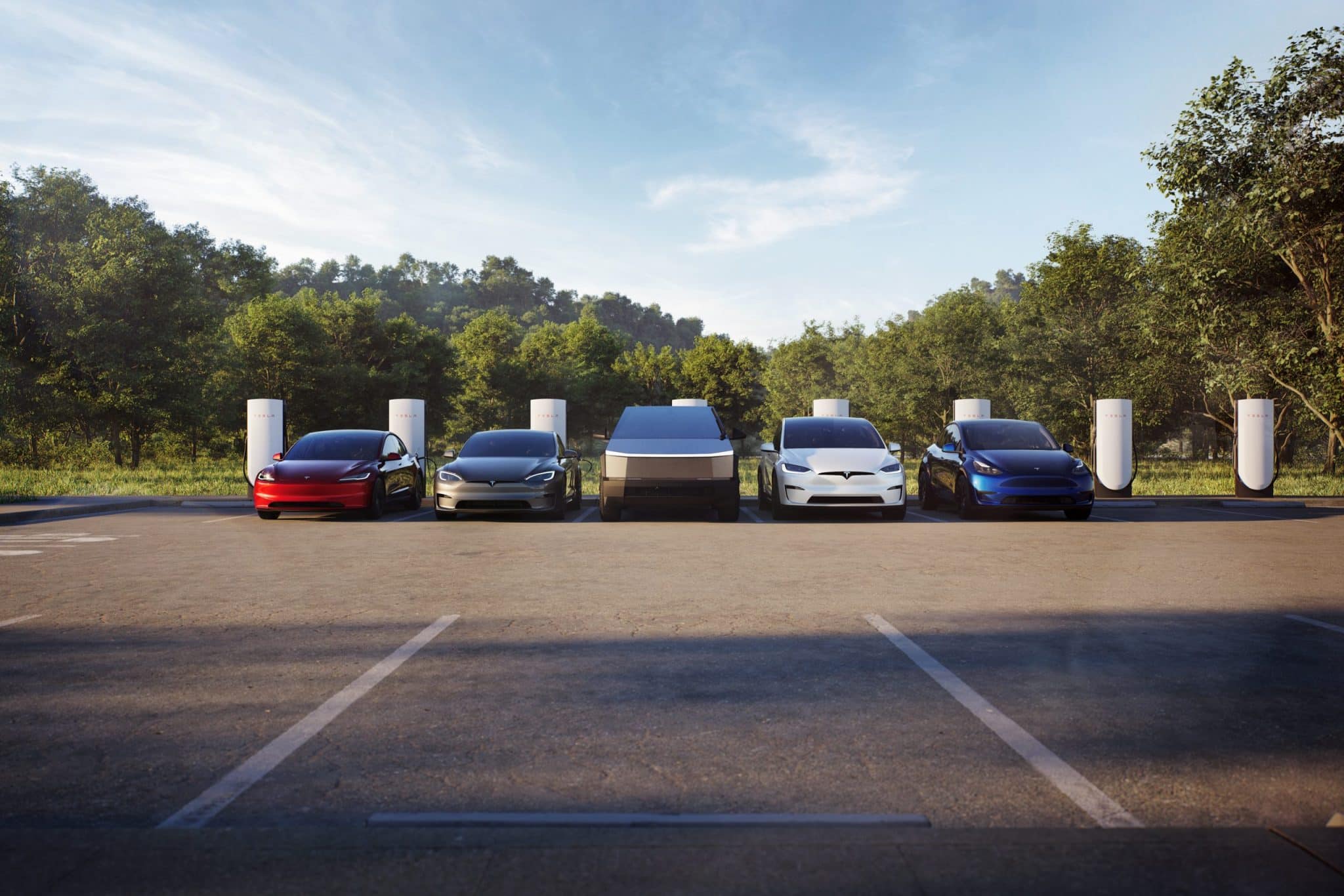
Key Takeaways
- Tesla launched its first true V4 Supercharger on the East Coast in Kissimmee, Florida, with 8 stalls powered by a 1.2 MW cabinet capable of 500 kW.
- Pricing for Tesla owners: $0.40/kWh peak (8am-midnight), $0.20/kWh off-peak; non-Tesla EVs pay $0.56/kWh peak, $0.28/kWh off-peak.
- Existing “V4” stalls are hybrids (V3.5) with V3 cabinets, limited to 250-325 kW, unlike true V4’s 1,000V support and 500 kW per stall.
- True V4 uses one compact 1.2 MW cabinet for all 8 stalls, reducing footprint and costs to under $40,000 per stall.
- Cybertruck benefits most with faster charging at low SOC; Model 3/Y see minimal immediate gains but future-proofing for high-voltage batteries.
- Marks Tesla’s push for high-power network, improving charge times, grid efficiency, and EV ecosystem benefits.
Tesla has just flipped the switch on a game-changer for EV drivers: the first true V4 Supercharger on the East Coast, located in Kissimmee, Florida. This isn’t just another charging station—it’s a milestone featuring eight stalls powered by a single, ultra-efficient 1.2 MW cabinet capable of delivering up to 500 kW per stall. Nestled at the Wawa convenience store on 7940 West Irlo Bronson Memorial Highway, this site marks the fourth such “true” V4 deployment in the U.S., signaling Tesla’s aggressive push toward a high-power, future-proof charging network. ❶ ❷ ❸
As a longtime Tesla enthusiast and EV blogger, I’ve been tracking Supercharger evolution since V2 days. This launch isn’t hype—it’s a tangible leap in speed, efficiency, and scalability. Whether you’re road-tripping in a Cybertruck or daily-driving a Model Y, here’s why Kissimmee matters and what it means for the broader EV ecosystem.
Demystifying “True” V4: How It Differs from V3.5 Hybrids
Let’s clear up the confusion first. Not all “V4” Superchargers are created equal. Many recent installations feature V4 stalls (or V3.5 hybrids) paired with older V3 cabinets, capping speeds at 250-325 kW. These look modern with longer cables (400mm extra for better reach on non-Tesla EVs) and improved cooling for sustained 325 kW output, but they’re bottlenecked by legacy hardware limited to ~480V and 425-615A amperage. ❹ ❺
True V4 Superchargers, like Kissimmee, pair V4 posts with the new V4 cabinet:
- Voltage Support: Up to 1,000V architecture, enabling higher power without excessive current (future-proofs for 800V+ vehicles).
- Power Output: 500 kW per stall (350 kW confirmed in early tests, scaling to 500 kW).
- Cabinet Specs: A compact 1.2 MW unit (>96% efficiency) powers all eight stalls, slashing footprint by 3x and costs to under $40,000 per stall. It even supports 1.2 MW bursts for Tesla Semi trucks. ❻ ❼
- No Buses: Liquid-cooled power sharing eliminates old busbars, boosting reliability.
| Feature | V3 Supercharger | V3.5/V4 Stall + V3 Cabinet | True V4 (Kissimmee) |
|---|---|---|---|
| Max Power | 250 kW | 250-325 kW | 500 kW |
| Voltage | ~400-480V | ~480V | 1,000V |
| Cable Length | Standard | +400mm | +400mm |
| Cabinet Power | 1 MW (4-8 stalls) | 1 MW | 1.2 MW (8 stalls) |
| Ideal For | Legacy fleet | Current Teslas | Cybertruck, Semi, 800V future |
Insight: This upgrade isn’t just faster—it’s smarter. Reduced civil works mean quicker deployments, crucial as Tesla opens its network to rivals like Ford and Rivian.
Kissimmee Station Deep Dive: Location, Pricing, and Real-World Access
Tucked near Orlando (perfect for Disney-bound families), the Kissimmee site is open 24/7 with eight V4 stalls. Peak pricing favors Tesla owners:
- Tesla: $0.40/kWh peak (8am-midnight), $0.20/kWh off-peak.
- Non-Tesla EVs: $0.56/kWh peak, $0.28/kWh off-peak—40% premium to encourage CCS-to-NACS adapters. ❽ ❾
Pro Tip: Charge off-peak to save ~50%. Idle fees apply post-session if stalls are busy ($0.50-$1/min in high-demand areas), so move your car promptly.
Charging Speeds That Turn Heads: Cybertruck Dominates V4
The real star? Cybertruck. Its 800V pack pulls peaks of 483-500 kW at low SOC (10-30%), adding 100+ miles in 10 minutes—far beyond V3’s 250 kW cap. Model 3/Y top out at 250 kW today but gain future-proofing for 400V-to-800V battery upgrades. ❿ ❶ ⓫
Real-World Curves (based on V4 tests):
- 10-80% SOC: ~35 minutes for Cybertruck (137 miles/15 min).
- Peaks hold 3-5% at 400+ kW, tapering smartly to protect cells.
- Non-Tesla like F-150 Lightning see ~15% faster rates due to higher amps.
Opinion: Cybertruck owners, prioritize V4 sites via the Tesla app’s navigation. For others, it’s incremental now—but by 2027, expect 400 kW averages across the lineup.
Efficiency and Cost Wins: Smarter Grid, Lower Bills
One cabinet for eight stalls cuts infrastructure costs dramatically, enabling denser urban sites. Higher efficiency (>96%) means less waste heat and grid strain—vital as U.S. Superchargers hit 60,000+ stalls. ❻
Advice for Fleet Operators:
- Road Trippers: Use Tesla’s trip planner; V4 adds 20-30% range/hour.
- Businesses: Install NACS for employee perks—non-Tesla premiums make Tesla fleet charging economical.
The Road Ahead: Upcoming True V4 Locations
Tesla’s ramping up:
- Recent: Redwood City, CA (first U.S.); Taylorsville, UT (second). ⓬
- Pipeline (2026): Bartow, FL (12 V4); North Las Vegas, NV (8 V4); expansions in CA, TX, FL highways. Check supercharge.info for live maps. ⓭
Prediction: 100+ true V4 sites by EOY 2026, prioritizing I-95 corridor.
Why This Matters: Insights for EV Adopters
V4 cements Tesla’s lead, pressuring Electrify America and EVgo to match. Opinion: It’s a boon for mass adoption—faster charges reduce “range anxiety,” boosting second-hand EV values. Advice:
- Buyers: Prioritize 800V vehicles (Cybertruck, upcoming Roadster).
- Owners: Update navigation; vote on tesla.com/supercharger-voting.
- Skeptics: Test drive + charge at Kissimmee—speeds sell themselves.
Charge into the Future
Kissimmee isn’t a station; it’s Tesla’s manifesto for effortless EV travel. As V4 proliferates, expect halved charge times and electrified highways. Stay plugged in—pun intended—for more updates.