 Gary Zhou
Key Takeaways
- Tesla owners have surpassed 8 billion miles driven on FSD Supervised, announced via Tesla’s official X post.
- FSD Supervised miles grew dramatically: 6M (2021), 80M (2022), 670M (2023), 2.25B (2024), 4.25B (2025), and 1B in first 50 days of 2026, per Tesla watcher Sawyer Merritt.
- At current pace, fleet trending toward 10 billion miles this year, fueled by expanding fleet, free trials, and Robotaxi ops.
- FSD Supervised safety: 1 major collision every 5.3M miles, outperforming manual Tesla with Active Safety (2.17M miles), without (0.85M), and US average (0.66M).
- Over 4.39B miles: 830 major collisions with FSD engaged vs. 16,131 manual with safety and 250 without.
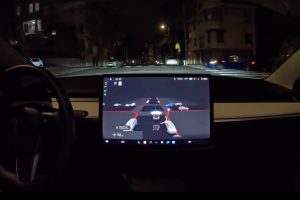
Tesla has just dropped a bombshell: owners have now logged over 8 billion miles on Full Self-Driving (FSD) Supervised, a staggering milestone that underscores the rapid evolution of autonomous tech. ❶ ❷ This isn’t just a number—it’s real-world data from millions of drivers across diverse conditions, fueling AI training and challenging skeptics who doubt self-driving’s viability. As a blogger who’s tracked Tesla’s autonomy journey since the early Autopilot days, I’m thrilled to dissect this achievement, its safety implications, growth trajectory, and what it means for Robotaxi dreams. Buckle up; this post dives deep.
The Meteoric Rise: From 6 Million to 8 Billion Miles in Five Years
FSD Supervised’s adoption has exploded, turning what was once a niche feature into a fleet-wide phenomenon. Tesla watcher Sawyer Merritt broke down the annual mileage like this:
- 2021: ~6 million miles (early days, limited rollout) ❸
- 2022: 80 million miles (software improvements kick in)
- 2023: 670 million miles (wider availability)
- 2024: 2.25 billion miles (v12 neural net revolution)
- 2025: 4.25 billion miles (global expansion)
- Q1 2026 (first 50 days): Already 1 billion miles, averaging 20.4 million miles per day—a new record. ❹
This hockey-stick growth projects Tesla hitting 10 billion miles this year alone. ❺ Visualize it: If laid end-to-end, that’s 38 million trips to the Moon. Factors fueling this?
- Massive Fleet Expansion: Tesla delivered over 2 million vehicles in 2025, all FSD-capable.
- Free Trials and Incentives: Periodic 30-day trials hook users—once they experience hands-free highway merging or city navigation, they rarely go back.
- Software Maturity: V13 and V14 versions handle unprotected lefts, roundabouts, and construction zones with eerie competence.
- Robotaxi Pilots: Early unsupervised ops in Austin and elsewhere contribute miles, blending supervised owner data with fleet autonomy. ❻
Pro Tip for Tesla Owners: If you haven’t transferred your FSD license or tried a trial, do it now. At current valuations ($8K-$12K), it’s a steal compared to the safety gains.
Safety Stats That Shut Down the Haters: 7x Safer Than the U.S. Average
The real headline? Safety. Tesla’s latest Vehicle Safety Report (North America, all roads, last 12 months) is eye-opening. ❼ Over 4.39 billion miles with FSD engaged:
| Category | Miles per Major Collision | Total Major Collisions |
|---|---|---|
| FSD Supervised | 5,300,676 | 830 |
| Tesla Manual + Active Safety | 2,175,763 | 16,131 |
| Tesla Manual (No Safety) | 855,132 | 250 |
| U.S. Average | 660,164 | N/A ❶ |
That’s 7x fewer major collisions than the national average—and even beats attentive Tesla drivers with basic aids like Autopilot. ❽ Minor crashes? FSD clocks one every ~986K miles vs. U.S. 178K. ❾
Why does this matter? Humans get tired, distracted (phones!), or impaired. FSD doesn’t. Cameras see 360°, neural nets predict chaos seconds ahead. Elon Musk tweeted: “Lot of miles” needed for unsupervised—8B is a solid start. ❿
Breaking Down the Data: What Counts as a “Major Collision”?
Tesla defines these via telemetry: airbag deployments, injury crashes, or significant impacts. If FSD was active 5 seconds prior, it counts against the system. Transparent? Mostly—critics note supervision means humans intervene on edge cases, inflating “safe” miles. Still, raw numbers dwarf competitors like Waymo ( ~50M unsupervised miles). ⓫
Robotaxi Revolution: How These Miles Power the Future
Tesla’s not stopping at supervised. Robotaxi unveil (October 2025) kicked off pilots, with Model Y fleets racking unsupervised miles in Texas. ❻ While exact contributions are opaque, experts estimate 10-20% of recent miles from geo-fenced ops. This data trains end-to-end AI, closing the “long-tail” gap (rare events like black swans).
Insight: 8B supervised miles = 100x Waymo’s unsupervised. Scale wins. Expect regulatory nods soon—NHTSA’s eyeing Tesla’s data favorably.
Head-to-Head: FSD vs. Rivals
- Waymo: 50M miles, geofenced, expensive lidar. Safer per mile? Debatable, but tiny dataset.
- Cruise: Halted after incidents.
- Humans: 94% of U.S. crashes from error. FSD: <1%? ⓬
Caveats, Criticisms, and My Balanced Take
Not all sunshine. Reddit threads question if “supervised” inflates stats—users nag on 1% disengagements. ⓭ Robotaxi crashes (1/57K miles unsupervised) highlight risks. ⓮ Tesla’s self-reported data lacks third-party audits.
My Opinion: Bullish. I’ve test-driven V14—it’s transformative for commuters. Advice:
- Enable Always: Safety > perfection.
- Report Interventions: Feeds the fleet.
- Invest in TSLA? Autonomy = trillion-dollar TAM.
- Watch Q1 Earnings: Miles-to-revenue pivot incoming.
Skeptics: Wait for 100B miles unsupervised. Believers: Data doesn’t lie.
The Road Ahead: 10B Miles and Beyond
By year-end, 10B miles. Unsupervised nationwide? 2027. Robotaxi fleets? Millions. Tesla’s edge: Vision-only, scalable, cheap.
This milestone cements FSD as safer-than-human today. Drive safe—or let FSD do it.