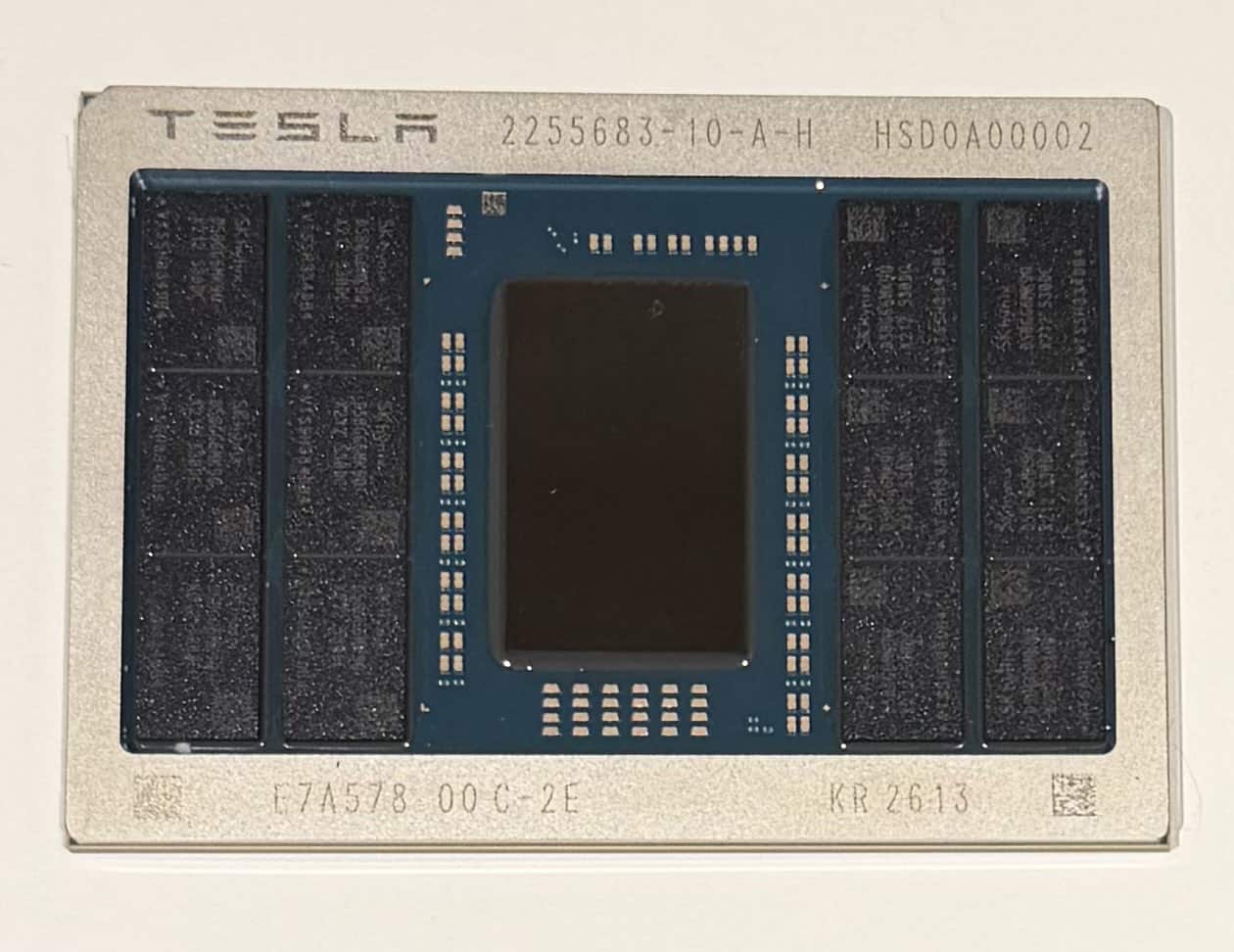
Tesla’s AI5 Chip Hits Tape-Out: Revolutionizing Optimus and Dojo While AI4 Powers Safer-Than-Human FSD
Key Takeaways
- Tesla has finalized the AI5 chip design and reached tape-out stage for mass production.
- Elon Musk on X: AI4 hardware is sufficient for FSD safety “much better than human,” no need for AI5 in vehicles.
- AI5 will accelerate Optimus robot development and massive Dojo-style supercomputer clusters.
- Musk thanks TSMC and Samsung; predicts AI5 as one of the most produced AI chips ever.
- AI4 in HW4 Teslas already shows superior safety metrics over human drivers in key areas.
- Strategic pivot: Avoid fleet retrofits, redirect compute to robots and training scale.
- Unsupervised FSD feasible technically with AI4, but regulatory approval is the main barrier.
- Musk clarifies roadmap in X replies, emphasizing Optimus and clusters over vehicle upgrades.
In a bombshell announcement on X (formerly Twitter), Tesla CEO Elon Musk revealed that the company has finalized the design of its next-generation AI5 chip and reached the critical “tape-out” stage—the final step before mass production kicks off.❶ ❷This milestone, shared on April 15, 2026, underscores Tesla’s relentless push into AI dominance, but with a surprising twist: Musk insists current AI4 hardware in HW4-equipped vehicles is already “much better than human” for Full Self-Driving (FSD) safety, making AI5 upgrades unnecessary for cars.❷Instead, AI5 is poised to supercharge Tesla’s humanoid robot Optimus and massive Dojo-style supercomputer clusters. This reads as masterstroke in resource allocation—prioritizing exponential growth in robotics and training compute over costly fleet retrofits Let’s dive deep into the implications, backed by the latest data and Musk’s own words.
The Tape-Out Milestone: What It Means for Tesla’s AI Hardware Roadmap
Tape-outis semiconductor jargon for sending the finalized chip design to a fabrication foundry, like hitting “print” after endless revisions. For Tesla’s AI5, this greenlights production prototypes, with high-volume manufacturing slated for 2027 via dual-sourcing partners TSMC (in Arizona) and Samsung.❸ ❹Musk thanked both giants publicly, predicting AI5 will become “one of the most produced AI chips ever” due to its applications across vehicles, robots, and data centers.❷
Performance-wise, a single AI5 chip delivers approximately5x the useful computeof a dual-SoC AI4 setup (the standard in HW4 Teslas). Some reports hype a 40x raw performance leap over predecessors, but Musk’s conservative “useful compute” metric accounts for real-world efficiency in neural net inference.❺This isn’t just incremental; it’s a leap designed for inference-heavy tasks like real-time robot control and video processing at scale.
Notably, the project faced delays—nearly two years behind original schedules—highlighting the brutal challenges of custom silicon in a world dominated by Nvidia.❶Yet, Tesla’s in-house team pulled it off, resuming work on AI6 and Dojo 3 in parallel.❻
AI4’s Proven Supremacy: Safer Than Humans, No Upgrades Needed
Elon Musk didn’t mince words:“AI4 is enough to achieve much better than human safety for FSD.” ❷This pivot crushes speculation about mandatory HW5/AI5 retrofits for the existing Tesla fleet, saving billions in logistics and hardware costs.
Tesla’s own Vehicle Safety Reports back this up with hard numbers:
- Autopilot (no FSD): Nearly 9x safer than the U.S. average human driver in Q3 2025, with one crash per millions of miles versus humans’ one per ~670,000 miles. ❼
- FSD Supervised: Even better, showing 200x safer in some analyses when adjusted for miles driven, far outpacing human baselines in forward collision avoidance, lane-keeping, and pedestrian detection. ❽ ❾
| Metric | Human Drivers (U.S. Avg.) | Tesla Autopilot | FSD Supervised |
|---|---|---|---|
| Crashes per Million Miles | ~1.5-2.0 | ~0.17 (9x safer) | <0.01 (potentially 200x) |
| Key Strengths | N/A | Emergency braking, lane control | Complex urban maneuvers |
These stats aren’t cherry-picked; they’re fleet-wide, aggregated from billions of miles.❿My take? Tesla’s end-to-end neural nets, trained on unmatched video data, are finally cracking the “long-tail” edge cases that trip up rule-based systems like Waymo’s.Advice for Tesla owners:If you have HW4, you’re future-proofed for unsupervised FSD—focus on software updates, not hardware swaps.
AI5 Unleashed: Fueling Optimus Robots and Dojo Superclusters
While cars get a pass on AI5, the real fireworks are elsewhere:
Optimus Humanoid Revolution
- AI5’s 5x compute boost enables “almost perfect” real-time decision-making for Tesla’s Optimus bots, from factory tasks to household chores. ⓫
- Imagine legions of Optimus units learning via Tesla’s vast video corpus—AI5 inference will make them dexterous, adaptive, and scalable.
- Insight: This could eclipse vehicle revenue long-term. Musk envisions billions in Optimus sales; AI5 is the enabler.
Dojo Supercomputer Clusters
- Tesla’s custom Dojo (now eyeing Dojo 3) uses AI5 for exaflop-scale training of FSD and Optimus nets, reducing Nvidia dependency. ⓬
- Massive scale: Musk hints at “Dojo-style supercomputer clusters” that could train models 10-100x faster, accelerating unsupervised FSD v13+.
- Opinion: Brilliant pivot. Nvidia shortages have plagued Tesla; in-house AI5/Dojo vertical integration mirrors Apple’s M-series success.
Pro Tip for Investors:Watch Optimus demos post-AI5 samples—Musk already teased prototypes. This isn’t hype; it’s hardware reality.
Manufacturing Powerhouse: TSMC and Samsung Seal the Deal
Dual-sourcing mitigates risks:
- TSMC (Arizona): Cutting-edge nodes for high-volume, U.S.-based production.
- Samsung: Recently won AI5 contract; Musk “accidentally” thanked “TSC” (likely TSMC slip) but confirmed both. ⓭ ⓮
This setup positions AI5 for gigawatt-scale fabs, rivaling Nvidia’s H100/Blackwell runs.
Strategic Brilliance: Ditching Retrofits for Exponential Growth
No fleet upgrades = smart economics. Retrofitting millions of cars? A logistical nightmare costing $10B+. Instead:
- Redirect R&D to robots/training.
- HW4 fleet becomes instant robotaxi army once regs clear.
My Prediction:Robotaxi unveil (delayed?) will demo AI4 prowess, with AI5 reserved for Gen 3 vehicles/Optimus.
The Elephant: Regulatory Barriers to Unsupervised FSD
Technically, AI4 nails it—but regulators lag:
- NHTSA Probes: Ongoing FSD investigations over visibility/low-light issues; potential recalls loom. ⓯
- EU Blocks: FSD “banned” despite superior safety data. ⓰
- Data Hurdle: Musk says ~10B miles needed for “safe unsupervised.” ⓱
Advice:Push lawmakers with data—petition for geofenced unsupervised FSD in low-risk areas (e.g., highways). Tesla’s transparency is its edge.
Final Thoughts: Tesla’s AI Empire Rises
Tesla’s AI5 tape-out isn’t just a chip milestone; it’s a declaration of independence. AI4 secures safer roads today, while AI5 builds tomorrow’s robot workforce and AI foundries. Delays? Sure. But execution trumps timelines.Bullish outlook:$TSLA to $500+ by EOY on Optimus ramps. Stay tuned—next: AI5 samples and Dojo 3 unveils.
What do you think—AI4 robotaxis by 2027? Drop comments below!