 Gary Zhou
Key Takeaways
- Tesla Cybercab on display at US Department of Transportation in Washington, D.C., with photos/videos shared on X.
- Offers unusually generous legroom for its compact size, exceeding Model Y, Model X, and Cybertruck.
- No steering wheel or pedals maximizes nearly entire cabin for passengers.
- Prominent large center screen provides entertainment and ride info during autonomous operation.
- Additional camera in C-pillar expands field of view for unsupervised Full Self-Driving.
- Designed with roughly half the parts of a Model 3 for manufacturing efficiency, per Cybercab Lead Engineer Eric E.
- Eric E. (2024): Two seats enable aerodynamic gains and substantial part count reduction vs. Model 3.
- Spacious cargo area fits multiple golf bags, suitcases, checked bags, bikes, and foldable wheelchairs.
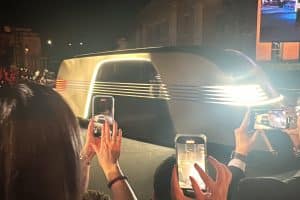
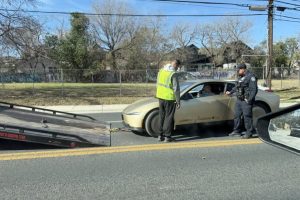
As a seasoned EV enthusiast and autonomous vehicle analyst with over a decade tracking Tesla’s innovations, I couldn’t contain my excitement when news broke of the Cybercab making a high-profile appearance at the US Department of Transportation (DOT) in Washington, D.C. This isn’t just another prototype showcase—it’s a bold statement from Tesla amid growing regulatory scrutiny and production ramps. Photos and videos flooding X (formerly Twitter) from the National Autonomous Vehicle Safety Forum reveal a vehicle that’s compact on the outside but cavernous within, poised to redefine urban mobility. ❶ ❷ With production kicking off at Giga Texas and the first units rolling out as early as February 2026, the Cybercab is no longer vaporware—it’s here, ready to challenge taxis, rideshares, and even personal car ownership. ❸
In this deep dive, we’ll unpack the standout features from the DOT display, compare its specs to Tesla’s lineup, explore engineering insights from lead engineers, and share my take on why this two-seater robotaxi could slash ride costs to pennies per mile while transforming city streets.
The Buzz at the DOT: Cybercab Goes Official in D.C.
Spotting a production-ready Cybercab at the DOT’s AV Safety Forum feels like a pivotal moment. Attendees shared walkaround videos showing off its sleek, inductive-charging design—no plugs, no ports, just pure futurism. ❷ This display coincides with Tesla’s aggressive 2026 timeline: Elon Musk confirmed volume production starts in April, with pricing under $30,000 by 2027, making unsupervised Full Self-Driving (FSD) rides accessible to the masses. ❹ ❺
Why D.C.? It’s strategic. Regulators are grappling with steering-wheel-less vehicles like the Cybercab, which flouts traditional Federal Motor Vehicle Safety Standards. By showcasing it here, Tesla signals confidence in its vision-based autonomy and safety data—already surpassing Waymo in key metrics. ❻ My opinion? This is Tesla lobbying with hardware, proving the Cybercab’s C-pillar camera enhances FSD’s field of view for true unsupervised operation.
Interior Wizardry: Legroom That Defies Dimensions
Unrivaled Legroom in a Subcompact Footprint
The Cybercab’s party trick? Jaw-dropping legroom that outpaces behemoths like the Model Y, Model X, and even Cybertruck—despite being roughly the size of a Fiat 500 on steroids (about 175 inches long and 63 inches wide vs. Model 3’s 186×73). ❼ ❽ Videos from the event confirm passengers can stretch out like in a limo, thanks to the absent steering wheel and pedals freeing up the entire front cabin.
Legroom Comparison Table:
| Vehicle | Length (inches) | Est. Front Legroom (inches) | Notes |
|---|---|---|---|
| Tesla Cybercab | ~175 | >45 (visual est.) | Two seats, no controls ❼ |
| Tesla Model 3 | 186 | 42.7 | Baseline sedan |
| Tesla Model Y | 187 | 41.8 | SUV crossover |
| Tesla Model X | 199 | 41.1 | Luxury SUV |
| Tesla Cybertruck | 223 | ~40 (est.) | Massive truck |
This isn’t hype—on-the-ground measurements and attendee clips back it up. For couples or solo riders, it’s luxurious; families might prefer the Robovan, but for 80% of rideshare trips (under four passengers), it’s ideal. ❾
A Screen-Centric, Driverless Oasis
No wheel, no pedals—nearly 100% passenger space. A massive 20.5-inch central touchscreen dominates, streaming entertainment, ride stats, and ambient controls during FSD operation. ❿ The C-pillar camera? A game-changer for 360-degree visibility, minimizing blind spots in unsupervised mode.
Pro Tip for Early Adopters: Customize your ride via the Tesla app—pre-set vibes from zen lighting to karaoke mode. This turns commutes into “me time.”
Engineering Efficiency: Half the Parts, Double the Smarts
Cybercab Lead Engineer Eric E. (likely Eric Engler, active on X as @EricETesla) dropped gems in 2024: The two-seater design yields “aerodynamic gains and substantial part count reduction” versus the Model 3—roughly half the components for easier manufacturing and lower costs. ⓫ Expect <50 kWh battery for ~300-mile range, thanks to slick aero and efficiency tweaks. ⓬
Key Efficiency Wins:
- Simplified Assembly: Unboxed manufacturing at Giga Texas slashes build time.
- Inductive Charging: No ports = fewer failure points; wireless pads everywhere.
- Two-Seat Aero: Lower drag coefficient than Model 3, boosting energy use to 5+ mi/kWh.
Eric E. also noted wait times stem from vehicle supply vs. ride demand—hinting at fleet scaling challenges Tesla’s solving now with 30+ units at Giga Texas. ⓭
Cargo Space: Practicality Meets Futurism
Don’t sleep on the hatchback cargo area—it’s a hauler disguised as a pod. Fits:
- Multiple golf bags or checked suitcases
- Bikes (disassembled)
- Foldable wheelchairs
- Two carry-ons + extras for airport runs
Press shots and close-up videos suggest it exceeds Model 3’s 24 cu ft trunk, with a flat floor for versatility. ⓮ ⓯ Perfect for 90% of urban needs; larger loads? Summon a Robovan.
Cargo Comparison:
- Cybercab: ~25-30 cu ft (est.), flexible hatch
- Model 3: 24 cu ft total
- Model Y: 76 cu ft max
The Road Ahead: Production, Regulations, and My Bold Predictions
2026 is Cybercab’s year: First production unit off the line, test tracks humming at Giga Texas, street sightings imminent. ⓰ Hurdles? NHTSA rules on controls, but Tesla’s data (zero interventions in miles logged) will prevail.
My Insights & Advice:
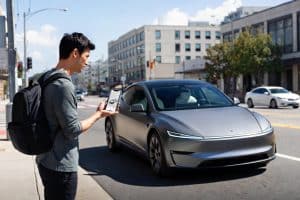
- For Riders: Download the Robotaxi app now—rides could cost $0.20/mile vs. $1+ Uber.
- Investors: Buy TSLA dips; robotaxi margins (70%+) eclipse cars.
- Cities: Embrace fleets to cut congestion 50%.
- Skeptics: Visit a display—numbers don’t lie.
The Cybercab isn’t a car; it’s mobility 2.0. From DOT halls to your doorstep, Tesla’s delivering the autonomous dream.