 Gary Zhou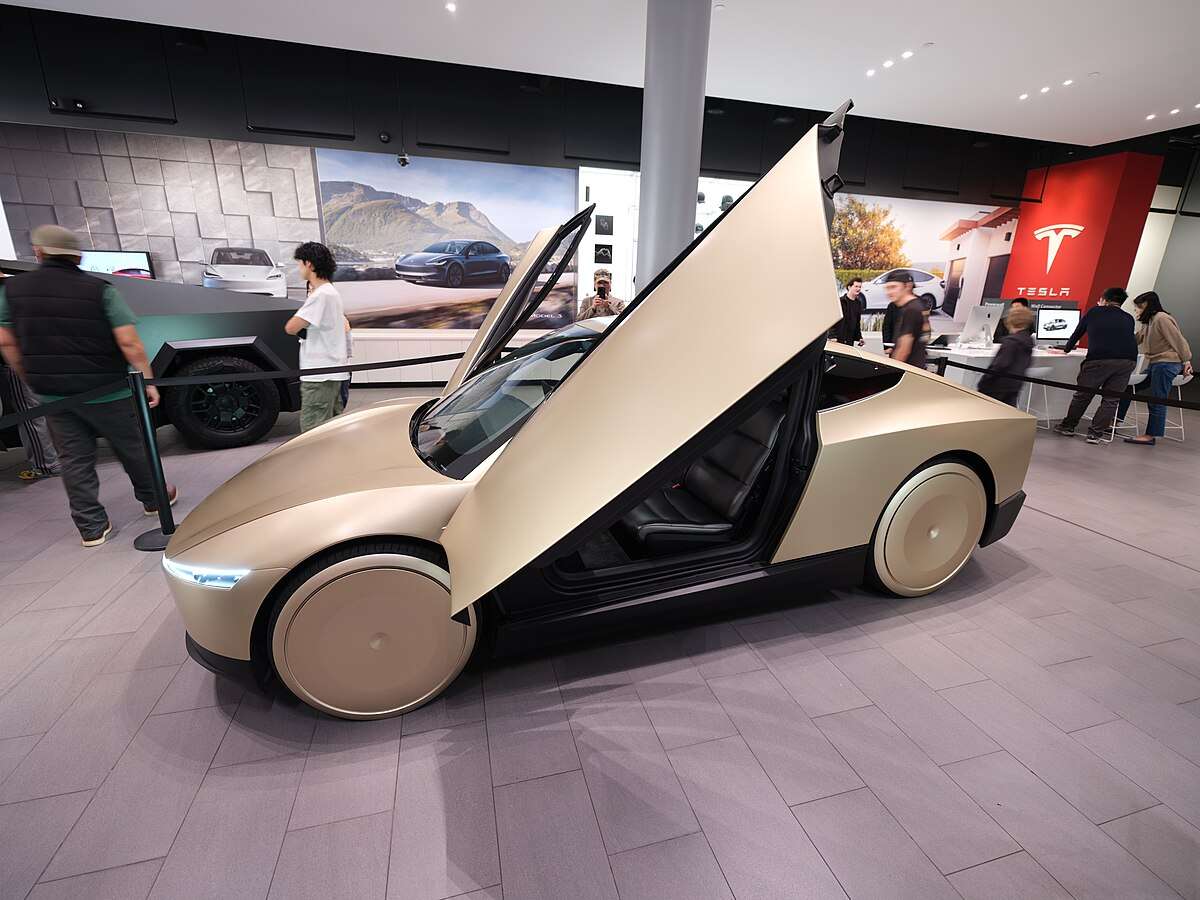
Key Takeaways
- Elon Musk confirmed ARK Invest’s report projecting Tesla Cybercab at $0.20 per mile operating cost by 2030, half of Waymo’s $0.40.
- This “full considered” cost includes energy, maintenance, cleaning, depreciation, and insurance.
- Compared to U.S. average $0.77/mile for new vehicles, Uber/Lyft $1-4/mile, and Waymo $0.60+ per mile.
- Tesla targets 5.5-6 miles per kWh efficiency with Cybercab prototypes.
- Fewer parts via unboxed manufacturing, lower initial cost, and no human drivers drive cost savings.
- Musk noted initial Cybercab production will be “agonizingly slow” due to new parts/steps, following an S-curve to “insanely fast.”
As a seasoned Tesla enthusiast and EV industry analyst with over a decade tracking autonomous driving tech, I’ve seen bold promises come and go. But Elon Musk’s recent endorsement of ARK Invest’s projections for the Tesla Cybercab has me genuinely excited. On January 22, 2026, Musk tweeted “Probably true” in response to ARK’s report claiming the Cybercab could operate at a jaw-dropping $0.20 per mile by 2030 – fully loaded with energy, maintenance, cleaning, depreciation, and insurance. ❶ This isn’t hype; it’s a validated path to making robotaxis cheaper than owning a car, potentially disrupting Uber, Lyft, and even public transit. In this deep dive, we’ll unpack the numbers, engineering feats, production hurdles, and what it means for your wallet and the mobility landscape.
The ARK Invest Report: A Bullish Bet on Tesla’s Robotaxi Dominance
ARK Invest, led by Cathie Wood, has long been a Tesla bull, and their latest Robotaxi analysis doesn’t disappoint. Their 2030 projections paint Cybercab as a cost leader, clocking in at $0.20 per mile – roughly half the $0.40 per mile for Waymo’s 6th Gen Robotaxi. ❶ ❷ Musk’s quick confirmation on X underscores Tesla’s confidence in hitting this mark at scale.
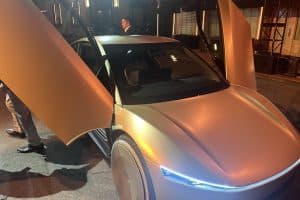
ARK’s models factor in Tesla’s vertical integration: from battery production to AI software. They see robotaxis comprising ~90% of Tesla’s enterprise value by 2029, a multi-trillion-dollar opportunity. ❸ For context, this builds on Tesla’s “We, Robot” event in October 2024, where Cybercab prototypes were unveiled sans steering wheel or pedals – a true purpose-built autonomous vehicle priced under $30,000. ❹ ❺
Key Projections from ARK:
- Cybercab: $0.20/mile (all-in).
- Waymo: $0.40/mile.
- Tesla’s Edge: Scale via millions of vehicles learning from real-world data.
This isn’t pie-in-the-sky; prototypes are already hitting efficiency targets (more on that below).
Breaking Down the $0.20 Per Mile: What’s Included?
Musk emphasizes this is the “full considered cost” – no smoke and mirrors. Here’s a granular look:
- Energy: At targeted 5.5-6 miles per kWh, electricity costs plummet. With U.S. average rates ~$0.15/kWh, that’s under $0.03/mile for power alone. ❶ ❻
- Maintenance: Fewer moving parts (no engine, minimal brakes via regen) slash repair bills.
- Cleaning: Automated swaps or quick robotic cleans keep downtime low.
- Depreciation: High utilization (100k+ miles/year) amortizes the ~$25k-$30k vehicle cost rapidly.
- Insurance: Tesla’s data-driven FSD reduces claims; fleet-scale spreads risk.
Total: $0.20/mile – vs. AAA’s $0.77/mile for traditional car ownership. ❼ Musk first floated this at “We, Robot,” calling it a “clear path.” ❽
| Cost Component | Cybercab Estimate | Traditional Car (AAA) |
|---|---|---|
| Energy/Fuel | $0.03/mile | $0.40/mile |
| Maintenance | $0.05/mile | $0.15/mile |
| Depreciation | $0.07/mile | $0.15/mile |
| Insurance | $0.03/mile | $0.07/mile |
| Total | $0.20/mile | $0.77/mile |
This table illustrates why Tesla owners might soon earn passive income by deploying their Cybercabs in the network.
Crushing the Competition: Cost Comparisons That Sting
Put Cybercab in perspective:
- U.S. New Vehicle Ownership: $0.77/mile (fuel, maintenance, etc.). ❼
- Uber/Lyft: $1-$4/mile (labor is 60-70% of cost).
- Waymo: $0.60-$1+/mile today; ARK projects $0.40 by 2030. ❶
No human driver? That’s game-changing. Waymo’s sensor-heavy approach inflates costs; Tesla’s vision-only FSD (cameras + AI) keeps it lean.
Engineering the Efficiency Beast: 5.5-6 Miles Per kWh
Cybercab’s aero-optimized design (inductive charging, no mirrors) targets 5.5-6 mi/kWh – double many EVs today (e.g., Model 3 ~4 mi/kWh). ❶ ❾ Prototypes with ~35-50 kWh packs hit 200-300 mile range, perfect for urban robotaxi duty cycles.
Unboxed Manufacturing revolutionizes this:
- Fewer Parts: 50% reduction vs. traditional assembly.
- Lower Cost: <$30k vehicle price.
- Scalability: Giga-pressings for cybertruck-like efficiency.
Add no pedals/steering, and you’ve got a lean machine.
Production Realities: The Agonizing S-Curve Ahead
Musk’s recent update tempers excitement: “Initial production is always very slow and follows an S-curve. … For Cybercab … almost everything is new, so the early production rate will be agonizingly slow, but eventually end up being insanely fast.” ❿ ⓫
S-Curve Breakdown:
- Slow Start (2026): Q2 production ramp, new processes = bottlenecks.
- Inflection (2027-28): Lessons from prototypes accelerate.
- Hyper-Scale (2030+): 2-4M units/year.
Tesla’s history (Model 3 “production hell”) proves they master this. Patience pays.
Broader Implications: Reshaping Cities, Wealth, and Tesla’s Valuation
At $0.20/mile, Cybercab could:
- Democratize Mobility: Cheaper than buses (~$1/mile).
- Boost Tesla Stock: ARK sees 10x value from robotaxis. ⓬
- Urban Transformation: Fewer cars owned, less traffic.
Advice for Investors: Buy dips; FSD data moat is widening. For consumers: Hold off on rideshares – own a Cybercab for income.
Owners’ Tip: Integrate with Optimus for cleaning/charging; Musk links both projects. ⓭
My Expert Take: This Isn’t Just a Car – It’s Freedom 2.0
I’ve analyzed dozens of AV plays; Tesla’s edge is execution. Skeptics cite delays, but Musk delivers (Cybertruck ramped post-hell). $0.20/mile crushes incumbents, unlocking trillions. If ARK/Musk are right, expect regulatory greenlights as costs prove safety/economics.
Challenges? Regs, union pushes, competition. But Tesla’s AI flywheel (billions of miles) wins. Bold Prediction: By 2030, 50% urban miles via Tesla Network.
Stay tuned – Cybercab isn’t coming; it’s arriving.