 Gary Zhou
Key Takeaways
- SpaceX shared a stunning video of Starship’s Super Heavy booster achieving a flawless hover during its 11th flight test.
- The nearly 400-foot tall booster smoothly returned to Earth, showcasing impressive balance and stability before its soft water landing.
- Flight Test 11 successfully met all major goals, including deploying Starlink mass simulators and relighting Raptor engines.
- This flight marked the second reuse of a Super Heavy booster, advancing SpaceX’s mission for a fully reusable Starship system.
- 🔄 The transition from Starship V2 to the upgraded V3 aims for faster turnaround and higher payload capacity, with aggressive future targets set by Elon Musk.
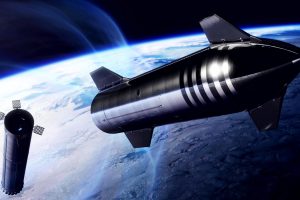
In an awe-inspiring demonstration of engineering prowess, SpaceX’s Starship program has achieved another milestone, showcasing the potential of fully reusable spaceflight technology. During its 11th flight test, the massive Super Heavy booster pulled off a jaw-dropping hover that has the space community buzzing with excitement.
The Hover That Stunned the World
The video released by SpaceX displays the nearly 400-foot tall Super Heavy booster exhibiting remarkable balance as it smoothly descended to hover above the Gulf of America. This impressive feat not only emphasized the precision and control engineered into the spacecraft but also highlighted SpaceX’s continued commitment to innovation and excellence in aerospace technology.
Key Elements of the Flight Test
- Starlink Mass Simulators Deployment:
- The deployment of Starlink mass simulators was a critical objective, representing the mission’s primary payload activity.
- Raptor Engines Relighting:
- Demonstrating the capability to reignite engines in space, a crucial feature for future deep-space missions, was successfully executed.
- Stable Reentry:
- Both the Starship Upper Stage and the Super Heavy booster achieved stable reentry, further validating the design for safe and reliable returns from space.
- Booster Reusability:
- For the second time, a Super Heavy booster demonstrated successful reuse, keeping SpaceX on track toward fully reusable spaceflight systems, a goal that could dramatically reduce costs and increase the frequency of missions.
The Transition from V2 to V3: What’s Next?
As SpaceX wraps up its achievements with the Starship V2, the transition to the Starship V3 is poised to introduce advancements aiming at faster turnaround times and enhanced payload capabilities. This new version is expected to push the boundaries of what is possible in space travel, setting the stage for more ambitious missions.
Anticipated Features of Starship V3
- Enhanced Payload Capacity:
- Innovations in design and materials will allow greater payloads, essential for deep-space missions and satellite deployments.
- Improved Turnaround:
- Faster preparation and re-launch capabilities will revolutionize the frequency and efficiency of space missions.
- Tower Catch Feat:
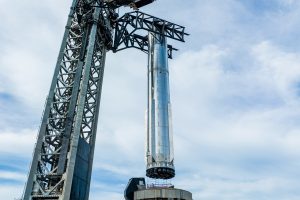
- As teased by Elon Musk, SpaceX plans to attempt capturing the Starship Upper Stage with a tower as early as spring 2026, a maneuver that could eliminate the need for ocean landings.
Paving the Path to Space
The success of Super Heavy’s 11th flight test not only marks a significant step forward for SpaceX but also for the future of sustainable space exploration. By focusing on reusability, SpaceX is transforming the economics of space travel and paving the way for humanity’s expansion into the cosmos. The move to Starship V3 will likely accelerate these trends, continuing to inspire and awe with each new achievement.