 Gary Zhou
Key Takeaways
- FCC has accepted SpaceX’s filing for up to 1 million NGSO satellites for the “Orbital Data Center” system.
- Satellites to operate at 500-2,000 km altitudes using optical inter-satellite links for data transmission.
- Proposal opened for public comment until early March, as highlighted by FCC Chairman Brendan Carr on X.
- SpaceX describes it as first step toward Kardashev II-level civilization, harnessing Sun’s power.
- System integrates with existing/planned Starlink networks for connectivity.
- SpaceX requests waivers on milestones, bonds, and disclosure rules to enable scale.
- Framework for future orbital computing like AI workloads, powered by continuous solar energy.
Imagine a sky filled not just with stars, but with a million tiny supercomputers orbiting Earth, guzzling endless solar power to crunch AI workloads that would cripple terrestrial data centers. That’s the audacious vision SpaceX just lodged with the FCC – and on February 4, 2026, the agency accepted it for review, kicking off a public comment period that could reshape computing, space policy, and humanity’s cosmic ambitions. ❶ ❷
As a blogger who’s tracked SpaceX’s relentless push from Falcon 1 failures to Starship triumphs and Starlink’s global broadband revolution, this “Orbital Data Center” proposal feels like the next logical – if wildly ambitious – evolution. It’s not just about satellites anymore; it’s about turning low Earth orbit (LEO) into the ultimate data center real estate, powered by the sun and integrated with Elon Musk’s growing empire of rocketry, internet, and AI. Let’s dive deep into the filing, the tech, the regulatory hurdles, and what it means for our future.
The Proposal: A Million Satellites in Orbit for AI Supremacy
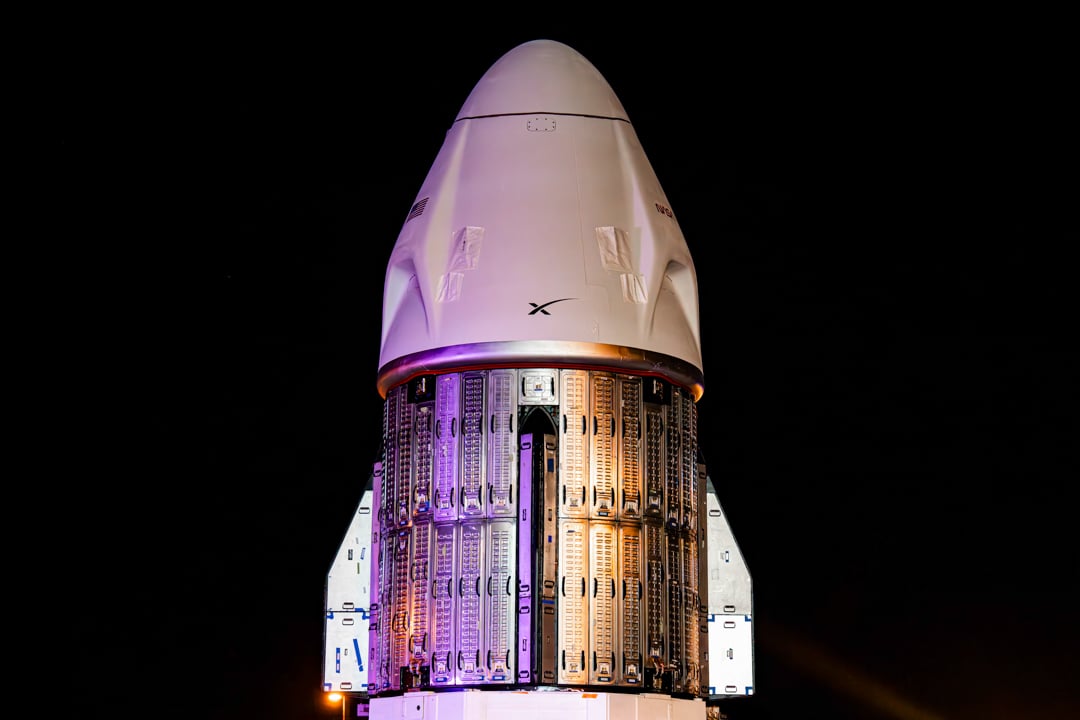
SpaceX filed its application on January 30, 2026 (ICFS File No. SAT-LOA-20260108-00016), seeking authority for a new non-geostationary orbit (NGSO) satellite system dubbed the “SpaceX Orbital Data Center system.” ❶ At its core: up to one million satellites – yes, you read that right, a million – operating between 500 km and 2,000 km altitudes. These aren’t your average comms birds; they’re designed as space-based data centers optimized for energy-hungry tasks like AI training and inference. ❸
Why orbit? Earth-bound data centers are hitting walls: skyrocketing energy demands (AI alone could consume as much power as entire countries by 2030), land scarcity, water cooling limits, and carbon footprints. SpaceX flips the script:
- Unlimited Solar Power: Orbits at 30-degree inclinations and sun-synchronous paths ensure >99% sunlight exposure in higher shells, enabling near-constant power without batteries or fuel. ❸
- Scalable Real Estate: Orbit offers vast “physical scale” – no zoning laws, endless expansion via launches.
- Cost Efficiency: SpaceX claims orbital compute will be cheaper long-term, dodging terrestrial grid constraints. ❷
Traffic flows via high-bandwidth optical inter-satellite links (laser comms) forming a petabit-scale mesh network. Data routes through this space laser web to authorized ground stations, with backup Ka-band frequencies (18.3-19.3 GHz space-to-Earth, 28.6-29.1 GHz Earth-to-space) for telemetry, tracking, and command (TT&C) – all on a non-interference, unprotected basis. ❶
Seamless Integration with Starlink: A SpaceX Ecosystem Play
This isn’t a standalone fleet. The Orbital Data Centers will connect directly with SpaceX’s first- and second-generation Starlink constellations for data relay to Earth. Starlink’s thousands of satellites become the backbone, beaming processed AI outputs back to users worldwide. ❶ ❷
Picture it: Your Grok AI query zips up via Starlink, gets crunched in orbit by solar-fueled GPUs, and returns instantly – all without taxing planetary power grids. Rumors swirl of SpaceX acquiring xAI to supercharge this (as hinted in recent reports), vertically integrating rockets, sats, nets, and brains. ❹ Whether confirmed or not, it positions SpaceX as the one-stop shop for orbital intelligence.
Navigating Regulations: SpaceX’s Waiver Wishlist
No mega-constellation sails unchallenged. SpaceX requests four key waivers to our FCC rules, arguing the system’s novelty and non-interfering nature justifies flexibility. ❺ Here’s the breakdown:
- Waiver of §§ 25.156(d) & 25.157 (Processing Rounds): Skip NGSO “processing round” timelines for Ka-band use. Reason: Dynamic beam steering and optical rerouting prevent interference; delays innovation without protecting others. ❺
- Waiver of § 25.164 (Milestones): No need for 50% deployment in 6 years or 100% in 9. Reason: Backup-only Ka-band on non-priority basis avoids “warehousing”; SpaceX’s launch cadence ensures progress. ❺
- Waiver of § 25.165 (Surety Bonds): Exempt from $1M-$5M bonds. Reason: Same non-interference logic; bonds add needless cost for low-risk ops. ❺
- Waiver of § 25.114(a)(1) (Schedule S Details): Flexibility on channel plans, beam configs, and orbital disclosures. Reason: Dynamic ops (variable bandwidths, multi-use beams) don’t fit rigid forms; provided representative data instead. ❺
The FCC’s Space Bureau accepted the filing via Public Notice DA-26-113, opening comments. Deadlines: Petitions/Comments by March 6, 2026; Oppositions/Responses by March 16; Replies by March 23. File via ICFS – your chance to weigh in on orbital overcrowding or innovation. ❶
FCC Chairman Brendan Carr amplified it on X: “The FCC welcomes and now seeks comment on the SpaceX application for Orbital Data Centers,” quoting SpaceX’s Kardashev vision. ❻
The Kardashev Connection: Sci-Fi Meets Strategy
SpaceX drops a bombshell: This is the “first step towards becoming a Kardashev II-level civilization – one that can harness the Sun’s full power.” ❷ For context, the Kardashev scale (1964 by Nikolai Kardashev) measures civs by energy use:
- Type I: Planetary energy (Earth ~0.73).
- Type II: Stellar energy (Dyson spheres, etc.).
- Type III: Galactic.
Orbital data centers? A Dyson swarm lite – trillions of watts from solar sails/arrays, beamed as compute. Bold? Absolutely. Practical first step for AI scaling, where energy is the bottleneck.
Challenges and Criticisms: Debris, Congestion, and Skepticism
Not all sunshine. Critics flag:
- Orbital Debris: 1M sats amplify collision risks in crowded LEO (Starlink already ~6,000). ❸
- Spectrum/Interference: Even “non-protected,” Ka-band could clash.
- Deployment Reality: No timeline/cost; Starlink Gen2 took years.
- Environmental Irony: Launches emit CO2, though solar offsets compute emissions.
My take: SpaceX’s reusability mitigates this. Rapid iteration (Starship fleets) could deploy subsets fast, with deorbit tech standard.
Implications for AI, Industry, and Humanity
For AI: Orbital compute slashes costs 10x+, enables exascale without blackouts. xAI/Grok could thrive here. Industry: Competitors (Amazon Kuiper, OneWeb) must adapt; data center giants (MSFT, GOOG) eye partnerships. Global: Bridges digital divide via cheap AI access; boosts Mars ambitions (in-orbit sims). Advice for Investors/Entrepreneurs: Bet on space AI stocks. Diversify into laser comms, solar sails.
Orbiting Towards Type II?
SpaceX isn’t just building rockets – it’s engineering civilizations. If approved, this filing catapults us from sci-fi to reality. Watch the comment period; public input matters. As your space tech guide, I’m bullish: The stars aren’t the limit; they’re the launchpad.
What do you think? Orbital data centers: Game-changer or orbital clutter? Drop thoughts below!