
 Gary Zhou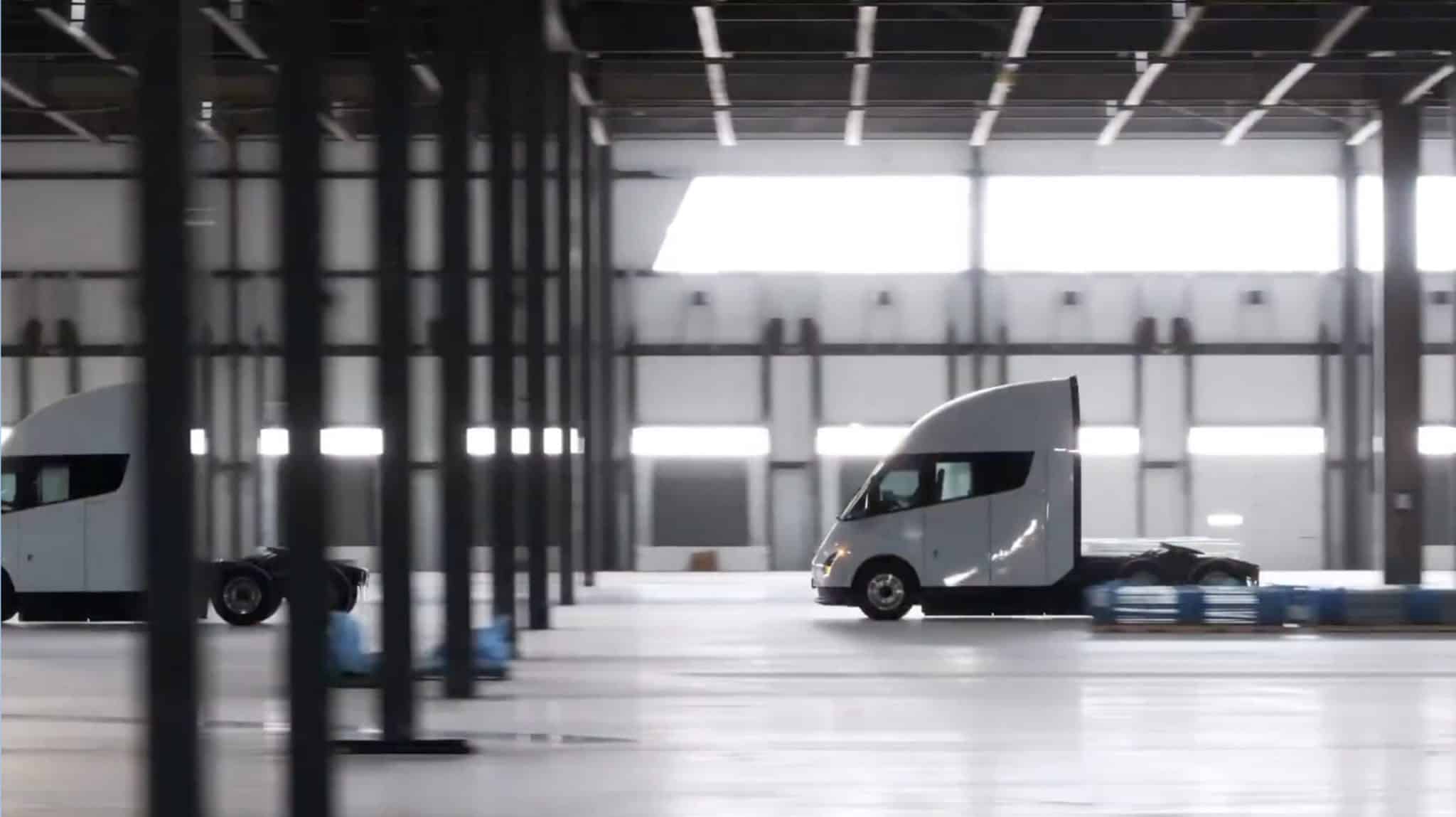
Key Takeaways
- Tesla is using redesigned Cybertruck 4680 battery cells in its Long Range Semi to address long-haul challenges like cold-weather range loss.
- Battery pack shifted from flat pancake modules to compact vertical cubic layout, minimizing surface area for better heat retention.
- Dan Priestley (Head of Tesla Semi program) highlighted: same Cybertruck cells, but cubic design stores more energy in small space, enabled by electric-first vehicle architecture.
- Cubic packs reduce overnight cooldown in sub-zero conditions, cutting winter range losses of 20-40% seen in conventional EVs.
- Advanced heat pump recycles waste heat from motors/brakes/air into battery, enabling 24/7 operations in harsh winters.
- Structural integration with chassis simplifies assembly, enhances rigidity, and leverages scaled 4680 production from Cybertruck/Model Y.
- Innovation supports Semi production ramp-up at Nevada Gigafactory, boosting efficiency for cold-weather trucking fleets.
As a veteran EV enthusiast and trucking industry analyst with over a decade covering electric vehicle innovations, I’ve seen my share of hype cycles. But Tesla’s latest revelations on the Semi—straight from program lead Dan Priestley—aren’t just buzzwords. They’re a seismic shift in heavy-duty transport. The redesigned Tesla Semi, now entering production, swaps flat battery modules for a compact “cubic” pack using evolved Cybertruck 4680 cells. This isn’t incremental; it’s a masterclass in thermal physics, structural engineering, and scalable manufacturing designed to make diesel trucks obsolete, even in brutal winters. ❶ ❷
In this deep dive, we’ll unpack the tech, compare it to Cybertruck roots, explore cold-weather triumphs, and offer practical advice for fleet operators eyeing the future. Buckle up—this cubic revolution could redefine 500+ mile hauls year-round.
The Tesla Semi’s Journey: From Pilot to Production Beast
Launched in 2017 with bold promises of 500-mile range and 1 MW charging, the Tesla Semi faced delays due to battery scaling and supply chains. Fast-forward to 2026: Tesla’s Nevada Gigafactory is ramping to 50,000 units annually, with pilot fleets (PepsiCo, Frito-Lay) logging millions of miles. ❸ ❹ Dan Priestley, Tesla’s Semi program head, recently toured Jay Leno through a production-intent truck, dropping bombshells like a million-mile battery lifespan and 1.2 MW charging that recovers 60% in 30 minutes. ❺ ❻
Key upgrades include:
- 48V architecture: Ditches hydraulics for electric steering assist, slashing weight by 1,000 lbs.
- Dual-axle powertrain: Optimizes torque distribution for efficiency.
- Hands-free conductive charging: Zero-downtime refueling, outpacing diesel pit stops. ❼ ❽
But the star? The battery pack redesign.
Inside the Cubic Battery Pack: A Thermal Fortress
Forget pancake-flat modules of yore. The Semi’s pack is a vertical “cube”—tall stacks of redesigned 4680 cells forming dense, compact blocks. Why? Surface area-to-volume ratio. Physics 101: Heat dissipates faster from flat surfaces. Cubes minimize exposed edges, retaining warmth overnight in sub-zero temps. ❶ ❷
Priestley emphasized: “Same Cybertruck cells, but cubic design stores more energy in a small space, enabled by electric-first architecture.” ❾ This structural integration bonds packs to the chassis, boosting rigidity, simplifying assembly, and cutting costs via scaled Cybertruck/Model Y production. ❿
Pack Specs at a Glance:
- Cell Type: Redesigned 4680 (tabless, dry-electrode for higher density).
- Layout: Vertical cubes under cab/floor.
- Durability: 1 million miles with minimal degradation. ❹
- Energy: ~850 kWh for 500-mile range at 1.7 kWh/mile efficiency.
This isn’t theory—Tesla’s internal fleet has shipped 20,000+ packs from Nevada. ⓫
4680 Cells: Cybertruck DNA Powers the Semi
Tesla’s 4680 cells—unveiled at 2020 Battery Day—promised 5x energy, 6x power, and half the cost. Cybertruck pioneered them (Gen 2 dry-cathode variants), and now Semi adapts for trucking brutality.
Cybertruck vs. Semi 4680 Showdown:
| Feature | Cybertruck 4680 | Semi 4680 (Redesigned) |
|---|---|---|
| Form Factor | Structural pack (123 kWh) | Cubic modules (~850 kWh total) |
| Energy Density | ~300 Wh/kg | Optimized for volume (higher stack density) ⓬ |
| Challenges | Ramp-up delays | Cold-weather focus, million-mile life ⓭ |
| Production | Giga Texas (millions ramped) | Giga Nevada (shared line) ❷ |
Early Semi pilots skipped 4680s for 2170s, but 2026 production flips to in-house cells for cost/energy wins. ⓮ Opinion: Smart pivot—Tesla’s vertical integration crushes suppliers like LG’s prismatic packs.
Conquering Cold Weather: No More 20-40% Range Killer
EVs lose 20-40% range below freezing—chemistry slows, cabin heat guzzles juice. Diesel fares better (engine waste heat), but Semis close the gap.
Cubic Edge:
- Reduced cooldown: Cubes insulate better; overnight losses halved vs. flat packs.
- Real-world proof: Tesla pilots in Alaska aced ice tests; no downshifts needed on hills (instant torque). ⓯ ⓰
Studies show heat-pump Teslas lose ~13-25% vs. 50% without; Semi pushes further. ⓱ In -20°F, expect 400+ miles usable—viable for 24/7 ops.
Next-Level Thermal Wizardry: Waste Heat Recycling
Paired with cubes: An advanced heat pump scavenges heat from motors, brakes, cabin air, pumping it to batteries. No idle waste like diesels. Result? 24/7 harsh-winter reliability, matching (or beating) diesel uptime. ❷
Pro Tip: Preheat via app + route-planning via Tesla’s fleet software minimizes losses.
Scaling Up: Nevada Gigafactory and Fleet Wins
Giga Nevada’s Semi line leverages Cybertruck ramps—4680 output exploding. Early adopters (Uber Freight, Frito-Lay) report lower costs, no schedule compromises. ⓲ 50k/year capacity by 2027? Game over for regional diesels.
Insights for Trucking Fleets: Why Switch Now?
My Take: Diesels win on range myths, but Semis deliver TCO savings (0.07/kWh electricity vs. $5/gal diesel) + zero emissions incentives. Cold-weather fixes erase excuses.
Advice for Operators:
- Pilot Early: Join waitlist; test in your routes.
- Infra Prep: Megachargers (1.2 MW) pay back in 2 years.
- ROI Calc: 1M-mile packs = 5-7 year refresh vs. diesel’s 500k.
- Autonomy Ready: Cubic design aids FSD hardware.
- Winter Strategy: precondition + efficient routing = diesel parity.
Risks? Supply chain hiccups, but Tesla’s track record (Model Y ramp) reassures.
The Road Ahead: Diesel’s Sunset?
Tesla Semi’s cubic 4680 pack isn’t just tech—it’s trucking’s future. With production humming, cold conquered, and costs plummeting, 2026 marks electrification’s tipping point. Fleets ignoring this? They’ll be idling in irrelevance.
What do you think—ready to go electric? Drop comments below!