 Gary Zhou
Key Takeaways
- Tesla’s end-to-end AI system links perception, planning, and control into a single neural network for holistic optimization.
- Unlike competitors, Tesla uses real-world data to train its AI on nuanced driving value judgments, improving decision-making in complex situations.
- The company addresses immense data challenges by processing billions of input tokens daily, leveraging its global fleet for extensive training data.
- Tesla’s innovative tools, like the Generative Gaussian Splatting method, enhance network interpretability and allow safe simulations of driving scenarios.
- Ashok Elluswamy believes the advancements in this AI architecture will also benefit Tesla’s humanoid robot, Optimus.
In the ever-evolving landscape of autonomous vehicles, Tesla stands out not only for its groundbreaking technology but also for its unique approach to AI development. By integrating perception, planning, and control into one cohesive neural network, Tesla is setting new standards for holistic optimization in self-driving technology. Let’s delve deeper into the intricacies of Tesla’s end-to-end AI system, its training methodologies, and the promising future it holds for broader applications.
Understanding Tesla’s End-to-End AI System
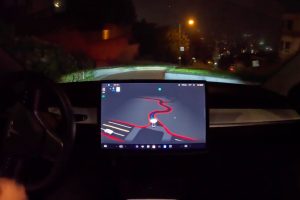
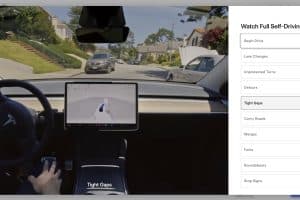
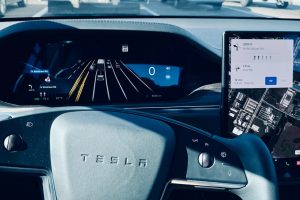
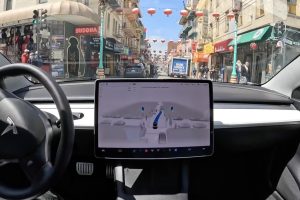
Unlike many of its competitors, Tesla’s self-driving system is not a patchwork of disparate technologies. Instead, it employs a single, continuously trained neural network that seamlessly integrates various functions such as perception, planning, and control. This “end-to-end” architecture allows for a fluid exchange of information across all components, thereby optimizing the entire driving experience holistically.
Key Features:
- Holistic Integration: By linking perception, planning, and control, Tesla ensures that every decision made by the AI is informed by real-time data and past experiences, contributing to a more intuitive and human-like driving behavior.
- Human-Like Reasoning: Tesla’s AI system processes real-world data to learn subtle value judgments, similar to human drivers making decisions about the safest and most efficient routes.
- Scalability: The network’s design is inherently scalable, allowing Tesla to rapidly deploy updates and improvements across its global fleet without major overhauls.
Training with Real-World Data
Tesla’s approach to AI training sets it apart from other companies in the automotive space. The company’s vast global fleet acts as a massive data-gathering network, collecting billions of input tokens daily. This real-world data is crucial for training the system to recognize and respond to a wide array of driving scenarios.
Data Curation Process:
- Massive Data Collection: Tesla’s vehicles collect an avalanche of data every day, equivalent to 500 years of driving experience.
- Curated Training Samples: Sophisticated data pipelines sift through this incoming data, selecting the most valuable samples for AI training.
Innovative Tools and Simulation Techniques
To ensure the AI system operates safely and efficiently, Tesla employs advanced tools such as the Generative Gaussian Splatting method. This innovative approach enables the company to reconstruct 3D scenes and model dynamic objects quickly, enhancing both the interpretability of the AI and the safety of simulation tests.
- 3D Scene Reconstruction: This allows for real-time, high-resolution modeling of the driving environment, important for testing and validating AI decisions.
- Safe Simulations: Tesla’s neural world simulator helps engineers safely test new models in a controlled, virtual environment, enabling rapid iteration and improvements.
Future Applications Beyond Self-Driving Cars
Tesla’s advancements in AI technology have implications that extend far beyond the realm of autonomous vehicles. Ashok Elluswamy, Tesla’s VP of AI/Autopilot Software, suggests that the same AI architecture will support the development of Tesla’s humanoid robot, Optimus. This leap signifies how Tesla’s innovations could potentially transform industries ranging from robotics to manufacturing.
Tesla’s end-to-end AI system is not just a technological marvel—it’s a paradigm shift in how we perceive and develop autonomous systems. With its focus on holistic optimization, real-world data integration, and pioneering simulation techniques, Tesla is paving the way for a future where AI not only drives cars but also impacts broader realms of our daily lives.