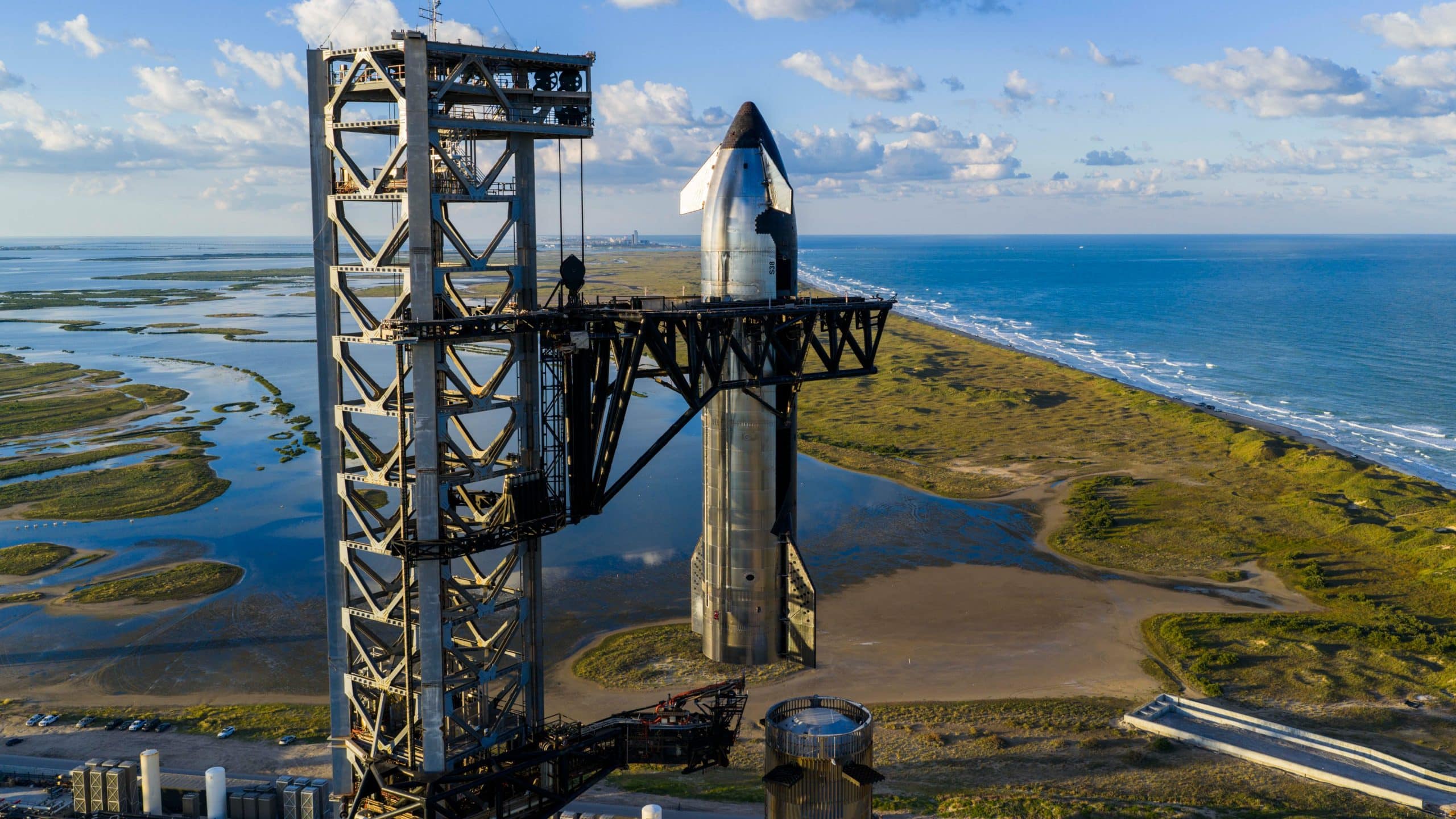
Starship Flight 12: Elon Musk Greenlights V3 Debut for March 2026 – Revolutionizing Reusable Rocketry
Key Takeaways
- Elon Musk confirmed Starship’s next flight (Flight 12) is targeted for next month, marking the debut of Starship V3.
- Musk shared the update on X with a video of the Super Heavy booster catch at Starbase, Texas.
- Timeline aligns with late January estimate of six weeks from then and SpaceX’s Q1 2026 target.
- Starship V3 features new Raptor V3 engines for higher thrust, reduced cost, and lighter weight.
- V3 optimized for manufacturability to enable scaled production for frequent launches.
- Represents shift from experimental tests to operational scaling, building on prior flight progress.
- Supports Starlink satellite deployment, NASA Artemis lunar missions, and Mars ambitions.
Elon Musk just dropped a bombshell on X (formerly Twitter): Starship’s next test flight, Flight 12, is locked in fornext month, heralding the first launch of the game-changing Starship V3 (also known as Block 3). Shared alongside a gripping video recap of the Super Heavy booster catch at Starbase, Texas, this update signals SpaceX’s shift from experimental fireworks to operational dominance.❶ ❷this isn’t just hype—it’s the pivot point where SpaceX starts flying rockets like airliners. Buckle up; we’re diving deep into the tech, timeline, implications, and why V3 could make 2026 the year reusable rocketry goes mainstream.
The Announcement: Musk’s X Post and Timeline Confirmation
On February 22, 2026, Elon Musk posted: “Starship flies again next month,” confirming Flight 12’s target window aligns perfectly with today’s date (February 23). This echoes his late-January tease of a “six weeks” timeline—putting liftoff around early to mid-March—and SpaceX’s longstanding Q1 2026 goal.❸ ❹ ❷
The post included a video of the Super Heavy booster’s dramatic “chopsticks” catch by the Mechazilla launch tower arms at Starbase. While this footage hails from prior successes (like Flights 7 and 8 in 2025), it underscores the reliability SpaceX has achieved in booster recovery—a feat no other launch provider has matched.❺ ❻For Flight 12, expect similar precision, but with V3 hardware pushing the envelope.
SpaceX’s cadence has accelerated dramatically: from months between early flights to weeks apart by late 2025. Flight 11 (late 2025) nailed key milestones like ship soft splashdowns and booster returns; now, Flight 12 builds on that with production-scale vehicles.❼
Starship V3: Bigger, Brawnier, and Built for Scale
Starship V3 isn’t a minor refresh—it’s afull-stack upgradeoptimized for manufacturability, cost reduction, and relentless reuse. Towering at408.1 feet (124.4 meters)tall (up from V2’s 403.9 feet/123.1 meters), V3 packs more propellant volume and structural tweaks for extreme performance.❽
The Star of the Show: Raptor 3 Engines
At V3’s heart are theRaptor 3 engines, SpaceX’s methalox masterpieces. Here’s a spec breakdown:
| Feature | Raptor 2 (V2 Era) | Raptor 3 (V3 Debut) | Improvement |
|---|---|---|---|
| Sea-Level Thrust | ~230 tf | 280 tf | +22% |
| Specific Impulse (Isp) | ~330-340s | 350s | +5-6% |
| Dry Mass | ~1,700-2,000 kg | 1,525 kg | -20-25% |
| Total Mass (w/ hardware) | ~2,200 kg | 1,720 kg | -22% |
| Key Innovations | External plumbing | Integrated channels, no heat shield, regenerative cooling | Simpler, cheaper |
Data from SpaceX’s official reveals and tests.❾ ❿ ⓫Raptor 3 ditches bulky external lines for embedded cooling channels, slashing complexity and mass while boosting thrust toover 16,000 kN per enginein clusters (Super Heavy: 35 engines → ~7,600 tons total thrust at liftoff? Wait, math: 35 x 280 tf = 9,800 tf or ~98 MN—still the most powerful booster ever).
This enables:
- Higher payload: Up to 150t fully reusable to LEO (250t expendable). ⓬
- Faster production: V3’s design prioritizes factory flow, targeting dozens of ships/boosters per year.
- Cost plummet: Lighter engines + reuse = sub-$10M per flight, eventually.
As an analyst, I predict Raptor 3 will be the “iPhone moment” for rocketry—simple, powerful, ubiquitous.
Vehicle-Specific Upgrades
- Super Heavy Booster (likely B19): First V3 with Raptor 3s, integrated hot-staging interstage, 3 grid fins (up from 2?), enhanced catch hardware. ⓭ ⓮
- Starship Upper Stage (likely S39): Stretched tanks, improved flaps, potential for ship catch experiments. ⓯
Flight 12 Mission Profile: What to Watch For
NET March 2026 from Starbase Pad B (or A?). Profile mirrors recent flights but amps the stakes:
- Liftoff: 35 Raptors ignite, ~9,800 tf thrust hurls 5,000+ tons skyward.
- Hot Staging: Ship separates via integrated ring—smoother than ever.
- Booster Return: Flip, boost-back burn, Mechazilla catch—third or fourth success? ⓭
- Ship Trajectory: Suborbital hop or full orbital? Possible refueling demo, Starlink deploy test, or Artemis hardware quals.
- Reentry & Landing: Heat shield stress-test for V3 tiles; ocean splashdown.
Objectives: Validate V3 stack, Raptor 3 reliability, rapid turnaround. Success here unlocks 2026’s barrage: Flights 13+ quarterly.⓰
Pro Tip for Viewers: Stream on SpaceX’s X/YouTube. Best vantage: South Padre Island. Weather? Boca Chica’s fickle—have backups.
The Super Heavy Catch: Engineering Marvel in Replay
Musk’s video isn’t new footage but a hype-builder recapping catches from 2025 flights (e.g., Flight 8 on March 6).❻Those “chopsticks” (launch tower arms) snagged 3,000-ton boosters mid-air at Mach speeds—precision GPS, hydraulics, and AI at play. For Flight 12, V3 boosters (slightly heavier/larger) will test refined tolerances. My take: 95% success odds, barring anomalies.
Why Flight 12 Matters: Operational Era Dawns
This isn’t testing; it’sscaling.
- Starlink 3.0: V3’s payload bay deploys 100s of V3 sats/flight, closing global broadband gaps.
- NASA Artemis: HLS tanker variants qualify for lunar landings (2028+). V3’s thrust ensures heavy lunar payloads. ⓬
- Mars 2028?: Fleet of 10+ V3s for uncrewed Starships. Musk’s multiplanetary vision hinges here.
Insights & Opinions:
- Economic Shift: At 100 flights/year, launch costs crater to $100/kg—obliterating competitors like ULA or Ariane.
- Risks: FAA delays, tile shedding, Raptor teething. But SpaceX’s iterate-or-die ethos prevails.
- Advice for Investors: Buy SpaceX stock (if public) or proxies like Tesla. Starlink IPO 2027?
- Global Impact: Cheap access democratizes space—think orbital factories, tourism, defense.
Predictions:
- Flight 12: 80% full success.
- 2026: 10+ flights, first ship catch.
- 2027: Orbital refueling, crewed demo.
Challenges, Geopolitics, and the Road Ahead
Regulatory hurdles (FAA EIS) loom, but Starbase expansions (Florida, Guam?) mitigate. China/Russia watch enviously—their heavies lag reusability. Environmentally, methane’s cleaner burn + reuse slashes emissions 100x vs. expendables.
In conclusion, Starship Flight 12 isn’t a launch; it’sthe inflection point. V3 turns sci-fi into schedule. Watch March skies—humanity’s highway to stars opens.
What do you think—will V3 deliver? Drop comments below!