 Gary Zhou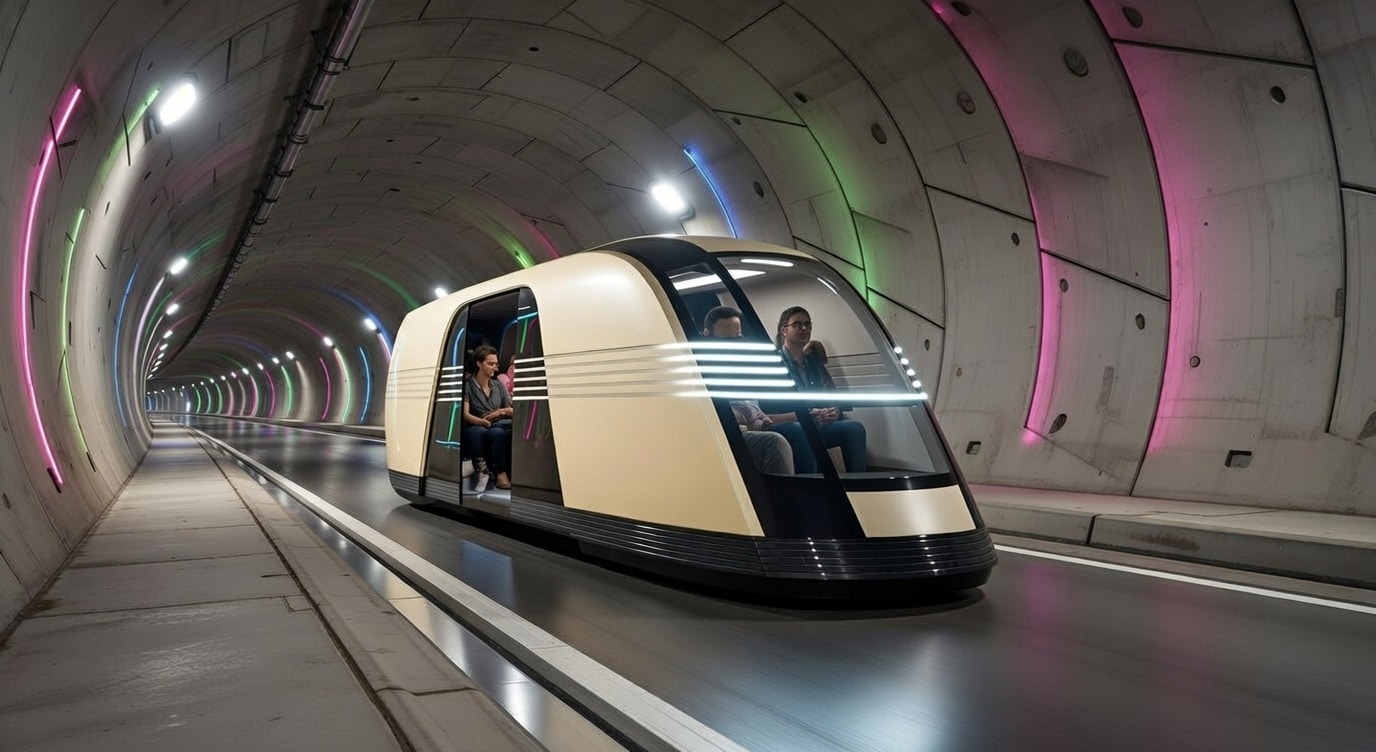
Key Takeaways
- The Boring Company selects three winners for free Loop tunnels: NOLA Loop in New Orleans, Ravens Loop in Baltimore, and University Hills Loop in Dallas.
- Expands commitment from one promised winner to three out of 487 submissions, funding construction if feasible.
- Fully funds rigorous diligence phase including meetings, borings, and utility checks at 100% company expense.
- Builds only feasible projects, removing common early-stage barriers for infrastructure proposals.
- Bonus pursuits: Hendersonville Utility Tunnel in Tennessee and Morgan’s Wonderland Tunnel in San Antonio for a special needs theme park.
- Active construction: Drilling Music City Loop in Nashville and groundbreaking Loop in Dubai.
- Elon Musk stresses urban traffic solved by “going 3D” (tunnels), blaming cost and bureaucracy over engineering.
- Challenge drew submissions from across US states like Alaska to Texas and international entrants.
Imagine waking up to news that your city just won a free underground tunnel – not one, but three such prizes announced at once. That’s exactly what happened today when Elon Musk’s The Boring Company (TBC) revealed the winners of its groundbreaking Tunnel Vision Challenge. From a staggering 487 submissions across the U.S. and beyond, TBC doubled down on its promise (originally one winner) by selecting three Loop tunnel projects for free construction in New Orleans, Baltimore, and Dallas. But wait, there’s more: two bonus pursuits for utility and accessibility infrastructure. As a blogger who’s followed Musk’s infrastructure revolutions from the Las Vegas Loop to international expansions, this announcement feels like a pivotal moment in solving urban gridlock. Let’s dive deep into the details, implications, and why cities everywhere should take note. ❶ ❷
The Tunnel Vision Challenge: A Bold Call to Innovate
Launched in early 2026, the Tunnel Vision Challenge was TBC’s ingenious pitch to the world: Submit your best idea for a 1-mile tunnel – Loop for passengers, freight, pedestrian, utility, or otherwise – and the company would build the winner free of charge. The goal? Accelerate urban transport innovation by crowdsourcing real-world needs while showcasing TBC’s tunneling prowess. Submissions poured in from all 50 U.S. states (Alaska to Texas) and international spots, hitting 487 by the February 24 deadline. ❸ ❹
TBC whittled it down to 16 finalists by March 3, building massive hype among cities like Tennessee’s trio (Knoxville, Gatlinburg, Hendersonville) and Texas heavy-hitters (The Woodlands, Dallas). ❺ ❻ Instead of picking just one, TBC announced the “Thrilling Three” today, March 24, committing to full funding for a rigorous diligence phase – think meetings, soil borings, utility scans – all at 100% company expense. Only feasible projects get built, sidestepping the red tape that kills most infrastructure dreams early. ❶
This isn’t charity; it’s strategic. TBC recoups via long-term operations (e.g., rider fares), but the upfront build proves their tech scales. ❺
The Thrilling Three: Passenger Loops to Transform Cityscapes
NOLA Loop: New Orleans’ Underground Escape from Traffic Jams
Winner: NOLA Loop (New Orleans, Louisiana) – A passenger transport Loop tunnel using Tesla vehicles for point-to-point rides. ❼
New Orleans, with its iconic French Quarter congestion and flood-prone streets, desperately needs alternatives to surface chaos. This ~1-mile Loop could shuttle tourists and locals swiftly underground, dodging Mardi Gras crowds and daily snarls. Details on exact routing are emerging, but expect stations tying into key hubs like the Convention Center or downtown. As one of the first Southern expansions, it positions NOLA as a testing ground for humid, water-table-challenged tunneling – a win for coastal cities everywhere. ❶
Ravens Loop: Baltimore’s Purple Pride Goes Underground
Winner: Ravens Loop (Baltimore, Maryland) – Another Loop for passenger vehicles, likely themed around the NFL’s Baltimore Ravens stadium area. ❽
Baltimore’s traffic woes around M&T Bank Stadium are legendary – game days turn I-95 into a parking lot. The Ravens Loop could bypass this with high-speed underground transport, connecting stadium, downtown, and Inner Harbor. Local officials were caught off-guard (no prior details shared), but excitement is building. This project revives Musk’s earlier D.C.-Baltimore Loop ambitions, now hyper-localized. ❾ For sports fans, imagine arriving stress-free – a game-changer for event-driven cities.
University Hills Loop: Dallas’ $1B Development Supercharged
Winner: University Hills Loop (Dallas, Texas) – Linking the massive 280-acre University Hills mixed-use development to the University of North Texas Dallas DART station. ❿
This one’s a developer’s dream: Hoque Global’s $1 billion project features 580 homes, shops, offices, and a town center in South Dallas. The Loop tunnel provides seamless, zero-emission access, boosting walkability and property values. As a finalist early on, University Hills aggressively wooed TBC, positioning itself as future-proof urbanism. Texas now boasts five prior finalists – a tunneling hotspot! ⓫ ⓬
Bonus Pursuits: Beyond Passengers – Utilities and Inclusivity
TBC didn’t stop at Loops. They’re pursuing two extras post-diligence:
- Hendersonville Utility Tunnel (Tennessee): Burying power lines underground to end outage-prone storms. One mile costs $10-12M; TBC covers the free mile, with potential expansion. A pragmatic fix for Nashville suburbs amid Music City Loop progress. ⓭ ⓮
- Morgan’s Wonderland Tunnel (San Antonio, Texas): Pedestrian tunnel for the world’s first special needs theme park. Elevating accessibility with underground paths – pure innovation for inclusivity. ⓮
These diversify TBC’s portfolio, proving tunnels solve more than traffic.
Active Projects Heating Up: Nashville and Dubai
Amid the wins:
- Music City Loop (Nashville): 9.5-mile system; drilling underway, permitting advancing. ⓯
- Dubai Loop: 6.4 km pilot with 4 stations; groundbreaking soon, construction late 2026. ⓰
Elon Musk’s Philosophy: “Going 3D” to Conquer Traffic
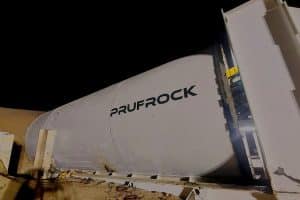
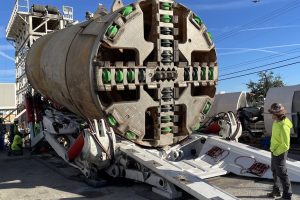
Musk’s mantra? Urban traffic is solved by going 3D – multi-layer tunnels downward. “If you think of tunnels going 10, 20, 30 layers deep (or more), it is obvious that going 3D down will encompass the needs of any city’s transport of arbitrary size.” ⓱ He blames bureaucracy and costs, not engineering – TBC’s Prufrock machines aim to 10x speed and slash prices. ⓲
What’s Next? Diligence, Builds, and Scalability
TBC funds all pre-construction hurdles. If greenlit, builds commence rapidly – Vegas Loop proves it. Watch for timelines by mid-2026.
Pro Tips for Cities:
- Submit Bold Ideas: Freight/utilities expand beyond passengers.
- Prep Utilities/Data: Feasibility hinges on borings.
- Partner Early: Developers like University Hills win big.
- Advocate Locally: Cut red tape for faster wins.
Insights and Opinions: A Tipping Point for Urban Futures?
This Challenge isn’t hype – it’s proof TBC scales. Passenger Loops monetize via fares; utilities/accessibility build goodwill. Critiques? Water tables in NOLA/Baltimore challenge drills, but TBC’s track record reassures. Economically, each tunnel spurs growth: jobs, tourism, real estate booms.
In my view, we’re entering the “Tunneling Renaissance.” Surface roads are obsolete; 3D networks are inevitable. Cities ignoring this risk obsolescence. Kudos to TBC for democratizing infrastructure – 487 ideas vetted means real demand.
What do you think? Will your city pitch next? Drop comments below!