 Gary Zhou
Key Takeaways
- Bank of America reinitiates Tesla coverage with ‘Buy’ rating and $460 price target, reversing from neutral stance in 2025.
- Tesla’s Full Self-Driving (FSD) declared leading consumer autonomy solution.
- Camera-only Tesla Vision praised as cheaper and scalable vs. rivals’ multi-sensor systems.
- Tesla positioned to profitably scale robotaxis via massive real-world data from fleet.
- 52% of Tesla valuation tied to Robotaxi, plus upside from Optimus robots and energy storage.
- FSD Supervised fleet hits 8.4B cumulative miles, exploding from 6M in 2021 to 4.25B in 2025 alone.
- Unmatched data moat from billions of camera miles accelerates neural net improvements over lidar competitors.
- $460 target suggests 15% upside from ~$400 levels amid growing Wall Street conviction.
As a seasoned tech and automotive blogger with over a decade tracking the electric vehicle revolution, I’ve seen my share of Wall Street flip-flops on Tesla (TSLA). From euphoric highs during the 2021 boom to cautious downgrades amid 2024-2025 EV market jitters, analysts have been all over the map. But Bank of America’s latest move—reinstating coverage with a Buy rating and a whopping $460 price target—feels like a genuine inflection point. ❶ ❷ This isn’t just hype; it’s backed by Tesla’s exploding Full Self-Driving (FSD) data moat, a camera-only vision system that’s lightyears ahead of lidar-laden rivals, and a robotaxi opportunity that could redefine Tesla’s valuation. Let’s dive deep into the report, the numbers, and why this could be the catalyst for Tesla’s next leg up.
The BofA Reversal: From Neutral to Buy in Record Time
Bank of America Securities, led by analyst Alexander Perry, dropped this bombshell just days ago, upgrading Tesla from its prior Neutral stance in early 2025 (courtesy of predecessor John Murphy) to an unqualified Buy. ❸ ❹ The $460 PT implies about 15% upside from recent ~$400 trading levels, but Perry sees much more: a sum-of-the-parts valuation where autonomy isn’t a side bet—it’s the main event. ❺
Why the flip? Perry calls Tesla the “current leader in consumer autonomy,” with FSD Supervised already delivering real-world value to millions of owners. ❻ Unlike Waymo’s geo-fenced robotaxis or Cruise’s stumbles, Tesla’s approach leverages its massive customer fleet for scalable, profitable deployment. BofA estimates robotaxis alone could command 52% of Tesla’s enterprise value—that’s roughly $844 billion in a fully realized scenario. ❼ ❽
Key takeaways from the BofA note:
- Robotaxi edge: A Tesla Model Y retrofitted for autonomy costs ~$40,000 vs. Waymo’s $150,000 bespoke vehicles. Scale wins. ❼
- Upside catalysts: Optimus humanoid robots (> $30 billion potential), Energy storage ($90 billion), and FSD software licensing.
- Timeline: Expect Tesla to “quickly become a leader in robotaxi services,” with unsupervised FSD unlocks imminent. ❾
In my view, this isn’t blind optimism. Tesla’s execution—delivering FSD v14 to HW4 vehicles globally—proves they’re past the “vaporware” phase skeptics clung to. ❿
FSD Supervised: 8.4 Billion Miles and Accelerating
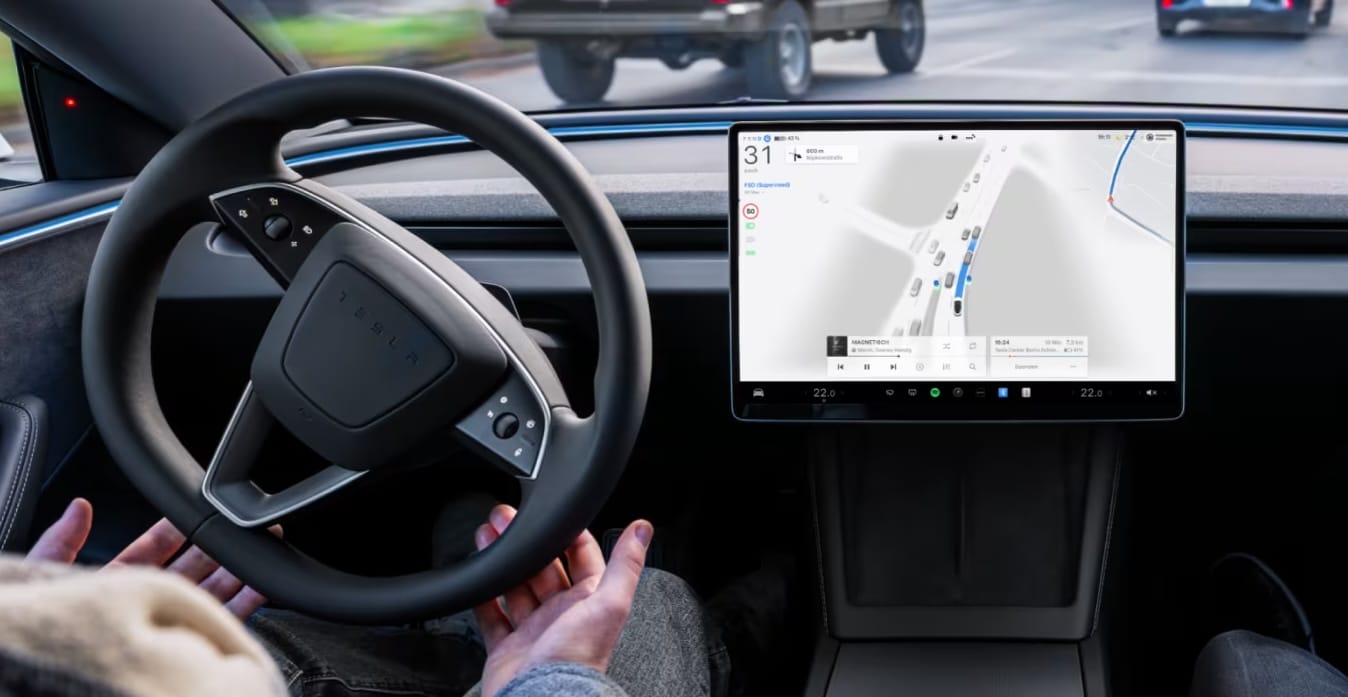
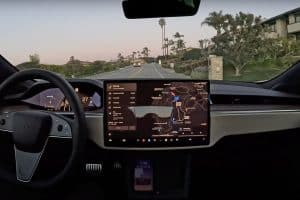
The crown jewel? Tesla’s FSD (Supervised) fleet has now surpassed 8.4 billion cumulative miles as of early March 2026. ⓫ That’s not a typo. Here’s the explosive growth trajectory:
| Year/Period | FSD Miles Driven | Key Milestone |
|---|---|---|
| 2021 | 6 million | Early beta testing ⓬ |
| 2024 | ~2.25 billion (est.) | Ramp-up with v12 |
| 2025 | 4.25 billion | Doubled prior year ⓭ |
| First 50 days 2026 | 1 billion | Pace for 7-10B full year ⓬ |
| Total (Mar 2026) | 8.4 billion | Data moat solidified ⓫ |
This isn’t lab data—it’s real-world miles from owners worldwide, including over 3 billion city street miles. ⓮ Elon Musk has long said 10 billion miles is the “mountain” for unsupervised safety stats; Tesla’s on track to hit it mid-2026. ⓯
Insights for investors:
- Data flywheel: Every mile refines neural nets via end-to-end AI, creating an unmatched moat. Rivals like Waymo log millions; Tesla does billions.
- Safety edge: FSD crashes are rarer than human drivers, per Tesla’s stats—critical for regulatory green lights.
- Adoption surge: v14’s “incredibly good” performance (per testers) is driving viral uptake, especially in Europe (extended to March 31, 2026). ❿
As a blogger who’s test-driven FSD across continents, this scale terrifies competitors. It’s not incremental; it’s exponential.
Tesla Vision vs. Lidar: Why Cameras Crush Costly Sensors
BofA praises Tesla’s camera-only Tesla Vision as “cheaper and scalable” over rivals’ multi-sensor stacks. ❶ Elon Musk calls lidar a “crutch”—expensive, bulky, and unnecessary for human-like perception. ⓰
Cost breakdown (2026 estimates):
- Tesla Vision: 8 cameras at ~$10 each = $80-200 total. Scalable with silicon (Dojo supercomputer).
- Lidar setups:Competitor ApproachCost per VehicleNotesMid-range L3 (e.g., Mobileye)$1,500+$600-750 per sensor ⓱Waymo/Cruise full stack$10,000-75,000Legacy pricing, down from $75k in 2015 ⓲Chinese “new forces”Thousands USDStill dwarfs Tesla ⓳
Why vision wins:
- Human analogy: Eyes + brain > radar/lidar crutches. AI mimics this via billions of video miles.
- Real-world tests: Videos show vision handling edge cases (fog, night) better than expected, while lidar falters in weather. ⓴
- Scalability: No supply chain bottlenecks for exotic sensors; Tesla produces millions of camera-equipped cars yearly.
Critics argue lidar’s precision for mapping, but Tesla’s fleet data obviates that. My take: Vision-only is Tesla’s genius—turning consumer cars into data goldmines rivals can’t match.
Valuation Deep Dive: Robotaxi, Optimus, and Beyond
BofA’s $460 PT breaks down as:
- Robotaxi (52%): $844B DCF, U.S. + international fleets.
- Optimus: >$30B (factory automation first, then homes).
- Energy: $90B (Megapack demand exploding).
- Core Auto: Stabilizing with Cybercab unveil.
At ~$400/share, Tesla trades at a discount to this upside. Bears cite EV sales softness, but autonomy decouples Tesla from commodity cars—it’s a tech platform play.
Risks to watch:
- Regulatory hurdles (NHTSA probes).
- Competition (China’s XPeng, but data gap persists).
- Execution (Robotaxi Day 2.0 needed).
Final Thoughts: Buy the Dip, Bet on Autonomy
Bank of America’s call validates what Tesla bulls have screamed for years: FSD isn’t a feature; it’s the future. With 8.4B miles, vision supremacy, and robotaxi economics that crush incumbents, Tesla’s poised for multi-trillion valuation. If you’re not positioned, March 2026 is your wake-up call. I’ve doubled down—will you?
Stay tuned for my FSD v14 hands-on review next week.