Author: Gary Zhou

Tesla FSD v14.2.2.5: A Rollercoaster of Progress and Persistent Quirks – First Impressions and Real-World Analysis

As a seasoned Tesla enthusiast and autonomous driving analyst who’s logged thousands of miles testing Full Self-Driving (FSD) betas, I’ve been eagerly awaiting the rollout of v14.2.2.5. This update promised refinements in speed management, navigation, and edge-case handling, building on the neural net advancements from earlier v14 iterations. But does it deliver? Drawing from hands-on user reports, Teslarati’s in-depth review, Reddit threads, and YouTube test drives, this post dives deep into the highs, lows, and everything in between. Spoiler: It’s a mixed bag – smoother than ever in some areas, but plagued by head-scratching bugs that remind us FSD is still “supervised” for a reason.

Bank of America Goes Bullish on Tesla: $460 Price Target Spotlights FSD Dominance and Robotaxi Goldmine

As a seasoned tech and automotive blogger with over a decade tracking the electric vehicle revolution, I’ve seen my share of Wall Street flip-flops on Tesla (TSLA). From euphoric highs during the 2021 boom to cautious downgrades amid 2024-2025 EV market jitters, analysts have been all over the map. But Bank of America’s latest move—reinstating coverage with a Buy rating and a whopping $460 price target—feels like a genuine inflection point. This isn’t just hype; it’s backed by Tesla’s exploding Full Self-Driving (FSD) data moat, a camera-only vision system that’s lightyears ahead of lidar-laden rivals, and a robotaxi opportunity that could redefine Tesla’s valuation. Let’s dive deep into the report, the numbers, and why this could be the catalyst for Tesla’s next leg up.

Elon Musk’s Audacious Bet: Tesla Optimus as the Dawn of AGI-Powered Von Neumann Probes and Multi-Planetary Civilization

In the rapidly evolving landscape of artificial intelligence and robotics, few visionaries command as much attention as Elon Musk. Recent announcements from Tesla, xAI, and SpaceX have ignited a firestorm of speculation about the convergence of humanoid robots, artificial general intelligence (AGI), and interstellar expansion. At the heart of this revolution is Tesla’s Optimus robot—not just a factory worker or household helper, but potentially the world’s first self-replicating “Von Neumann probe” capable of bootstrapping entire civilizations on alien worlds. Drawing from Musk’s latest X posts, production shifts at Tesla’s Fremont factory, and blockbuster mergers, this post dives deep into the implications, timelines, and transformative potential of these developments.

Tesla’s Controversial FSD Transfer Policy Shift: Cybertruck Owners Beware – Delivery Deadlines Now Trump Orders

In a move that’s sent shockwaves through the Tesla community, the company has quietly updated its Full Self-Driving (FSD) Supervised transfer program. What was once a generous incentive allowing owners to transfer their pricey FSD package to a new vehicle if they simply ordered by March 31, 2026, now demands delivery by that same date. This subtle but seismic change, spotted first by eagle-eyed owners on forums and social media, primarily impacts Cybertruck buyers facing production delays – leaving many feeling baited and switched after committing to orders.

Ralph’s Supermarkets Charges Ahead: Tesla Semi Sighting on LA Highways Ignites Grocery Logistics Revolution

In a moment that’s gone viral across social media, a dashcam video captured a sleek Ralph’s Supermarkets Tesla Semi trucking down a Los Angeles highway. Posted by X user @ChargePozitive on March 2, 2026, the footage has sparked excitement among EV enthusiasts and logistics pros alike. This isn’t just a one-off test; it’s concrete evidence of Kroger-owned Ralph’s – a staple in Southern California grocery shopping – deploying Tesla’s game-changing electric Semi in real-world operations. As a blogger who’s tracked the evolution of electric trucking for years, I see this as a pivotal tipping point for the industry. Let’s dive deep into what this means, backed by the latest data and insights.

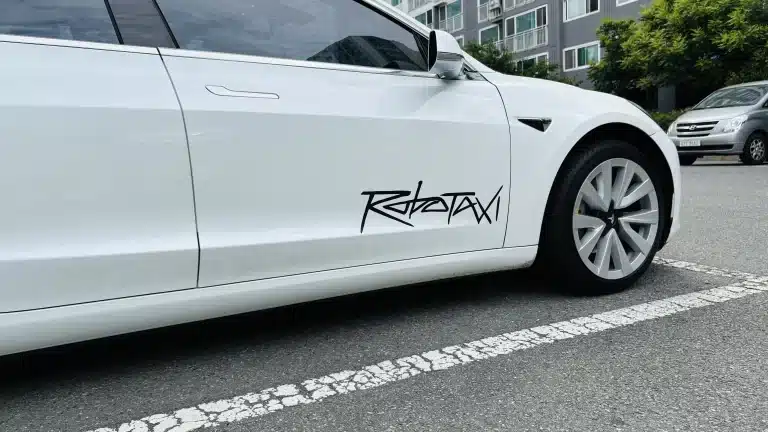
Tesla’s Cybercab Hits Warp Speed: Drone Footage Reveals 25 Units at Giga Texas as Production Surges Ahead of Schedule

Tesla is no stranger to defying expectations, and the latest developments at Gigafactory Texas prove it once again. Just weeks after the first production Cybercab rolled off the assembly line on February 17, 2026—beating Elon Musk’s own April timeline by a wide margin—drone enthusiast Joe Tegtmeyer has captured what could be the largest public sighting of these steering-wheel-free robotaxis yet: 25 Cybercabs scattered across the massive Giga Texas complex. This isn’t just hype; it’s a tangible sign that Tesla is shifting gears from low-volume “unboxed” test builds to higher-volume production testing, with mass production looming just 4-8 weeks away.

SpaceX’s Starship Era Dawns: Starlink V2 Satellites Set for Mid-2027 Launch, Ushering in Global 5G from Space

Imagine a world where your smartphone gets seamless 5G speeds anywhere on Earth—no towers, no dead zones, just pure satellite magic. That’s the vision SpaceX is aggressively pursuing, and the latest bombshell from Mobile World Congress (MWC) in Barcelona has the tech world buzzing. SpaceX President Gwynne Shotwell and Starlink VP Mike Nicolls revealed plans to launch next-generation Starlink V2 satellites aboard the colossal Starship rocket starting mid-2027. This isn’t just an upgrade; it’s a paradigm shift that could catapult Starlink to unprecedented global dominance, delivering contiguous coverage and revolutionizing connectivity for billions.

Starlink and Deutsche Telekom Forge Historic Partnership: Satellite-to-Mobile Revolution Hits 140 Million Europeans in 2028

In a groundbreaking announcement at MWC Barcelona on March 2, 2026, SpaceX’s Starlink has teamed up with telecom giant Deutsche Telekom to deliver satellite-to-mobile connectivity across 10 European countries, reaching over 140 million subscribers. This isn’t just another satellite internet service—it’s direct-to-device (D2D) technology that seamlessly bridges terrestrial network gaps with space-based 5G speeds, voice, video, and messaging. Imagine hiking in the Alps, sailing the Mediterranean, or driving through rural Montenegro without ever losing signal. As a blogger who’s followed SpaceX’s satellite ambitions since the early Falcon 9 days, this feels like the tipping point where low-Earth orbit (LEO) constellations truly disrupt traditional telecom.

Paul Hyon Kim’s Shocking Guilty Plea: Inside the “RESIST” Tesla Arson and America’s 2025 Anti-EV Fury

As a seasoned blogger specializing in automotive security, electric vehicle trends, and the intersection of technology with political extremism, I’ve tracked the rising tide of violence against Tesla properties since early 2025. The guilty plea of Paul Hyon Kim—a 37-year-old Las Vegas resident—for firebombing a Tesla Collision Center marks a pivotal moment. This wasn’t just an isolated act of vandalism; it was a brazen assault amid a national wave of over 50 attacks on Tesla assets, fueled by anti-Elon Musk sentiment. On February 24, 2026, Kim admitted to federal charges without a plea deal, facing 5 to 70 years behind bars. His sentencing looms on May 27, 2026. In this deep dive, we’ll dissect the attack, Kim’s profile, the charges, and the chilling broader context—offering insights on how political rage is torching the future of EVs.

Revolutionizing Global Connectivity: SpaceX Unveils Starlink Mobile V2 – 5G Speeds from the Stars

Imagine a world where your smartphone seamlessly switches from a terrestrial cell tower to a satellite orbiting 550 kilometers above Earth, delivering Netflix-quality streaming in the middle of the Sahara Desert or during a hurricane blackout. That’s no longer science fiction—it’s the promise of SpaceX’s newly previewed Starlink Mobile V2 satellites. Rebranded from the previous “Direct-to-Cell” moniker, Starlink Mobile is poised to transform how we stay connected, blending satellite tech with everyday mobile networks for unprecedented coverage.

Load more