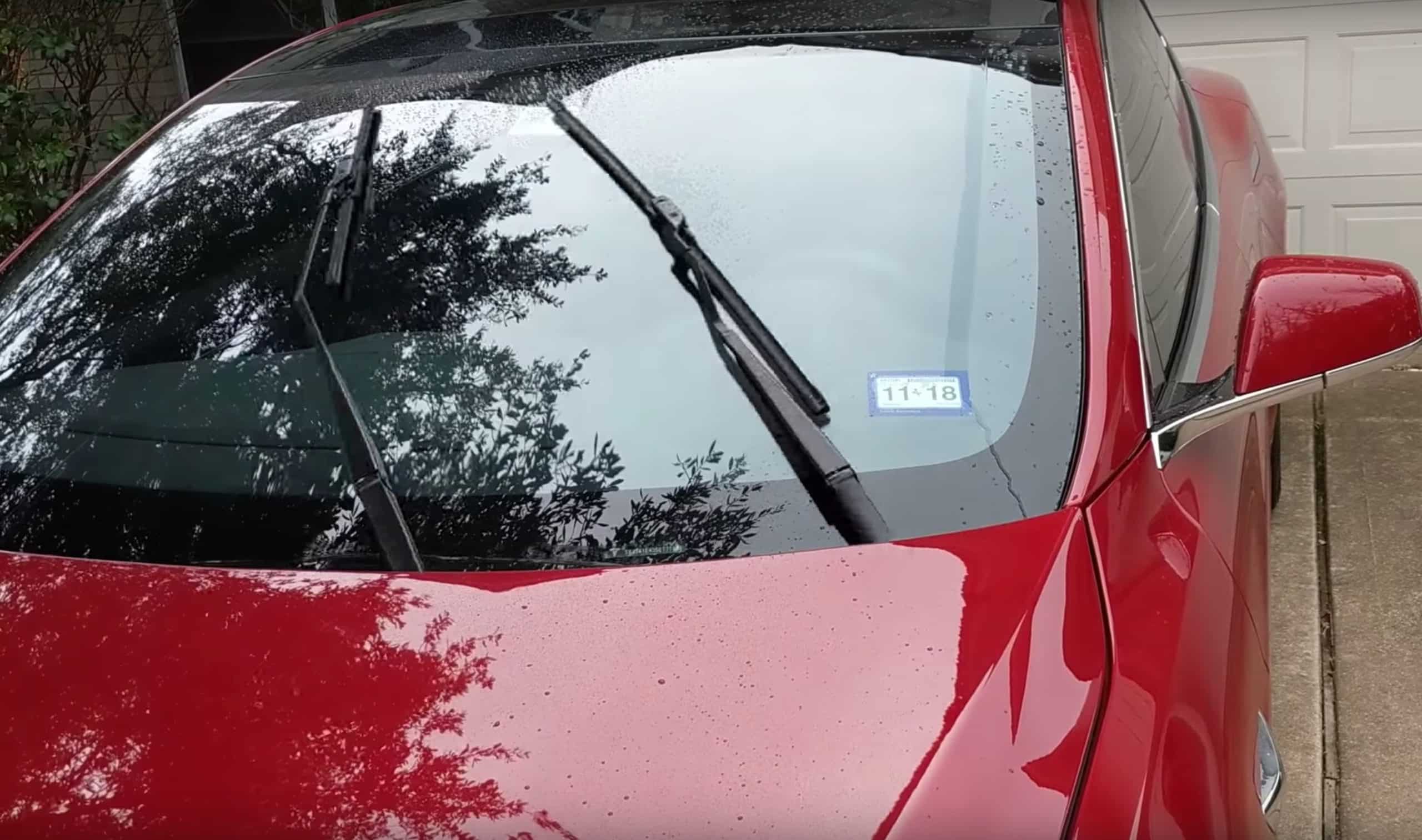
Tesla’s Auto Wipers: Patent-Powered Upgrade Ends a Decade of Driver Frustration
Key Takeaways
- Tesla deployed a major OTA update improving Auto Wipers across its entire fleet, confirmed by senior AI engineer Yun-Ta Tsai on April 10, 2026.
- The upgrade is based on patent US 20260097742 A1, introducing an “energy balance model” without new hardware.
- System measures wiper motor power to calculate blade-glass friction, detecting water lubrication or dry/icy conditions tactilely.
- Combines physics data with camera-based Tesla Vision to eliminate false triggers like glare or bugs.
- Detects ice buildup to auto-activate defrost and monitors long-term friction for blade replacement alerts.
- Historical complaints since 2018 include wipers failing in light rain or over-activating on dry days, despite prior software fixes like Autowiper v4.
For years, Tesla owners have endured one of the most notorious quirks in the EV world: unreliable auto wipers. Whether it’s failing to activate during a light drizzle—leaving streaky windshields and compromised visibility—or screeching across a bone-dry glass in response to a sun glare or bug splat, the complaints have been relentless since 2018.❶ ❷But on April 10, 2026, senior Tesla AI engineer Yun-Ta Tsai dropped a bombshell confirmation: a fleet-wide over-the-air (OTA) update has deployed a revolutionary fix based on freshly published patent US 20260097742 A1. No new hardware required—just pure software brilliance fusing physics-based “tactile” sensing with Tesla Vision.❶ ❸
This isn’t another band-aid like the 2023 Autowiper v4 or 2024 sensitivity sliders. It’s a fundamental overhaul introducing an “energy balance model” that measures wiper blade friction in real-time, turning the motor itself into a sophisticated rain, ice, and wear detector. Here is the bottom line: feels like the breakthrough we’ve all been waiting for. In this deep dive, we’ll unpack the tech, compare it to legacy systems, review early owner feedback, and explore what it means for the future of autonomous driving.
The Long-Standing Wiper Woes: A Timeline of Tesla Owner Gripes
Tesla’s auto wiper saga dates back to the Model 3’s launch in 2017-2018, when the company ditched traditional optical rain sensors in favor of camera-based Tesla Vision to cut costs and align with its “vision-only” autonomy push.❶Early adopters praised the innovation, but reality hit hard:
- Light rain blindness: Wipers often ignored fine mist or drizzle, forcing manual intervention and risking safety. ❷
- Phantom activations: Glare from headlights, shadows, bugs, or even dashboard reflections triggered unnecessary wipes, scratching windshields and wearing blades prematurely. ❶
- Edge-case failures: Snow, fog, or pollen confounded the neural nets, leading to forums like Reddit’s r/TeslaLounge and Tesla Motors Club filled with rants. ❹
Elon Musk himself acknowledged the pain in 2024, promising “super good” wipers via software. Iterative fixes followed:
- 2023 Deep Rain update: Multi-frame video analysis for better drop detection.
- Autowiper v4: Neural network tweaks for sensitivity.
- 2024.14 OTA: Manual sliders added as a workaround.
- FSD integrations: Tied wipers to Full Self-Driving camera feeds.
Yet, as InsideEVs noted in early 2024, issues persisted, with owners disabling the feature entirely.❷TESLARATI amplified the buzz with a viral tweet on the new patent rollout, calling it a “major upgrade.”❺
The Game-Changer: Patent US 20260097742 A1 – “Wiper Friction Estimation for Autowiper Performance Improvement”
Published April 9, 2026, this Tesla patent (inventors likely including Yun-Ta Tsai, per org charts) is the hero here.❸Titled precisely for its purpose, it leverages existing wiper hardware—no costly add-ons—for a “tactile” upgrade. Tsai confirmed on X (formerly Twitter): the energy balance model is now live fleet-wide.❶
Core Innovation: Instead of relying solely on cameras, the system turns the wiper motor into a friction sensor. By monitoring electrical power draw during subtle test sweeps, it calculates blade-glass interaction with pinpoint accuracy.
Inside the Energy Balance Model: Physics 101 Meets AI
Here’s where the magic happens—no hand-wavy ML promises, just hard physics:
- Power Measurement: The ECU tracks total electrical power (voltage x current) fed to the wiper motor in real-time. ❻
- Subtract Known Losses:
- Motor internal friction (constant).
- Linkage drag (modeled via position/speed).
- Aerodynamic resistance (wind speed via other sensors).
- Isolate Blade Friction: Residual power reveals surface conditions:ConditionFriction LevelPower DrawActionDry GlassHighElevatedNo wipe or low speed ❻Light RainMedium-LowReduced (water lubricates)Gentle intermittentHeavy RainVery LowMinimalFast cycleIce/DebrisVery HighSpikedDefrost + heat
A single pass detects mist before vision confirms drops. Long-term logging spots blade wear (rising friction trends trigger alerts).❸
This “energy balance” is elegant: zero extra parts, scalable to all models.
Physics + Vision: The Hybrid Powerhouse That Crushes False Triggers
Tesla Vision (cameras spotting drops/distortion) gets a reality check from tactile data:
- Glare/Bugs Ignored: High friction confirms dry glass, vetoing visual false positives.
- Proactive Mist Detection: Friction senses water first, priming wipers.
- Adaptive Speed: Friction averages tune intervals dynamically.
As Tesery.com explains, it’s a “physical sensing layer” validating NN inferences—finally bridging vision’s weaknesses.❻
New Superpowers: Ice Detection, Auto-Defrost, and Blade Alerts
- Ice Buildup: Extreme friction spikes trigger cabin/wiper defrosters automatically—no frozen wipers mid-storm.
- Predictive Maintenance: Friction history notifies: “Replace blades soon” via touchscreen, preventing failures. ❻
In cold climates like Canada, this could be a lifesaver.❼
Tesla Vision vs. Traditional Rain Sensors: Head-to-Head
Traditional sensors (e.g., BMW, Honda) use infrared beams: water drops refract light, triggering wipes. Cheap ($2-5), reliable, but flawed:
Pros of Traditional:
- Foolproof in light rain.
- No learning curve.
Cons:
- Dirty/covered sensors fail.
- Localized (not full windshield).
- No ice/wear detection.
Tesla Vision (Pre-Update):
- 360° camera view.
- AI adapts to conditions.
- But: Glare/mist blind spots, as Reddit users lament: “Cameras confuse shadows for rain.” ❽
New Hybrid:
- Best of both: Vision for visuals, physics for truth.
- Cost-free upgrade.
- Superior in edge cases (ice, wear).
Reddit consensus: Vision-only was “70% solution”; this pushes to 95%+.❾
Early Owner Feedback: Hits, Misses, and Hope
On 2026.2.3 (likely the vector), Reddit’s r/TeslaLounge is buzzing:
- Wins: “Perfect 1-hour rain drive on Model 3—no dry wipes!” “First flawless FSD session.” ❾
- Misses: Some report no change—”Still wipes in sun” or “Ignores light snow.” Others blame dirty cameras.
- Overall: Improvements over 3-4 years ago, but not universal. Europe notes subtler rain handling.
Facebook/Twitter echoes: Relief from “dry wiping,” but patience needed for data.❿
What This Means for Owners: Advice and Future Outlook
Immediate Tips:
- Update to latest software (2026.x).
- Clean cameras/windshield.
- Test in varied weather; tweak sensitivity if needed.
- Monitor alerts for blades.
My Take: This exemplifies Tesla’s OTA magic—solving hardware-agnostic pains via data/AI. It bolsters FSD trust (clear vision = safer autonomy) and silences critics. If fleet data refines it further, expect “solved” status by summer.
For legacy owners: Retrofits unnecessary; everyone’s upgraded. New buyers: One less caveat.
Tesla’s wiper win proves vision-only works when hybridized smartly. Buckle up—rainy days just got better.