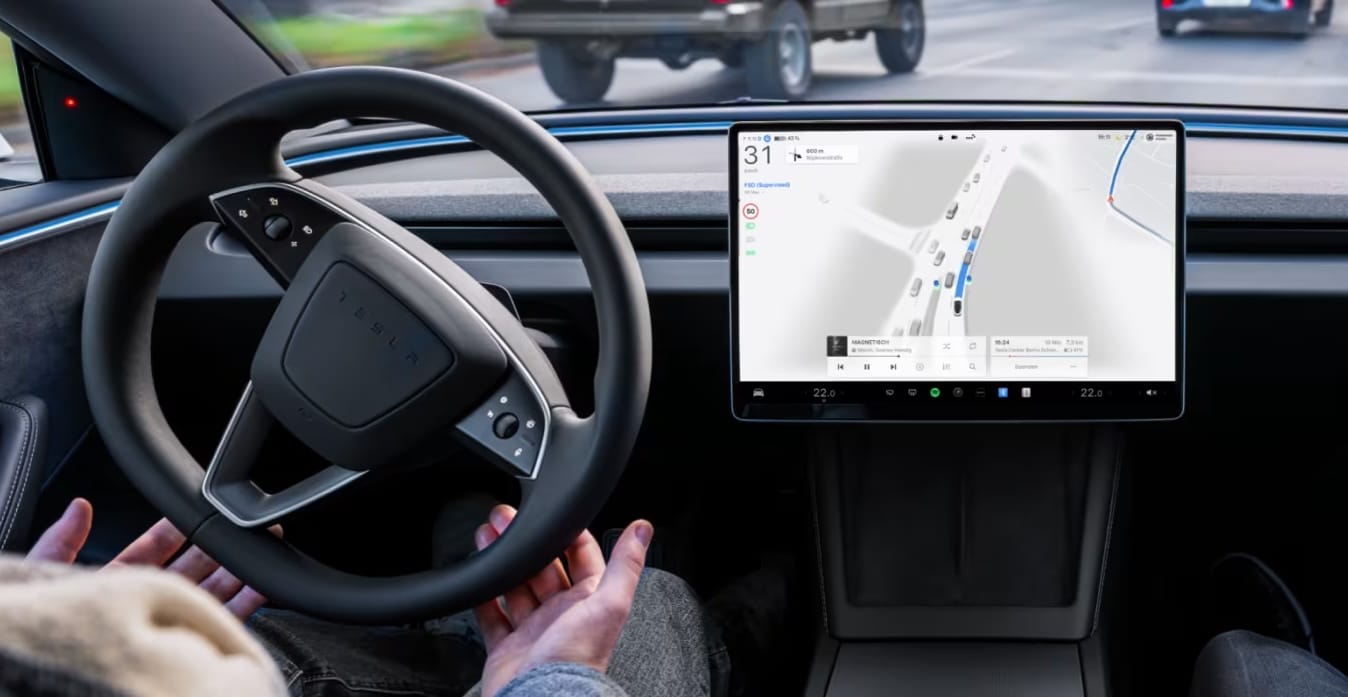
Tesla FSD: The Invisible Lifesaver – 7x Safer Than Humans, Yet Under Siege by Headlines and Lawsuits
Key Takeaways
- Tesla’s Full Self-Driving (FSD) is a major advancement in passenger travel, with significant safety improvements but not perfection.
- In a video, FSD on a Model 3 swerves at 65 mph in fog and rain to avoid a pedestrian, saving lives.
- Elon Musk states: “Tesla self-driving saves a lot of lives – the statistics are unequivocal. That doesn’t mean it’s perfect,” highlighting 10x safety over humans yet remaining 10% fatalities and lawsuits.
- 90% of lives saved go unnoticed, while the 10% failures lead to headlines and legal battles.
- Media amplifies FSD errors and Tesla accidents, ignoring invisible successes and creating distorted perception.
- Tesla’s FSD (Supervised) data shows fewer crashes per mile than U.S. average.
- Regulatory scrutiny, liability, and media focus hinder adoption despite life-saving potential.
- Musk’s post is a reality check: society must value statistical lives saved over dramatic failure stories.
Imagine hurtling down a foggy highway at 65 mph in pouring rain, visibility near zero, when suddenly a pedestrian darts into your path. In a split second, your Tesla Model 3’s Full Self-Driving (FSD) Supervised system detects the danger, executes a precise swerve, and averts disaster – all without you lifting a finger. This real-world video, shared widely online, isn’t just dramatic footage; it’s a glimpse into the life-saving potential of Tesla’s autonomous tech. ❶
Tesla CEO Elon Musk recently echoed this sentiment in a candid post: “Tesla self-driving saves a lot of lives – the statistics are unequivocal. That doesn’t mean it’s perfect.” He highlighted how FSD achieves roughly 10x the safety of human drivers overall, yet the remaining 10% of incidents – the failures – dominate headlines, lawsuits, and public perception. ❷ ❸ In this deep dive, we’ll unpack the data, debunk myths, analyze the controversies, and explore why society must shift focus from sensational stories to statistical realities.
The Compelling Safety Statistics: FSD Outpaces Humans
Tesla’s Full Self-Driving (Supervised) Vehicle Safety Report, updated as of early 2026, provides the most transparent view yet into FSD performance. With over 8.2 billion miles driven on FSD Supervised, the system records:
- One major collision every 5.3 million miles (versus the U.S. average of about 660,000–700,000 miles per major crash). ❹ ❺ ❻
- 7x fewer major and minor crashes than the national average.
- Compared to Tesla vehicles driven manually without active safety features: FSD shows even better metrics, with miles-per-collision rates 2–3x higher on highways and city streets. ❶
Here’s a quick comparison table based on Tesla’s Q1 2026 data and U.S. baselines:
| Metric | FSD (Supervised) | Tesla Manual (No Safety Features) | U.S. Average (Human Drivers) |
|---|---|---|---|
| Miles per Major Crash | 5.3 million | ~1.5–2 million (highway) | 660,000–700,000 |
| Miles per Minor Crash | ~1 million | ~500,000 (city) | 178,000 |
| Safety Multiplier vs. US | 7–10x safer | 2–3x safer | Baseline |
These aren’t cherry-picked anecdotes. Tesla’s telemetry from millions of vehicles provides real-world data, showing FSD excels in high-speed avoidance (like the fog swerve video) and pedestrian detection – scenarios where human reaction times falter. ❽
Why FSD Wins: AI’s Edge Over Human Error
- 360-Degree Vision: 8 cameras provide constant awareness, unlike fatigued or distracted humans (94% of crashes involve human error per NHTSA).
- Instant Reactions: FSD processes data in milliseconds, swerving or braking before humans can.
- Data-Driven Evolution: With billions of miles, neural nets improve weekly via over-the-air updates. ❾
Tesla extrapolates that if all U.S. vehicles used current FSD tech, it could prevent thousands of injuries and hundreds of fatalities annually based on 2024 VMT (vehicle miles traveled). ❶
The Dark Side: 10% Failures, Lawsuits, and Regulatory Heat
Musk admits imperfection: “90% of lives saved go unnoticed, while the 10% failures lead to headlines and legal battles.” Indeed, FSD isn’t infallible.
Ongoing Lawsuits and Musk’s Role
- Class-Action Suits: Owners claim Tesla and Musk overstated FSD as “full self-driving,” leading to purchases under false pretenses. A 2026 Texas suit even alleges negligence in retaining Musk as CEO due to his “hype.” ❿ ⓫ ⓬
- Cybertruck FSD Crashes: A $1M lawsuit after a near-overpass plunge blames missing safety alerts. ⓭
- Shareholder Actions: Accusations of misleading investors on robotaxi timelines and FSD efficacy. ⓮
Judges have allowed several to proceed, citing Musk’s 20+ “false or misleading statements.” ⓯
NHTSA Probes: Low-Visibility Concerns
In March 2026, NHTSA escalated an investigation into 3.2 million Tesla vehicles (2016–2026 models) over FSD crashes in fog, glare, or dust – 9 incidents, including 1 fatal. ⓰ Critics argue Tesla’s camera-only approach struggles here, unlike lidar-equipped rivals.
Media Distortion: Why Successes Stay Silent
The provided info nails it: Media amplifies errors. A single FSD crash goes viral, while billions of safe miles? Crickets.
- Cognitive Bias: “Availability heuristic” – dramatic failures stick, invisible saves don’t.
- Clickbait Economy: “Tesla FSD Kills!” outperforms “FSD Saves 90% More Lives.”
- Result: Public distrust despite data showing FSD 9–13x safer in some metrics. ⓱
Experts like Philip Koopman note Tesla’s baselines may favor FSD (e.g., highway-heavy use), but even adjusted, it’s 2–3x safer than humans. ❽
Insights and Advice: Navigating FSD in 2026
As a blogger who’s tracked autonomy for years, here’s my take:
Optimistic Outlook
FSD v13+ (2026) nears “human-level” in complex scenarios. Robotaxi unveilings could prove unsupervised viability, potentially slashing insurance rates (Lemonade already cut Tesla FSD premiums 50%). ⓲
Balanced Risks
- Supervised Only: Always keep hands ready – it’s Level 2.
- Edge Cases: Avoid heavy fog; updates are coming.
Practical Advice for Tesla Owners:
- Enable FSD Supervised for long drives – stats prove it’s safer.
- Review Tesla’s quarterly reports: Vehicle Safety Report.
- Report incidents via app to aid improvements.
- Insurance Tip: Shop FSD-discount providers.
- Future-Proof: HW4/HW5 vehicles get best updates.
Societal Shift Needed
Regulators must prioritize lives-per-mile over zero-tolerance. Liability laws (e.g., moving to manufacturer post-99% reliability) could accelerate adoption.
Embrace the Stats, Not the Spectacle
Tesla FSD isn’t perfect, but it’s a major advancement – swerving lives from danger in fog, rain, and chaos. Musk’s reality check resonates: Value the 90% unseen saves over 10% spotlights. As miles climb past 9 billion in 2026, data will drown out doubt. The road to full autonomy is bumpy, but safer than ever. Buckle up – the future drives itself.