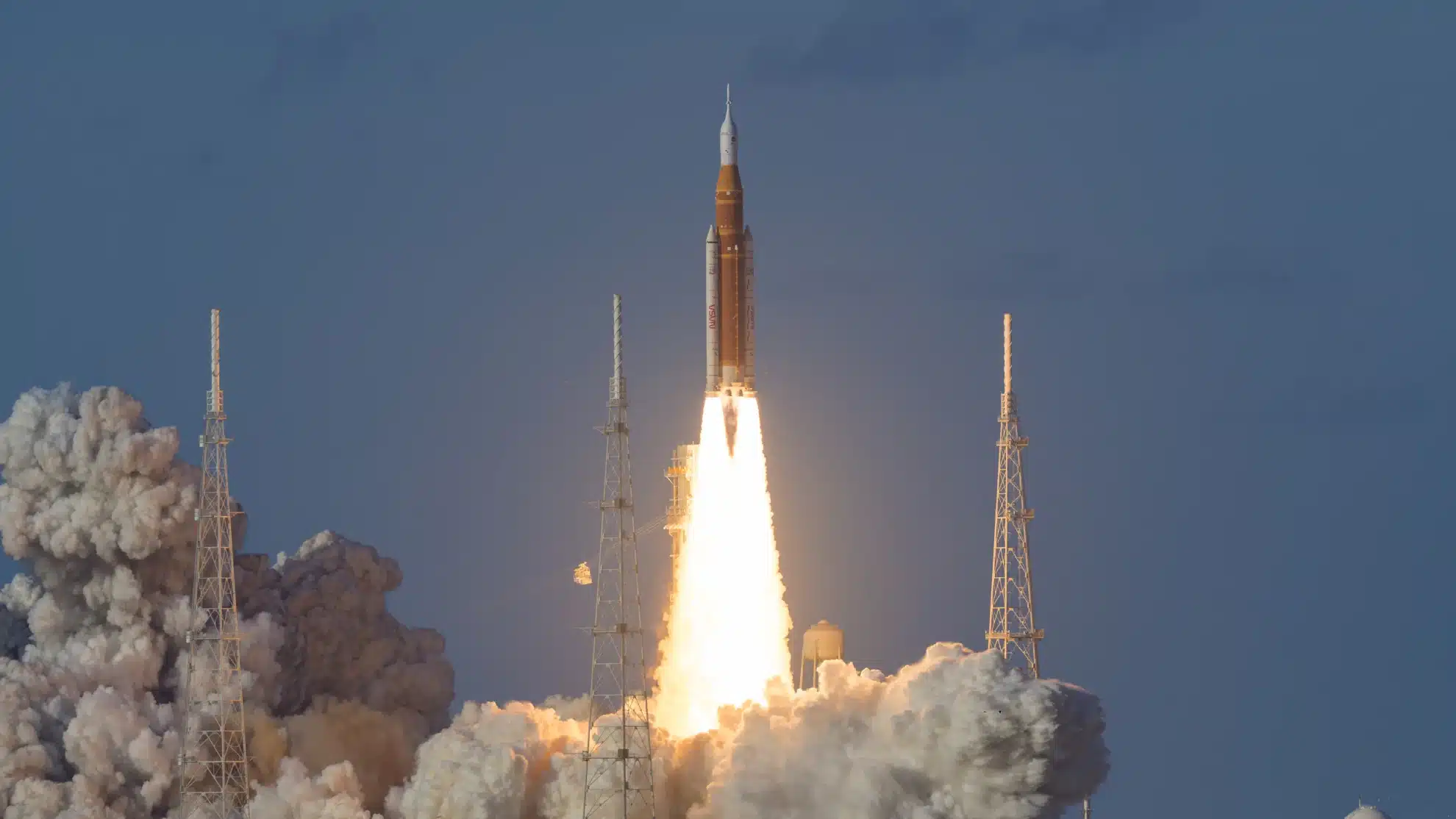
Artemis II Ignites the Cosmos: NASA’s Bold Return to the Moon After 54 Years
Key Takeaways
- NASA launched Artemis II on April 1, 2026, from Kennedy Space Center, first crewed lunar mission since Apollo 17 in 1972, carrying Reid Wiseman, Victor Glover, Christina Koch, and Jeremy Hansen on a 10-day flyby.
- Mission is a test flight for Orion spacecraft’s life support, navigation, and communications in deep space, aiming for a new record distance of 252,000 miles from Earth.
- SpaceX’s Starship is key for Artemis IV lunar landing in 2028, pending successful orbital propellant transfer demo between Starships.
- Last Moon walkers were Gene Cernan and Harrison Schmitt of Apollo 17, 53 years ago; Elon Musk urges return for a permanent lunar base.
- Artemis program backed by 60 countries via Artemis Accords; milestones include Glover as first person of color beyond LEO, Koch as first woman, Hansen as first non-American near Moon.
- Post-liftoff successes: solar arrays deployed, crew completed proximity operations demo.
- Artemis II paves way for future Moon landings and permanent base after over five decades.
On April 1, 2026, the roar of the Space Launch System (SLS) rocket echoed across Kennedy Space Center, propelling NASA’s Orion spacecraft—affectionately namedIntegrityby its crew—into the heavens. This wasn’t just another rocket launch; it marked the first crewed mission to the Moon since Apollo 17 touched down in 1972. I can tell you: this moment feels like the dawn of a new space age. Artemis II isn’t about planting boots on lunar soil just yet—it’s a daring 10-day flyby that will push Orion’s systems to their limits in deep space, setting the stage for humanity’s sustainable return to the Moon and beyond.❶ ❷
The Crew: Trailblazers Redefining Space Exploration
At the heart of Artemis II are four extraordinary astronauts, each bringing a unique legacy to this historic flight:
- Reid Wiseman (Commander, NASA): A U.S. Navy test pilot with over 165 days in space from Expedition 41 aboard the ISS. He’s the steady hand guiding Integrity around the Moon.
- Victor Glover (Pilot, NASA): Set to become the first person of color to venture beyond low Earth orbit (LEO). Glover’s piloting prowess from his six-month ISS stint will be crucial during key maneuvers. ❸
- Christina Koch (Mission Specialist, NASA): The woman who holds the record for the longest single spaceflight by a woman (328 days on ISS). She’s poised to be the first woman to fly to the Moon, shattering another glass ceiling in space.
- Jeremy Hansen (Mission Specialist, CSA): Canada’s representative and the first non-American to get this close to the Moon since Apollo. His international perspective underscores the collaborative spirit of Artemis.
These aren’t just names on a roster—they’re pioneers whose diverse backgrounds reflect NASA’s push for inclusivity. Glover’s milestone, in particular, symbolizes how Artemis is broadening the astronaut corps beyond white males, a shift that’s long overdue.❹
Mission Objectives: Testing the Limits of Deep Space Travel
Artemis II is fundamentally a shakedown cruise for Orion, NASA’s next-generation spacecraft designed for deep space. Unlike Apollo’s short hops, Orion must endure the radiation, microgravity, and isolation of cislunar space. Here’s what they’re testing:
- Life Support Systems: Ensuring air, water recycling, and thermal control work flawlessly with humans aboard for 10 days—critical for longer Mars journeys ahead.
- Navigation and Propulsion: The crew will perform a translunar injection burn to sling Integrity toward the Moon at speeds exceeding 25,000 mph, reaching a record-breaking distance of about 252,000 miles from Earth. ❺
- Communications: High-gain antennas and laser comms demos will relay HD video and data from lunar distances, paving the way for real-time operations.
- Proximity Operations: Already a success! The crew manually flew Orion near the Interim Cryogenic Propulsion Stage (ICPS) post-separation, honing docking skills for future lander rendezvous. ❻ ❼
As of April 2, 2026 (Flight Day 2), updates are pouring in: solar arrays deployed perfectly, perigee raise burn complete for a stable high-Earth orbit, and apogee raise done. Orion is now outbound-bound, with lunar arrival around April 6.❶ ❽My take? These early wins are huge—Orion’s European Service Module (built by Airbus) is proving its mettle, but the real test comes during the Moon flyby when cosmic rays peak.❾
Historic Firsts and the Shadow of Apollo 17
It’s been 54 years since Gene Cernan and Harrison Schmitt, the last humans on the Moon, bid farewell to the lunar surface on Apollo 17. Cernan’s iconic words—”We’re going to come back and not go away anymore”—echo today as Elon Musk and others champion a permanent lunar base. Artemis II revives that dream, with Glover, Koch, and Hansen etching their names in history:
- First person of color beyond LEO (Glover).
- First woman to the Moon (Koch).
- First non-U.S. astronaut near the Moon (Hansen).
Pro Tip for Space Fans: Track the mission live via NASA’s flight tracker or YouTube views from Orion. It’s mesmerizing to watch Earth shrink to a blue marble.❿ ⓫
The Artemis Roadmap: From Flyby to Lunar Bases (2026-2030)
Artemis II is the bridge to landings. Here’s the ambitious timeline:
- Artemis III (2027-2028): First crewed lunar landing since 1972, targeting the south pole for water ice. Orion docks with SpaceX’s Starship Human Landing System (HLS) in lunar orbit; two astronauts descend. Delays loom due to Starship readiness, but NASA’s page now eyes “by 2028.” ⓬ ⓭
- Artemis IV (2028): Starship’s orbital refueling demo is pivotal—SpaceX nailed a ship-to-ship transfer in March 2026, a game-changer for HLS’s 10+ tanker flights needed per landing. ⓮ ⓯
- Beyond 2028: Gateway lunar station, sustained presence, Mars prep by 2030s.
Challenges Ahead:
- Delays: Artemis II slipped from 2024; III faces Starship hurdles.
- Budget: $93B+ through 2025, but Congress must stay committed.
- Competition: China’s ILRS program eyes south pole too—Artemis Accords are our edge.
Opinion: SpaceX’s rapid iteration (e.g., IFT-7 refueling tests) is injecting urgency into NASA. Without it, we’d still be debating.⓰
Global Unity: The Power of the Artemis Accords
Backing this? 61 nations via the Artemis Accords, from Australia to Brazil—principles for peaceful exploration, data sharing, and sustainability.❹ESA’s service module, CSA’s Hansen, JAXA contributions: it’s a true international effort, unlike Apollo’s U.S.-solo.
Why Artemis II Matters: My Insights and Advice
This mission isn’t hype—it’s validation. Orion’s heat shield (tested post-Artemis I) and abort systems give me confidence, but radiation shielding needs Mars-level upgrades. For aspiring space pros:
- Study Up: Dive into astrodynamics; tools like NASA’s Eyes app simulate the trajectory.
- Advocate: Support STEM funding—lunar economy could hit trillions.
- Watch Closely: Moon flyby (April 6?) will reveal Earthrise views rivaling Apollo 8.
In a world of earthly woes, Artemis II reminds us: exploration unites. AsIntegrityhurtles toward record distances, expect breakthroughs that redefine our cosmic future. Stay tuned—I’ll update as the crew loops the Moon!