Tesla’s Solar Revolution: $2.9 Billion China Equipment Deal Powers 100 GW US Manufacturing Ambition by 2028
Key Takeaways
- Tesla is negotiating a $2.9B deal for solar manufacturing equipment from Chinese suppliers like Suzhou Maxwell, to be shipped to Texas for US production.
- Elon Musk announced at Davos and Q4 2025 earnings call a goal of 100 GW annual solar manufacturing capacity in the US by 2028, from raw materials to panels.
- Tesla job postings confirm plans for 100 GW solar production on American soil before 2028.
- Urgency driven by surging US power demand from AI data centers, electrification, and Tesla’s Megapack battery growth, with solar as key economic solution.
- Paradox: Tesla buys Chinese equipment to achieve domestic independence, as US tariffs inflate solar costs and China dominates supply.
- Suzhou Maxwell awaits Chinese export approval; deal news boosted shares of involved firms by over 7%.
- Musk’s history suggests ambitious 100 GW target, though timelines may slip, will likely succeed.
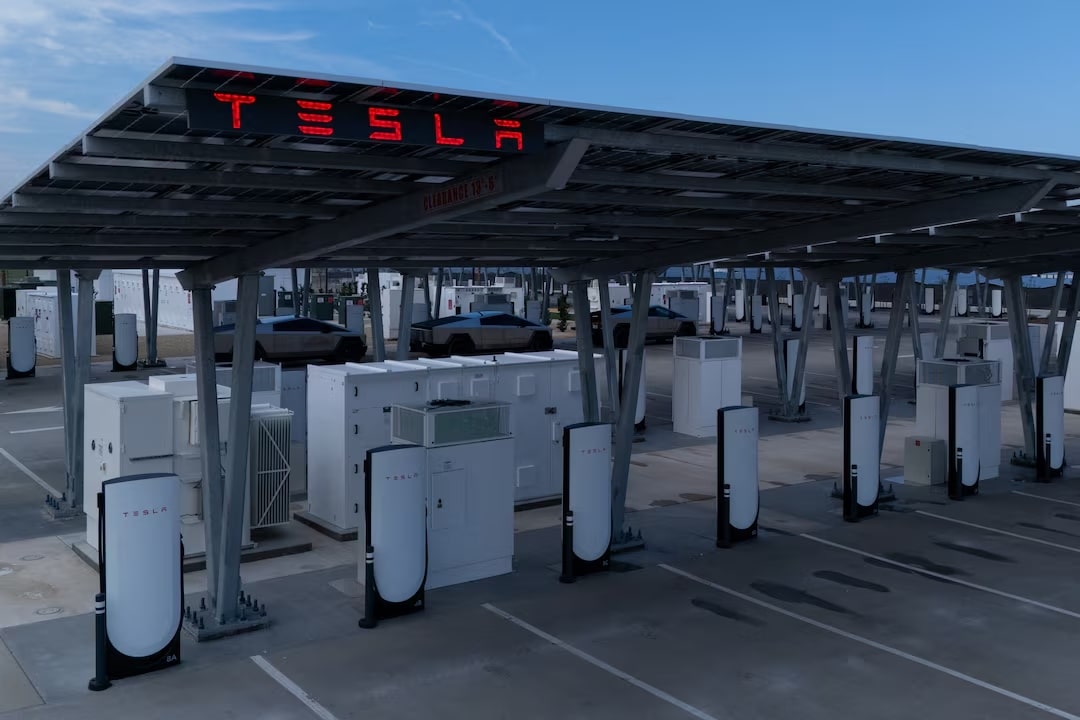
I’ve seen Elon Musk turn audacious visions into reality time and again. From the Gigafactories that reshaped automotive production to the Megapack’s dominance in grid-scale storage, Tesla doesn’t just play in the energy space—it redefines it. But today’s news? It’s a game-changer. Tesla is reportedly negotiating a staggering$2.9 billion dealfor solar manufacturing equipment from Chinese suppliers like Suzhou Maxwell Technologies, set to ship to Texas for domestic US production.❶ ❷This move directly supports Musk’s bombshell announcement:100 GW of annual solar manufacturing capacity in the US by 2028, starting from raw materials all the way to finished panels.❸ ❹
In this deep-dive blog post, we’ll unpack the announcement, the geopolitical paradox, the tech behind it, and why this could catapult Tesla Energy into a trillion-dollar powerhouse. Buckle up—solar just got supersonic.
Elon Musk’s Davos Declaration: 100 GW by 2028 Isn’t Hyperbole—It’s a Roadmap
It all kicked off at the World Economic Forum in Davos this January 2026. Musk, fresh off Tesla’s record Q4 2025 earnings call, laid out a crystal-clear vision: Tesla (and separately SpaceX) would each ramp up to100 GW per year of US-based solar production within three years. ❹ ❺That’s not just panels—it’s the full stack: polysilicon refining, wafer slicing, cell fabrication, module assembly. For context:
- Current global solar manufacturing: Around 600 GW annually, with China controlling ~95%. ❻
- US capacity today: A measly ~5-10 GW, mostly modules, not upstream. ❼
- Tesla’s target: 100 GW would make the US the #2 producer overnight, dwarfing Europe and rivaling China’s provincial output.
Musk tied this directly to existential energy crunches: AI data centers guzzling power like never before, EV adoption exploding, and grid constraints everywhere. “Large-scale solar production is key to powering energy-intensive AI data centers and space satellites,” he emphasized.❽During the earnings call, he reiterated the goal, signaling it’s baked into Tesla’s capex plans—potentially $30-70 billion over the next few years.❾
My take: Musk’s timelines slip (Cybertruck, anyone?), but the direction never does. Remember Roadster 2.0? Delayed, but the original changed cars forever. This 100 GW push feels like Gigafactory Nevada on steroids.
The $2.9 Billion China Paradox: Building US Independence with Chinese Tools
Here’s the juicy irony: To escape China’s solar stranglehold, Tesla is buying$2.9 billion in turnkey equipmentfrom Chinese giants like Suzhou Maxwell Technologies (leader in cell fab tools), Shenzhen S.C. New Energy, and Laplace Renewable.❶ ❿Equipment headed to Texas for a massive solar cell factory, per reports. News broke today (March 20, 2026), spiking shares: Suzhou Maxwell up 12%, others over 7%.❿ ⓫
Why China? They own 80-90% of global solar equipment manufacturing. No US firm matches their scale or cost. But Chinese export approval is pending—geopolitics at play.❶
| Supplier | Specialty | Share Reaction |
|---|---|---|
| Suzhou Maxwell | Solar cell fab lines | +12% |
| S.C. New Energy | Wafer/polysilicon tools | +7%+ |
| Laplace Renewable | Module assembly | +7%+ ❿ |
Paradox unpacked:
- US Tariffs Bite: Duties up to 30% on imported modules make solar uneconomic—Musk called them “extremely high” at Davos. ⓬
- Domestic Dodge: Equipment isn’t tariffed like cells/panels; once in Texas, Tesla produces tariff-free.
- Strategic Win: Accelerates ramp-up; China gets cash amid their oversupply glut.
Opinion: Brilliant chess move. Critics cry hypocrisy, but pragmatism wins wars. Tesla did this with Shanghai Gigafactory—imported tools, built local empire.
Tesla Job Postings: Concrete Proof of the 100 GW Blitz
Talk is cheap; hires aren’t. Tesla’s careers page screams commitment:
- Staff Manufacturing Development Engineer, Solar: “Deploy 100GW of solar manufacturing from raw materials on American soil before 2028.” ⓭
- Sr. Manufacturing Equipment Engineer: Same 100 GW mantra, focusing on energy products at “massive scale.” ⓮
Dozens of roles in solar controls, equipment design—ramping fast since Davos.⓯Texas sites eyed, leveraging Gigafactory Texas expertise.
The Urgency: AI Data Centers, EVs, and Megapack Boom Fuel the Fire
Why now? Power demand Armageddon:
- AI Explosion: Data centers to consume 8-10% of US electricity by 2030; xAI alone needs gigawatts.
- Tesla Synergy: Megapacks (31 GWh deployed 2025) pair perfectly with solar for 24/7 dispatchable power. Recent: 400 MW Megapack for Brazil AI center. ⓰
- Electrification: EVs, factories—US needs 2-3x more generation.
Solar + Megapack = cheapest new power. Musk: Solve “energy bottleneck” for AI/space.❹
Pro Tip for Energy Pros: Model hybrid solar-Megapack projects. LCOE under $20/MWh possible at scale.
Navigating Tariffs: US Solar’s Rocky Road
US tariffs (50%+ on cells, 25% modules) protect naively but inflate costs 20-30%.⓬Tesla’s fix? Onshore everything post-equipment. IRA tax credits help, but policy flux (Trump 2.0?) looms.⓱
Risks:
- Export delays from China.
- Capex overruns ($30B+).
- Tech hurdles (efficiency >25% N-type cells).
Rewards: Tesla Energy revenue could hit $100B+/yr by 2030.
What 100 GW Really Means: Scale, Impact, and Feasibility
- Economic: 50,000+ jobs, $50B+ GDP boost.
- Environmental: 100M tons CO2 avoided yearly.
- Global: Challenges China’s monopoly, stabilizes prices.
Musk’s track record? Optimus delayed, but FSD v12 flies. With $30B cash, doable—though 50-75 GW more realistic by 2028.
Investor Advice:
- Buy TSLA dips; Energy > Auto long-term.
- Watch Suzhou Maxwell (688772.SS) for deal confirmation.
- Diversify: First Solar (FSLR), Enphase (ENPH) benefit indirectly.
Final Thoughts: Tesla’s Solar Empire Rises
This isn’t hype—it’s execution. Tesla’s $2.9B China gambit + 100 GW vision positions it as America’s solar kingpin, powering AI’s future while greening the grid. Skeptical? Watch the jobs, shipments, factories. Musk doesn’t miss.
Stay tuned for updates—solar just went full Tesla.