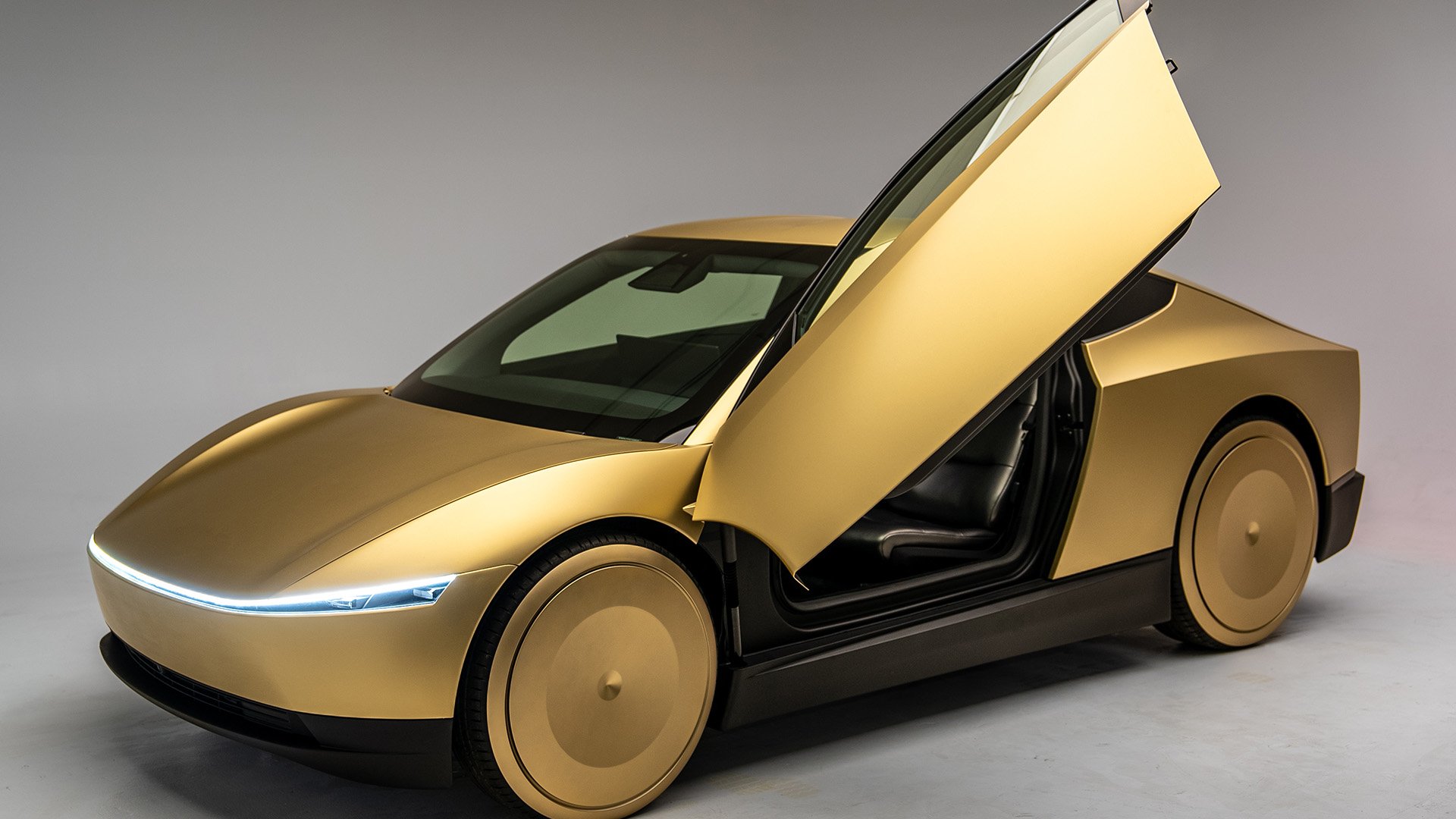
Tesla Cybercab: Braille Breakthrough Ushers in Truly Inclusive Autonomous Rides as April Production Looms
Key Takeaways
- Tesla Cybercab manufacturing is nearing an April start date, with test units spotted nationwide.
- Braille implemented on the Stop/Hazard Lights button for blind passengers’ emergency use, highlighted by @wholemars.
- Braille also on interior door releases, confirmed by @EricETesla.
- Focus on inclusivity for disabled users, leveraging Full Self-Driving to enable independent transport.
- Cybercab launches Tesla’s autonomous ride-sharing program, transforming mobility for all.
Imagine stepping into a car that doesn’t just drive itself but actively empowers those who’ve long been sidelined by traditional transportation. Tesla’s Cybercab isn’t just another robotaxi—it’s a beacon of inclusivity in the autonomous revolution. With production ramping up for an April 2026 start and test units now spotted across the U.S., recent revelations about its Braille features are stealing the spotlight.❶ ❷This reads as a detail—it’s Tesla doubling down on making mobility universal especially for the visually impaired and disabled community.
In this deep dive, we’ll unpack the production timeline, the genius behind the Braille integration, and how Cybercab’s design could transform ride-sharing. Buckle up (or not, since it’s driverless)—the future is here.
Production Timeline: April 2026 Lock-In and Test Fleet Surge
Elon Musk has reaffirmed—multiple times—that Cybercab production kicks off in April 2026 at Giga Texas.❸ ❹This isn’t pie-in-the-sky optimism; Tesla’s been testing the production system rigorously, with initial low-volume output for validation before scaling in Q3-Q4.❺
Key Milestones Ahead:
- April 2026: First units roll off the line—history in the making, just 16 months post-reveal. ❻
- Mid-2026: Fleet expansion for Robotaxi network deployment.
- Regulatory Wins: Public road testing already underway in Austin and D.C., signaling green lights for broader rollout. ❼
Test units are everywhere: 25+ at Giga Texas, spotted hauling on highways, and even navigating D.C. streets.❷ ❽Drone footage and eyewitness accounts confirm a growing fleet, prepping for mass production.❾My take? Tesla’s manufacturing wizardry—unboxed production—will make this the fastest EV ramp-up yet, undercutting rivals like Waymo.
The Braille Magic: Accessibility That Hits Home
At the heart of Cybercab’s inclusivity push is Braille integration, a “small but significant” feature that’s anything but minor.❿Highlighted by Tesla insiders like @wholemars and Cybercab lead engineer @EricETesla, it’s on two critical spots:
- Stop/Hazard Lights Button: Ceiling-mounted emergency stop with raised Braille labeling. Blind passengers can feel and activate it instantly—no fumbling in panic. ⓫ ⓬
- Interior Door Releases: Tactile Braille on electronic handles for safe, independent exit. ⓭ ⓮
Why This Matters Deeply
For the 2.2 billion people worldwide with vision impairment (per WHO stats), rideshares have been a nightmare—unreliable drivers, inaccessible apps, zero tactile feedback. Cybercab flips the script: Full Self-Driving (FSD) handles navigation, while Braille ensures control. @wholemars called it “insane” that cars are now blind-friendly, and he’s right—this is peak design thinking.⓯
Pro Tip for Riders: Download Tesla’s Robotaxi app now (it’s live!) to practice summoning rides. Early adopters get priority in test markets like Austin.⓰
Broader Inclusivity: Empowering the Disabled in the Autonomous Age
Tesla’s not stopping at Braille. Cybercab leverages FSD for true independence—no human driver bias or errors.⓭While Gen 1 isn’t wheelchair-optimized (Tesla’s transparent about that), ramps and accessibility rides are in development.⓱ ⓲
Challenges and Wins:
| Aspect | Current Status | Future Outlook |
|---|---|---|
| Vision Impaired | Braille emergency controls ✅ | App voice integration imminent |
| Mobility Impaired | Low step-in height | Wheelchair variants by 2027 |
| Elderly Users | Spacious two-seater interior | Personalized FSD profiles |
Critics gripe about exclusions, but Tesla’s iterating fast—Musk confirmed handicapped rides work-in-progress.⓳Opinion: This beats Uber’s half-measures; autonomy levels the field.
Ride-Sharing Revolution: Cybercab’s Network Impact
Cybercab launches Tesla’s Robotaxi fleet: summon via app, ride for pennies per mile, no ownership hassle.⓰ ⓴By 2026, expect fleets in major cities, slashing costs 5-10x vs. human-driven taxis.
Investor Insight: TSLA stock’s tied to this—successful April ramp could rocket shares. Owners: Add your car to the network for passive income.
Advice for Cities/Planners: Prioritize Robotaxi zones now; inclusivity mandates will follow.
Final Thoughts: Mobility for All, Tesla-Style
Cybercab’s Braille isn’t gimmickry—it’s empathy engineered into silicon and steel. As test units proliferate and April nears, Tesla’s proving autonomy isn’t elite-only.❿For blind users, it’s freedom; for society, progress. Watch this space—2026 will redefine “getting there.”
What do you think? Will you hail a Cybercab? Drop comments below!