Starship V3’s Epic Debut: Flight 12 Locked for Early April 2026 – Elon Musk’s Bold Timeline and What It Means for SpaceX’s Mars Ambitions
Key Takeaways
- Elon Musk announces Starship V3 first flight targeted in about 4 weeks, around early April.
- Joe Tegtmeyer echoes ~9 April launch target as realistic based on Starbase activity and testing.
- Key milestones include testing new launch tower, mount, and tank farm systems at Starbase.
- Booster 19 to roll out, mount up, get 33 Raptor V3 engines, then first pad static fire.
- Ship 39 prep: add 6 engines, static fire at Massey’s test site.
- Post-prep: full V3 Super Heavy and Starship stack, followed by wet dress rehearsal.
- Musk states Starship tower catch only after two perfect ocean soft landings to minimize risk.
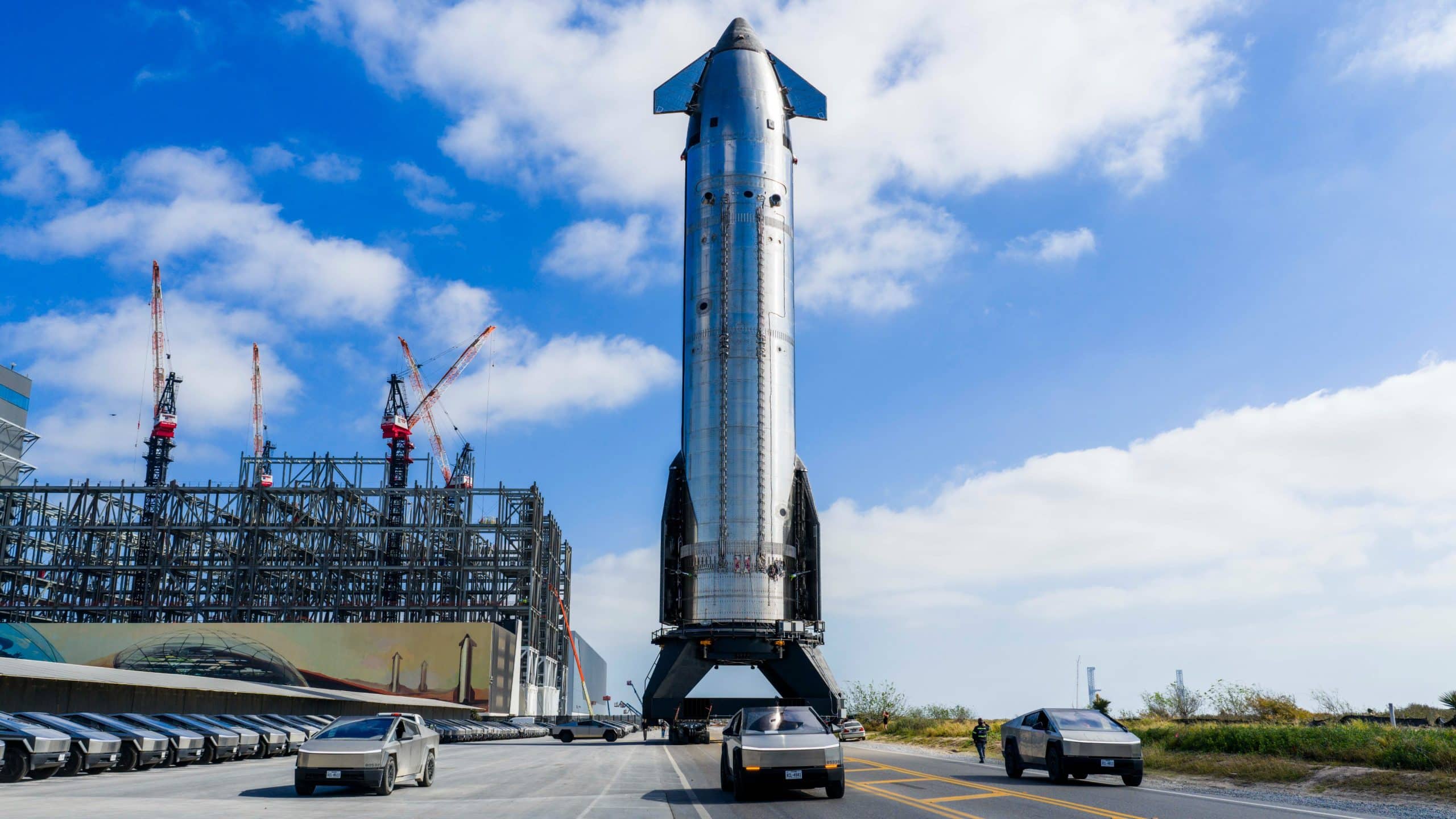
SpaceX enthusiasts, buckle up! Elon Musk has dropped a bombshell: the first flight of Starship Version 3 (V3) is targeted for about 4 weeks from now, putting the launch window squarely in early April 2026. This comes hot on the heels of intense activity at Starbase, Texas, where teams are racing through milestones for Starship Flight Test 12. Noted SpaceX observer Joe Tegtmeyer has echoed this optimism, calling a ~April 9 launch realistic based on ground observations of testing and infrastructure upgrades. u2776 u2777
As a blogger who’s followed SpaceX’s iterative rocket development since the early Falcon 1 days, this feels like a pivotal moment. Starship V3 isn’t just an incremental upgradeu2014it’s a fully reusable powerhouse designed for orbital refueling, Mars missions, and beyond. With Booster 19 and Ship 39 prepped for their debut, Pad upgrades underway, and Raptor V3 engines firing on all cylinders, Flight 12 could mark the transition from test flights to operational reality. But with high stakes, will SpaceX stick to the aggressive timeline? Let’s dive deep into the details, milestones, risks, and what this means for the future of space travel.
The Announcement: Musk’s Optimism Meets Ground Realities
On March 7, 2026, Elon Musk posted on X: “Starship V3 first flight in about 4 weeks.” This aligns with ongoing preparations for Flight 12, previously eyed for late March but now solidified for early April amid minor slips. u2778 u2779 RocketLaunch.Live lists the target as April 2026 (UTC), while SpaceX insiders like Tegtmeyer highlight Starbase’s frenetic pace as a green light. u277a
Why the confidence? SpaceX’s “test-to-failure” philosophy has accelerated iterations. After Flight 11’s learnings (including a COPV failure on Booster 18), the team pivoted to Booster 19 and Ship 39 for Flight 12u2014the first Block 3 vehicles with V3 enhancements. u277b My take: Musk’s timelines are famously elastic (remember the 2024 Mars dreams?), but 2026’s progressu201411 flights alreadyu2014shows maturation. Expect FAA approvals and weather to be the wild cards.
Timeline Breakdown
Here’s a projected path to launch, based on recent updates:
- Booster 19 rollout and engine installation: Roll to the pad, fitu00a033 Raptor V3 engines, followed by theu00a0first pad static fire.
- Ship 39 engine-out testing: Addu00a06 Raptor V3 engines, static fire at Massey’s test site.
- Full stack and wet dress rehearsal: Mate Booster 19 and Ship 39, load propellants for countdown simulation.
- Launch!u00a0NET early April, targeting suborbital trajectory with ocean soft landing goals.
Historical data from Block 2 flights shows ~73 days from ship cryotest to launch, supporting this pace. u277c
Meet the Stars: Booster 19 and Ship 39
Booster 19 (B19): This Super Heavy beast has aced cryogenic proof testing and is back in Mega Bay 1 for final Raptor installs. It’s the first V3 booster, boasting stretched tanks, optimized structure, and those 33 sea-level Raptors for ~17 million pounds of thrustu2014enough to eclipse Saturn V. u277d Recent flyovers show it prepped for rollout.
Ship 39 (S39): The upper stage just survived its first major tests at Massey’s, including propellant system checks that yielded stunning visuals of venting methane and LOX. Equipped with 3 sea-level + 3 vacuum Raptors, it features V3 upgrades like orbital docking ports, sleeker catch pins, and white heat shield tiles for reentry. u277e u277f
Insight: These vehicles embody SpaceX’s shift to “ship-like” productionu2014faster builds via Mega Bays. Opinion: If Flight 12 nails soft landings, rapid reuse (refly in weeks) becomes viable, slashing costs to <$10M per launch.
Raptor V3: The Engine Revolution
No Starship story is complete without Raptor V3, SpaceX’s methalox masterpiece. Recent tests include:
- Long-duration static firesu00a0simulating full ascent burns.u00a0u24eb
- Record turnarounds (e.g., R76’s test-to-departure).u00a0u24ec
- Booster 19’s upcomingu00a0first 33-engine pad staticu2014a spectacle of fire and fury.
V3 slashes mass by 7%, boosts thrust to 280 tons, and simplifies plumbing for reliability. Videos from McGregor show shock diamonds and sustained burns proving maturity. u24ed
Advice for watchers: Tune into NSF L2 or LabPadre cams. A single Raptor hiccup could scrubu2014SpaceX’s data-driven ethos prioritizes perfection.
Starbase Transformations: V3 Infrastructure Upgrades
Starbase is evolving into a V3 fortress:
- New launch tower, mount, and tank farm: Critical tests for Flight 12’s certification.u00a0u24ee
- Stage Zero 2.0 and Pad 2: Redesigned for quicker turns, with testing ramping up.u00a0u24ef
- Tank farm expansions: Supporting higher propellant throughput.
These aren’t bells and whistlesu2014they enable 24-hour ops and tower catches. My opinion: Starbase’s “Gigafactory for rockets” model rivals Tesla’s scale, positioning SpaceX for 100+ flights/year.
Tower Catch: Musk’s Risk-Averse Roadmap
Musk clarified: No Ship tower catch until two perfect ocean soft landings. This follows Booster catches’ success (e.g., Flight 5) but prioritizes Ship reliability. u24f0 u24f1
Why smart? Catches enable “rapid reuse,” but failure risks the pad. Flight 12 likely eyes ocean splashdowns first.
Pros and Cons of the Strategy
| Aspect | Pros | Cons |
|---|---|---|
| Safety | Minimizes pad damage | Delays full reuse demos |
| Learning | Builds reentry data | Extra ocean recoveries |
| Timeline | Flight 13/14 for catch? | Motivates perfect Fl12 |
What to Expect from Flight 12 u2013 And Beyond
Objectives:
- Ascent and separationu00a0with V3 performance.
- Ship reentry and soft landing.
- Booster chopsticks returnu00a0(hopefully caught!).
Payload teases include V3 Starlink sats precursors. Success unlocks Artemis III delays’ relief and Mars uncrewed in 2028. u24f2
Risks: Raptor sync, heat shield ablation, FAA holds. But SpaceX’s 90%+ success rate post-IFT4 inspires confidence.
Broader Implications: analysis
Flight 12 isn’t hypeu2014it’s reusability’s inflection point. V3’s 2x payload to orbit (~200t) crushes competitors, enabling Starlink V3, lunar bases, and Mars cities. Economically, <$100/kg to orbit disrupts everything.
Advice:
- For investors: Buy SpaceX stock (if public) or proxies like TSLA.
- Travelers: Book Brownsville flights nowu2014too early?u00a0u277c
- Fans: Follow @JoeTegtmeyer, @NASASpaceflight for live intel.
Challenges remain: Regulatory hurdles, supply chains. Yet, Musk’s vision endures.
The Stars Are Aligning
As of March 9, 2026, Starship V3’s Flight 12 is go for early Aprilu2014a testament to relentless innovation. Whether it splashes perfectly or teaches hard lessons, SpaceX inches toward multiplanetary life. Stay tuned; the countdown is real.
“