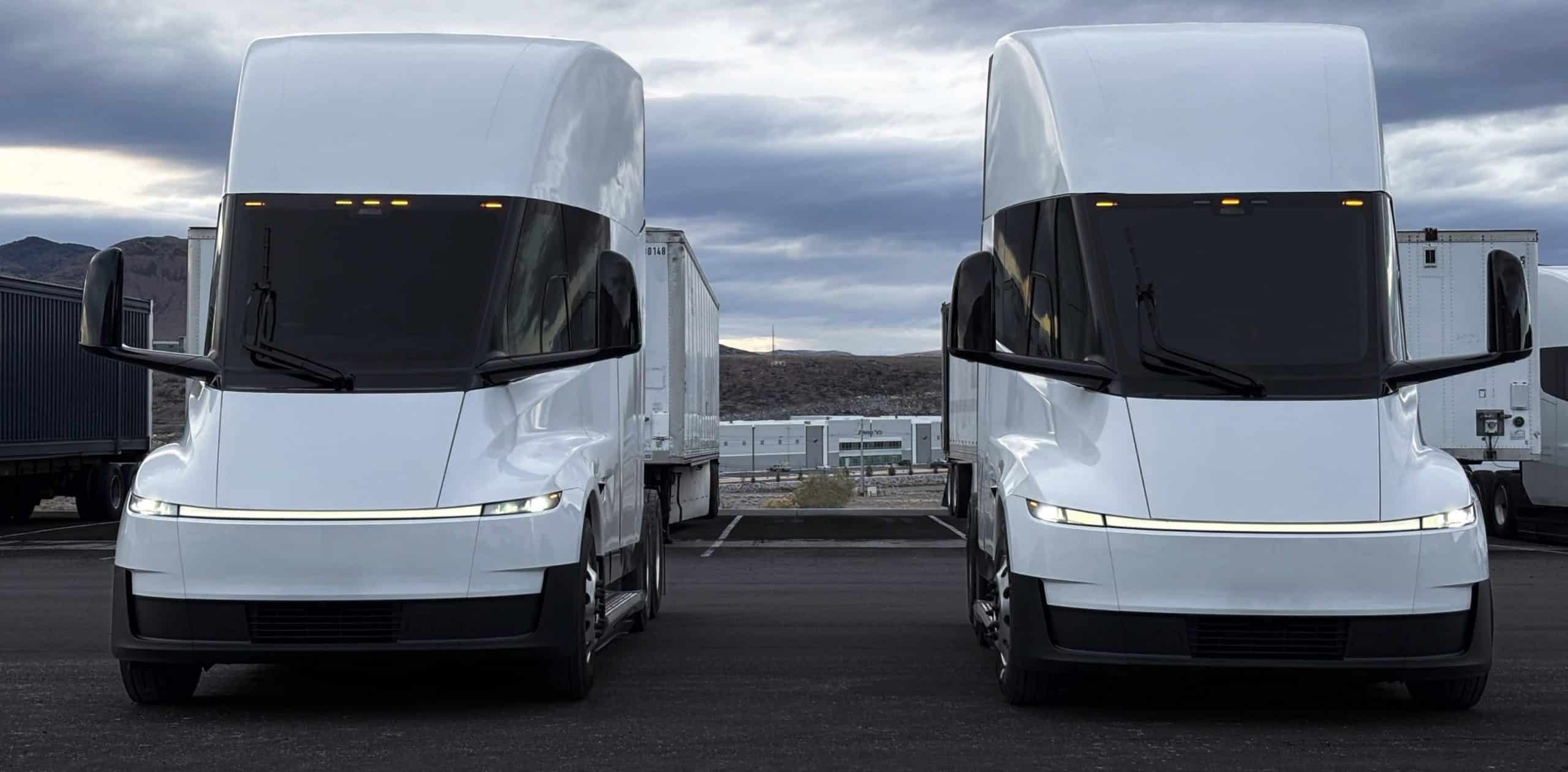
Tesla’s Trucking Revolution Accelerates: First Public Semi Megacharger Unveiled in LA Amid Factory Ramp-Up and Business Charging Boom
Key Takeaways
- Tesla opened its first public Tesla Semi Megacharger site in Los Angeles, offering up to 750 kW charging speeds for Semi customers.
- The opening was highlighted in a post on X by the official Tesla Semi account.
- This is the first non-factory Megacharger site and the third visible on Tesla’s map.
- Megachargers are designed for ultra-high speeds to make Tesla Semi competitive with diesel trucks.
- Elon Musk biographer Ashlee Vance shared factory photos near Giga Nevada, hinting at impending production ramp-up.
- Supercharger for Business program lets third parties buy and deploy Superchargers integrated into Tesla’s network.
- Alpharetta, GA deployed four 325 kW city-branded Superchargers for Tesla Model Y police vehicles, open to public.
- The Alpharetta project supports fleets while generating economic returns to offset costs.
- Other participants include Suncoast Charging, Pie Safe bakery, Francis Energy, and Wawa stores.
As Tesla continues to redefine the future of transportation, the electric vehicle giant has hit another major milestone: the opening of its first public Tesla Semi Megacharger site in Los Angeles (technically Ontario, California). ❶ ❷ This isn’t just another charging station—it’s a game-changer for heavy-duty trucking, offering blistering speeds of up to 750 kW to keep Tesla Semi fleets rolling without the downtime that plagues diesel rigs. Announced via the official Tesla Semi account on X, this site marks the third visible Megacharger on Tesla’s map and the first outside of factory grounds. ❸
In this in-depth post, we’ll dive into the specs, the production buzz from Giga Nevada, the innovative Supercharger for Business program powering real-world deployments like Alpharetta’s police fleet chargers, and what it all means for the EV trucking revolution. As a blogger who’s tracked Tesla’s Semi journey since its 2017 unveil, I’m bullish: this is the infrastructure backbone that could slash logistics costs by 50% or more while slashing emissions to zero.
The Dawn of Public Megacharging: LA Site Details and Significance
Nestled at 4265 E Guasti Road in Ontario, CA—strategically near the I-10 and I-15 freeway interchange—this new Megacharger is open 24/7 to all Tesla Semi customers. ❹ Unlike the two prior operational sites at Tesla factories in Lathrop, CA, and Sparks, NV, this is the first truly public station, signaling Tesla’s confidence in scaling Semi deliveries. ❺
Why does this matter? Trucking is America’s economic lifeblood, hauling 72% of goods by ton-miles. Diesel trucks guzzle fuel, emit 500 million tons of CO2 annually, and require 10-30 minute refuels—but with frequent stops. The Tesla Semi flips the script:
- Ultra-fast charging: Up to 750 kW here, with Megachargers capable of peaking at 1.2 MW (1,200 kW) for 60% range in 30 minutes. ❻ ❼
- Competitive edge: Adds range faster than diesel fill-ups, minimizing driver downtime.
Tesla’s map now shows 66 Megacharger locations (2 live, 64 “coming soon”) across 15 states, blanketing key freight corridors from West to East Coast. Texas leads with 19 sites, California 17—perfect for drayage from ports like LA/Long Beach. ❽ ❾
Pro Tip for Fleets: If you’re a logistics operator, scout Tesla’s “Find Us” map now. Early adopters like Frito-Lay and PepsiCo (already piloting Semis) will dominate routes with these chargers.
Tesla Semi Megacharger Specs: Engineered for the Long Haul
Megachargers aren’t your average EV plugs—they’re behemoths built for Class 8 trucks. Here’s the breakdown:
Core Specifications
| Feature | Details |
|---|---|
| Peak Power | Up to 1.2 MW (MCS 3.2 connector) ❿ |
| Charging Speed | 60% range (~300 miles) in 30 min; full charge in ~90 min ❻ |
| Stalls per Site | Varies; LA site undisclosed but scalable ❸ |
| Voltage/Current | 1,000V architecture for efficiency ⓫ |
| Compatibility | Tesla Semi exclusive for now; future NACS/MCS open? ❺ |
Paired with the Semi’s specs:
- Range: 325-mile Standard or 500-mile Long Range. ⓬
- Efficiency: 1.7 kWh/mile—half diesel’s energy cost. ❿
- Powertrain: 800 kW from three rear-axle motors; ePTO up to 25 kW. ⓭
- Battery: ~900 kWh pack, curb weight ~23,000 lbs (82,000 lbs GCW). ⓫
Insight: At current electricity rates (~$0.10/kWh), a 500-mile Semi run costs ~$85 vs. $200+ for diesel. Scale to 100k miles/year? Savings hit $11,500 per truck. With Megachargers, Tesla matches diesel uptime—critical for ROI under 2 years.
Production Ramp-Up: Giga Nevada Factory Buzz and Winter Testing
Excitement peaked when Elon Musk biographer Ashlee Vance dropped exclusive photos from inside Tesla’s “enormous” Semi factory near Giga Nevada. ⓮ ⓯ The facility is nearing completion, with visuals showing vast assembly lines ready for high-volume output.
Recent sightings:
- Winter testing complete on design-refreshed Semis, proving cold-weather resilience. ⓰
- Deliveries ramping: Final specs announced Feb 2026, customer pilots expanding. ⓭
Opinion: Tesla’s vertical integration shines here. Factory + Megachargers = moat against rivals like Daimler eCascadia. Expect 10k+ Semis/year by 2027, pressuring diesel incumbents.
Supercharger for Business: Empowering Fleets and Hosts
Tesla’s Supercharger for Business program is a masterstroke, letting third parties buy/install V4 Superchargers (up to 325-500 kW) into the global network—branded and managed as they wish. ⓱ ⓲
Spotlight: Alpharetta, GA Police Fleet
- 4-stall, 325 kW site on Old Milton Parkway, city-owned for Tesla Model Y police vehicles. ⓳ ⓴
- Public access: Generates revenue to offset fleet costs—win-win.
- Advice: Municipalities, replicate this. EVs cut police fuel by 70%; revenue from transients pays it back fast.
Other Pioneers
- Wawa: Self-branded Superchargers at 210+ sites; first launches live.[21][22]
- Francis Energy: 8-stall in Calumet, OK; Magic Dock/CC readers for non-Teslas.[23]
- Suncoast Charging & Pie Safe Bakery: Early participants deploying branded sites.[21]
Fleet Advice:
- Calculate ROI: Tesla handles ops; you set rates.
- Site Selection: High-traffic spots near highways.
- Branding: Custom wraps boost foot traffic (e.g., Wawa coffee + charge).
The Bigger Picture: EV Trucking’s Tipping Point
Tesla’s trifecta—refined Semi, Megacharger rollout, business program—positions it to capture 20% of Class 8 market by 2030. Challenges remain: grid upgrades, supply chain for batteries. But with IRA incentives ($40k/truck) and falling LFP costs, diesel’s days are numbered.
My Prediction: By 2027, coast-to-coast Semi routes viable. Logistics giants: pilot now or lag.
What do you think—ready to ditch diesel? Drop comments below!