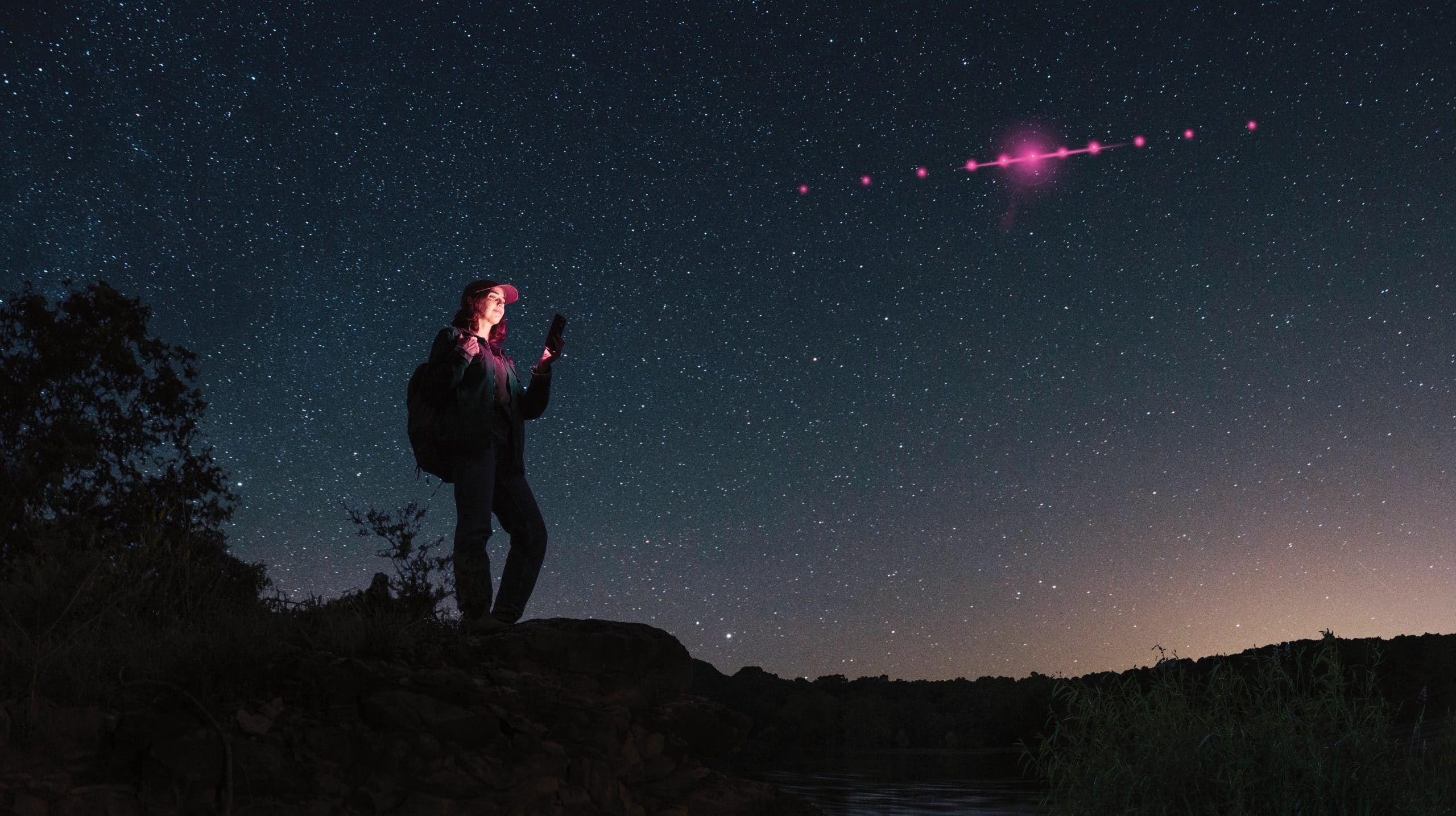
Starlink Phone: SpaceX’s Game-Changing AI-Optimized Satellite Smartphone on the Horizon?
Key Takeaways
- SpaceX is exploring a Starlink-branded phone for direct-to-device satellite internet connectivity.
- The potential device would connect directly to the Starlink constellation, though details and release remain unclear.
- SpaceX has prior mobile efforts, including T-Mobile partnership for smartphones and $19.6B EchoStar spectrum acquisition.
- Elon Musk tweeted it’s “not out of the question,” but would be optimized for max performance/watt neural nets, unlike current phones.
- Starlink drove SpaceX’s $15–16B revenue and $8B profit last year, comprising 50–80% of total revenue.
- SpaceX operates 9,500+ Starlink satellites serving 9M+ users worldwide, with 650 dedicated to direct-to-device services.
- Future mobile expansion relies on Starship launches, potentially boosting network capacity over 20x per flight.
In the ever-evolving world of space technology, SpaceX continues to push boundaries beyond rockets and reusable spacecraft. The latest buzz from Reuters reveals that Elon Musk’s powerhouse is seriously considering aStarlink-branded phone– a dedicated mobile device designed to connect directly to the Starlink satellite constellation, bypassing traditional cell towers entirely.❶ ❷This isn’t just idle speculation; it’s a strategic pivot that could redefine global connectivity, especially as Starlink already dominates SpaceX’s revenue stream. This reads as natural evolution of Starlink’s direct-to-device (D2D) ambitions – blending satellite internet with AI prowess in a handheld form factor
The Reuters Scoop: From Whispers to Potential Reality
According to sources familiar with the matter cited by Reuters, SpaceX has internally discussed building this “Starlink Phone” for years as part of a broader roadmap to expand Starlink into consumer mobile markets.❶While specifics like design, pricing, or launch timeline remain shrouded in mystery, the device would leverage Starlink’s low-Earth orbit (LEO) satellites for seamless internet access anywhere with a sky view – think remote hiking trails, ocean voyages, or disaster zones where terrestrial networks fail.
This aligns with SpaceX’s ongoing D2D initiatives. Already, partnerships like the one with T-Mobile allow unmodified smartphones (iPhones, Pixels, Galaxies) to tap into Starlink for texting, with voice and data on the horizon.❸But a purpose-built Starlink Phone? That promises deeper integration, potentially eliminating the need for bulky antennas or special chips.
Key differentiators we’re speculating on:
- Direct satellite handover: No reliance on ground stations for basic connectivity.
- Global coverage: Aiming for ubiquitous service, powered by 650+ D2D-dedicated satellites already in orbit. ❷
- Ruggedized for extremes: Optimized for adventurers, with battery life tuned for off-grid survival.
Elon Musk Weighs In: “Not Out of the Question” – But AI-First
Elon Musk himself fanned the flames on X (formerly Twitter) on January 30, 2026, responding to speculation:“Not out of the question at some point. It would be a very different device than current phones. Optimized purely for running max performance/watt neural nets.” ❷This isn’t your typical iPhone rival – Musk envisions anAI-centric powerhouse, prioritizing neural network efficiency over camera megapixels or TikTok scrolling.
Why neural nets? My take:
- xAI Synergy: With Grok and xAI pushing AI boundaries, a Starlink Phone could run on-device inference for real-time tasks like autonomous navigation, language translation in remote areas, or even drone control – all powered by satellite backhaul.
- Edge Computing in Orbit: Ties into SpaceX’s FCC filings for solar-powered satellite data centers for AI workloads. ❹
- Efficiency Edge: “Max performance/watt” screams Tesla-inspired optimizations, potentially outpacing power-hungry flagships in AI benchmarks.
This positions SpaceX not just as a telecom disruptor, but anAI hardware pioneer. Imagine a phone that doubles as your personal Grok companion, querying vast satellite data for weather predictions or resource scouting.
Building the Foundation: Partnerships and Spectrum Plays
SpaceX isn’t starting from scratch. They’ve laid crucial groundwork:
- T-Mobile Partnership: Beta testing D2D texting now, full voice/data soon – proving the tech works on everyday phones. ❺
- EchoStar Spectrum Haul: In 2025, SpaceX snapped up satellite spectrum in blockbuster deals totaling around $19.6 billion, including $2.6B for AWS-3 licenses in November. This clears regulatory hurdles for D2D services and squeezes competitors. ❷ ❻
These moves echo Musk’s playbook: Acquire assets, iterate fast, dominate.
Starlink’s Empire: Revenue Rocket Fuel
Starlink isn’t a side hustle – it’s SpaceX’s cash cow. In 2025, the company raked in$15-16 billion in revenue with $8 billion in profit, Starlink contributing 50-80% (estimates peg ~$10B from subscriptions alone).❼ ❽
Scale stats that blow minds:
- 9,500+ satellites in orbit, serving 9 million+ users worldwide.
- From $200M in 2021 to $10B+ in 2025 – a 50x leap! ❾
A Starlink Phone could supercharge user growth, turning passive subscribers into mobile evangelists.
The Starship X-Factor: 20x Capacity Boosts Ahead
None of this scales withoutStarship. Musk promises each Starship launch of V3 Starlink satellites will add60 Tbps of capacity – more than 20xwhat Falcon 9 delivers today.❿ ⓫With V3 sats boasting 1 Tbps downlink per bird, we’re talking hyper-scale bandwidth for billions.
Timeline watchlist:
- 2026: First operational Starship payloads, including V3 sats.
- Beyond: Full global D2D, enabling phone rollout.
Pro Tip for Investors/Techies: Track Starship’s flight cadence – every success multiplies Starlink’s moat.
Consumer Impacts: Revolution or Niche Gadget?
Pros:
- True anywhere connectivity: End dead zones forever – vital for rural America, maritime, aviation.
- AI Superpowers: On-device Grok for productivity in the wild.
- Affordability Long-Term: Starlink’s margins suggest competitive pricing post-scale.
Cons/Challenges:
- Regulatory Hurdles: FCC approvals, international spectrum wars.
- Competition: AST SpaceMobile, Apple (rumored sat comms), Amazon Kuiper. ⓬
- Power/Heat: Satellite links guzzle juice; neural nets amplify that.
Advice for Early Adopters:
- Sign up for T-Mobile/Starlink beta to test D2D today.
- Pair Starlink Mini (under 2.5 lbs!) with your phone as a bridge. ⓭
- Follow @elonmusk and @Starlink for teasers.
SpaceX’s Phone Could Eclipse Rockets
A Starlink Phone isn’t just hardware – it’s Musk’s vision of a connected, AI-augmented planet. With Starlink’s proven dominance and Starship’s promise, 2026-2027 could birth the post-smartphone era. Skeptics say it’s vaporware; I say bet on execution. SpaceX has flipped the script before – stay tuned.
What do you think? Drop comments: iPhone killer or overkill?