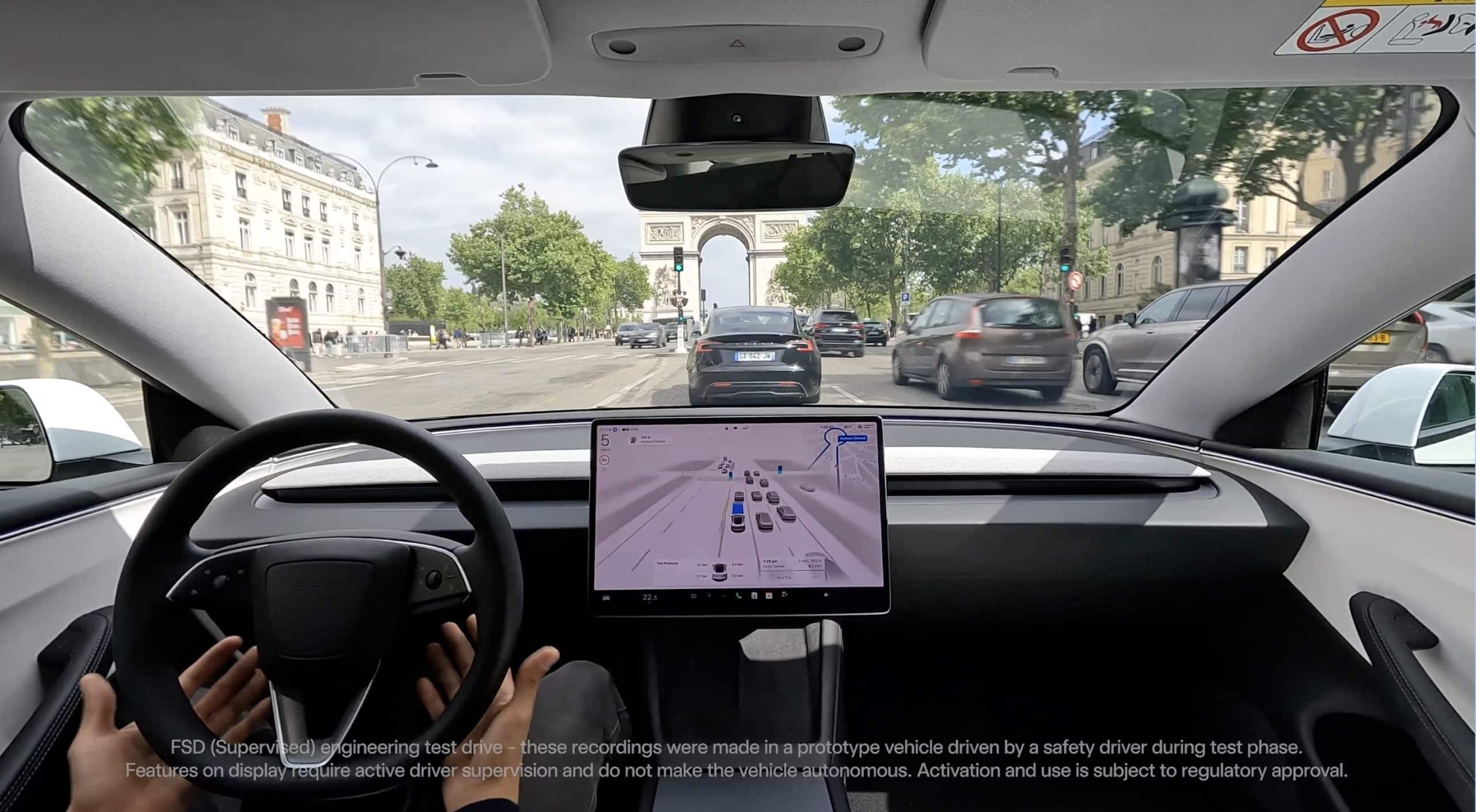
Tesla’s FSD Licensing Drought: Why Legacy Automakers Are Repeating Their EV Mistakes
Key Takeaways
- Tesla executive Sendil Palani confirmed on X that Full Self-Driving (FSD), the most robust US driver assistance program, isn’t attracting interest from lagging competitors despite Tesla’s efforts.
- Palani responded to a Tesla fan’s question about continued vehicle manufacturing, noting sharing FSD tech “has not been proven to be easy.”
- Tesla previously discussed licensing FSD with a major OEM (speculated as Ford, with cordial Musk-Farley ties), but no deal materialized per Q2 2023 and Q1 2024 earnings calls.
- Speculation on competitors’ disinterest: they believe they can develop it themselves, undervalue FSD, or repeat past mistake of ignoring Tesla’s EV lead.
- Hypothetical: Tesla could license FSD widely, potentially exit manufacturing, leveraging loyal fanbase for high valuation via software.
As a veteran automotive analyst and blogger specializing in electric vehicles and autonomous driving tech, Tesla’ continues to be a long-running story.s journey from a scrappy EV startup to the undisputed leader in self-driving software. Recently, Tesla VP of Finance Sendil Palani dropped a bombshell on X (formerly Twitter): despite Tesla’s “best efforts to share the technology,” licensing Full Self-Driving (FSD) “has not proven to be easy.”❶ ❷This candid admission, made in response to a fan questioning whether Tesla would continue manufacturing vehicles, underscores a persistent roadblock in the industry. Competitors—lagging far behind in autonomy—are turning down what could be a golden ticket to catch up. Is this hubris, fear, or something else? In this deep dive, we’ll unpack the history, the hurdles, and what it means for Tesla’s future dominance.
The Spark: Sendil Palani’s Revealing X Post
Sendil Palani, Tesla’s Vice President of Finance since 2014, isn’t typically the face of Tesla’s tech innovations—he oversees financial strategy across engineering and operations.❸ ❹Yet, his recent post on X has ignited discussions. Prompted by speculation about Tesla pivoting away from car production amid robotaxi hype, Palani clarified: Tesla remains committed to scaling vehicles like the Model Y and upcoming Cybercab. But the real gem? His aside on FSD licensing struggles.
This isn’t idle chatter. Tesla has repeatedly touted FSD as the “most robust driver assistance program in the United States,” powered by billions of miles of real-world data and end-to-end neural networks.❶Competitors’ disinterest echoes their early dismissal of EVs, where they laughed off Tesla only to scramble years later.
Tesla’s Licensing Overtures: A Timeline of Rejections
Tesla has been pitching FSD licensing for years, positioning it as a lucrative software play. Here’s the key history:
- Q2 2023 Earnings Call: Elon Musk revealed “early discussions” with a “major OEM” about licensing FSD. Speculation immediately pointed to Ford, given the cordial rapport between Musk and Ford CEO Jim Farley.❶ ❺
- Q1 2024 Earnings Call: Updates confirmed talks were ongoing but nascent. OEMs were “not really believing in it” yet. Musk hinted at a “good chance” of a deal that year.❻ ❼
- No Deal Materializes: By mid-2024, silence. Ford’s Farley later admitted discussions happened but Ford passed, citing a desire for in-house development.❽
- 2025 Escalation: Musk openly lamented that automakers “do not want” FSD, despite offers. When they do inquire, demands are “unworkable.”❾ ❿Palani’s 2026 post seals it: zero takers.❶
The Ford Saga: Mutual Respect, No Partnership
Ford was the prime suspect. Farley and Musk shared “mutual respect,” with Farley praising Tesla’s EV push.⓫Rumors peaked in early 2025, with speculation of an FSD deal boosting Tesla stock.⓬But Farley shut it down: Ford wants control over its autonomy stack. This despite BlueCruise lagging FSD by miles (pun intended).⓭
Why the Cold Shoulder? Unpacking Competitor Reluctance
Legacy automakers’ snub isn’t baffling—it’s predictable. Here’s my breakdown, drawn from industry patterns and recent analyses:
- Pride and In-House Ambitions: Execs believe they can build it themselves. GM’s Cruise, Ford’s BlueCruise, Mercedes’ Drive Pilot—all chase Level 3/4 but falter on scalability. Tesla’s vision-only, data-driven approach threatens their sensor-heavy paradigms.⓮
- Technical Hurdles: FSD isn’t “plug-and-play.” It demands Tesla’s integrated hardware (cameras, HW4+ computers) and data flywheel. Retrofitting rivals’ cars? Costly nightmare.⓯
- Regulatory and Liability Fears: Who bears blame in crashes? Licensing shifts risk to Tesla, but OEMs worry about approvals. Musk notes “unworkable requirements.”⓰
- Pricing and Economics: Tesla wants premium fees. If Farley licenses FSD but brands it “Ford Autonomous,” premiums apply—OEMs balk.⓱
- Déjà Vu from EVs: They ignored Tesla’s Roadster, then Model S. Now, FSD lead mirrors that. Musk warns: “I’ve tried to warn them.”❿
Pro Tip for Investors: Watch for cracks. A desperate OEM (e.g., Stellantis or VW) might bite as robotaxis launch.
Tesla’s Manufacturing Pivot: Cybercab and Beyond
Palani’s post quells fears—Tesla’s scaling production. Model Y expansions, Cybercab volume production slated for April 2026, and robotaxi fleets along I-5/I-10.⓲ ⓳No Model S/X phase-out rumors hold; focus shifts to autonomy hardware.
Strategic Advice for Tesla Fans:
- Buy FSD Now: Subscriptions will soar with unsupervised v13+.
- Robotaxi Plays: Own TSLA for licensing upside if OEMs fold.
- Diversify: Pair with suppliers like Mobileye, but Tesla’s moat is widest.
Analysis: Legacy’s Self-Inflicted Wound
From my 15+ years tracking autonomy, this is automaker arrogance redux. Tesla’s 10x data advantage (billions of miles) is insurmountable short-term. Competitors burn billions on lidar fiascos while FSD Supervised nears perfection. Licensing FSD could turbocharge their lineups overnight—think Super Bowl ads for “Ford FSD.” Instead, they’re dooming themselves to irrelevance.
Hypothetical? Tesla exits manufacturing, licenses FSD fleet-wide, valuations explode via software margins (90%+). Loyalists buy Cybercabs; Tesla becomes “Autonomy Inc.” Plausible by 2030.
The Road Ahead: Autonomy Arms Race Heats Up
By late 2026, Cybercab fleets will showcase unsupervised FSD, pressuring rivals.⓴First licensor? Likely a Chinese OEM or outlier like Rivian. Tesla wins either way: monopoly or massive revenue.
What do you think—will pride crack? Drop comments below!