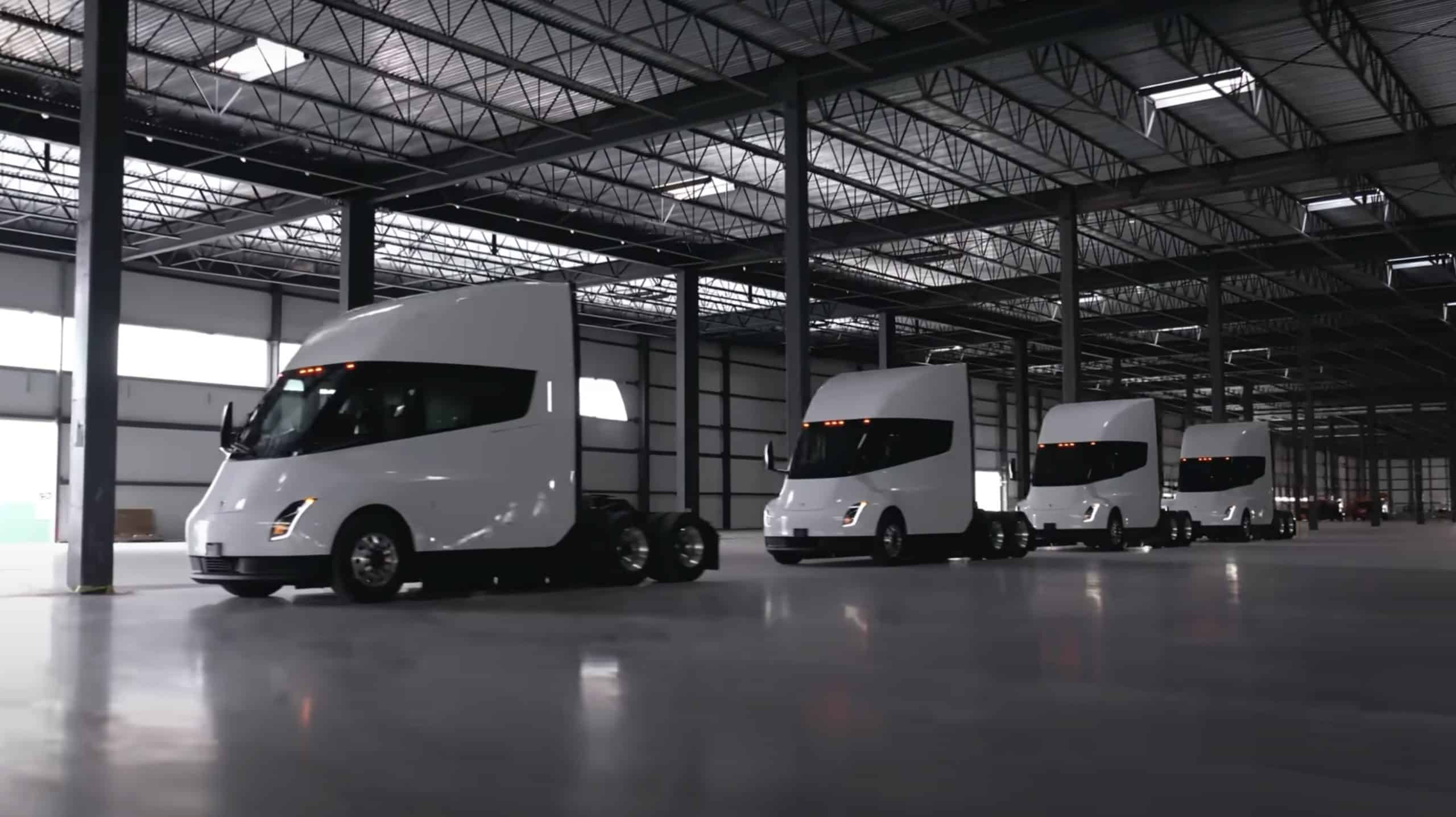
Tesla’s Epic Partnership with Pilot Travel Centers: Supercharging the Future of Heavy-Duty Electric Trucking
Key Takeaways
- Tesla partners with Pilot Travel Centers to expand Semi Chargers for all heavy-duty electric trucks.
- First sites opening this Summer along I-5 and I-10 in California, Georgia, Nevada, New Mexico, and Texas.
- Each station features 4-8 chargers delivering up to 1.2 MW per stall.
- Shannon Sturgil (Pilot SVP of Alternative Fuels) highlights partnership as key to advancing heavy-duty charging and sustainable transport.
- Tesla has 46 public Semi Charger sites in progress across major US trucking routes.
- Addresses EV truck charging bottlenecks; supports Tesla’s plan for 50,000 Semi units with adopters like PepsiCo and DHL.
- Additional collaborations include Uber’s EV Fleet Accelerator for affordable electric freight.
- Semi expands Tesla alongside Optimus and Energy divisions.
I’ve seen plenty of bold announcements. But today’s bombshell from Tesla and Pilot Travel Centers? This is the kind of seismic shift that could finally crack open the door to widespread adoption of battery-electric Class 8 trucks.u2776 u2777Announced on January 27, 2026, this deal isn’t just about plugging in Tesla Semisu2014it’s an open invitation forallheavy-duty electric trucks to juice up at America’s largest network of travel centers. Imagine I-5 and I-10 transformed into electric superhighways, where fleets from every manufacturer can recharge without the diesel dread.
In this deep dive, we’ll unpack the deal’s nuts and bolts, explore its ripple effects on production, adoption, and sustainability, and share my unfiltered take on why this positions Tesla as the undisputed kingpin of freight electrification. Buckle upu2014this is how the trucking world goes green.
The Partnership: A Match Made on Major Freight Routes
Pilot Travel Centers, the undisputed heavyweight in U.S. truck stops with over 800 locations, has inked a landmark agreement with Tesla to deploySemi Chargersat strategically selected sites.u2778 u2779Unlike Tesla’s proprietary Supercharger network for cars, these bad boys are designed for Class 8 beasts, delivering megawatt-level power to get rigs back on the road fast.
Here’s the rollout playbook:
- Locations: Kicking off in high-traffic hotspots acrossu00a0California, Georgia, Nevada, New Mexico, and Texas. Think prime real estate alongu00a0I-5u00a0(West Coast lifeline) andu00a0I-10u00a0(Sunbelt freight artery), plus other key corridors for logistics giants.u00a0u277au00a0u277b
- Timeline: Construction ramps up in theu00a0first half of 2026, with the inaugural sites flipping the switchu00a0later this summer. Pilot is eyeing aroundu00a020 sitesu00a0initially, scalable as demand surges.u00a0u2779u00a0u277c
- Open Access: Crucially, these chargers aren’t Tesla-exclusive. Any heavy-duty EV truck that fits the NACS (North American Charging Standard) connector can plug in, fostering an ecosystem play that benefits rivals like Daimler, Volvo, and Freightliner.u00a0u2777
This isn’t charityu2014it’s smart business. Pilot’s fueling empire has long dominated diesel, but with EV mandates looming (hello, California Air Resources Board rules), they’re pivoting to “alternative fuels” without missing a beat.u2776
Powering Up: Semi Charger Specs That Pack a Punch
No skimping on the hardware here. Each Pilot station will boast4 to 8 charging stalls, powered by Tesla’s cutting-edgeV4 cabinet technology. We’re talking up to1.2 megawatts per stallu2014enough to add hundreds of miles of range in under an hour for a fully loaded Semi.u277d u2776
Quick Comparison Table: Diesel vs. Semi Charging
| Aspect | Diesel Refueling | Tesla Semi Charger |
|---|---|---|
| Time to “Full” | 10-15 minutes | 30-60 minutes (80% SoC) |
| Energy Density | ~35 MJ/L | 500+ kWh battery |
| Cost per Mile | $0.50-$0.70 (diesel) | $0.20-$0.30 (projected) |
| Emissions | High CO2/NOx | Zero tailpipe |
These stalls leverage grid upgrades and Tesla’s Megapack storage for peak shaving, ensuring reliability even during demand spikes. With Tesla already greenlighting46 public Semi Charger sitesnationwideu2014mostly along trucking corridorsu2014this Pilot infusion supercharges the network to critical mass.u2777
Voices from the Vanguard: Shannon Sturgill’s Vision
Pilot’s Senior VP of Alternative Fuels, Shannon Sturgill, nailed the ethos in her statement:
u201cHelping to shape the future of energy is a strategic pillar in meeting the needs of our guests and the North American transportation industry. Heavy-duty charging is yet another extension of our exploration into alternative fuel offerings, and weu2019re happy to partner with a leader in the space that provides turnkey solutions and deploys them quickly.u201du2777
Sturgill’s words underscore Pilot’s guest-first strategy. Truckers spend hours at these stopsu2014why not make it a seamless EV pit stop with amenities intact?
Tesla Semi’s Ramp-Up: From Pilots to Production Powerhouse
Tesla’s not building chargers in a vacuum. TheTesla Semiis primed for explosion, with plans to produce50,000 units in the coming yearsas volume manufacturing hits stride in 2026.u2777 u277e
Early Adopters Leading the Charge:
- PepsiCo: Deployed dozens of Semis for drayage and regional hauls, logging millions of miles. Their data? Lower maintenance, 20% better efficiency.u00a0u277f
- DHL Supply Chain: Just took delivery of their first Semi in late 2025 after a glowing pilot. “Exceeded expectations,” they say, with more queued for 2026 to slash emissions.u00a0u24ebu00a0u24ec
- Uber Freight: Teamed with Tesla on theu00a0Dedicated EV Fleet Accelerator Program, a buyer’s club tackling upfront costs and scaling fleets affordably.u00a0u24ed
Others like ABF Freight are testing too. Real-world data from these pilotsu2014uptime >99%, regen braking savingsu2014is gold for skeptics.u24ee
Ecosystem Synergies: Semi, Optimus, and Energy Empire
This isn’t isolated. The Semi slots into Tesla’s trifecta:
- Energy Division: Megapacks bankroll the chargers.
- Optimus Robot: Future warehouse automation pairs perfectly with autonomous Semis.
- Vertical Integration: From battery cells to software updates, Tesla owns the stack.
Pro Tip for Fleet Managers:
- Pilot Now: Lease a few Semis via Uber’s programu2014ROI hits in 2-3 years via fuel savings.
- Route Optimize: Use Tesla’s fleet telematics for predictive charging.
- Incentives Hunt: Stack IRA credits ($40k per truck) with state rebates.
analysis: Game-Changer or Hype?
As someone who’s driven prototypes and crunched TCO models, this istheunlock. Charging was the albatrossu2014early EV trucks idled like grounded birds. Pilot’s ubiquity (every trucker knows Flying J) normalizes EVs overnight. Expect diesel prices to wobble as fleets defect.
Risks? Grid strain in Texas/Nevada, but Tesla’s VPP (Virtual Power Plant) mitigates. Competitors? They’ll scramble to NACS adapters. Long-term: 30% of Class 8 sales electric by 2030.
What’s Next? Eyes on the Horizon
Watch for:
- Q2 2026 openings and utilization stats.
- More adopters (Walmart? UPS?).
- Semi FSD beta for hub-to-hub autonomy.
Tesla’s proving: Electrify freight, or get left in the dust.
In conclusion, this Pilot pact isn’t just infrastructureu2014it’s the death knell for diesel dominance. Trucking’s green revolution starts here. What’s your fleet’s EV timeline? Drop thoughts below!
“