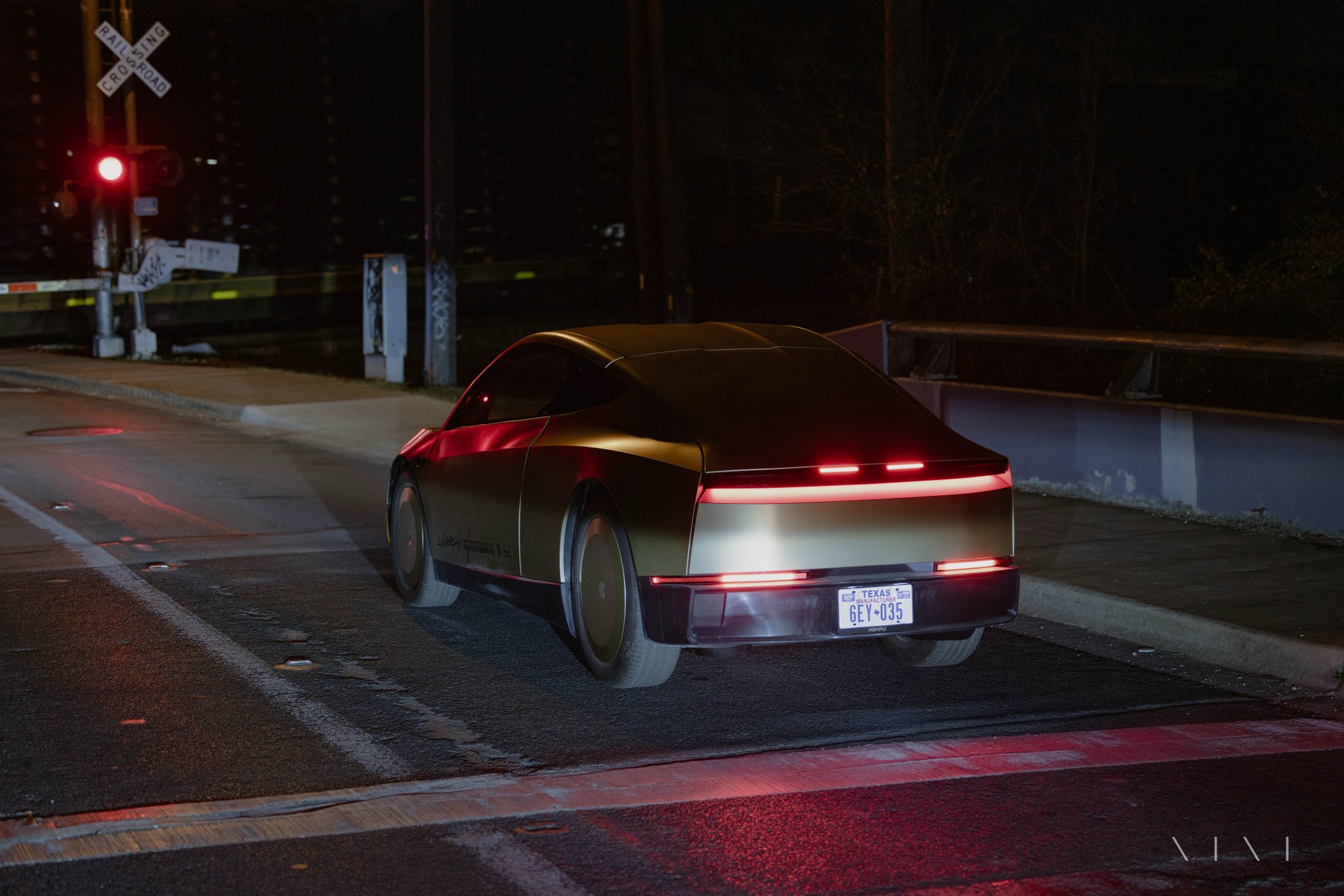
Tesla Cybercab Prototypes Spill the Beans: NACS Charging Backup and Rear Camera Washers Herald Practical Autonomy in 2026
Key Takeaways
- Tesla Cybercab prototype spotted with rear panel potentially housing a physical NACS charge port, highlighted by Owen Sparks on X.
- Provides backup to wireless-only charging, enabling use of existing Superchargers before infrastructure rollout.
- Ensures flexibility and redundancy for continuous autonomous operation as production nears in months.
- Chicago sightings show rear camera washer keeping lenses clean, noted by Sawyer Merritt as a long-requested feature for FSD in harsh weather.
- Indicates Tesla’s practical design approach, possibly extending washers to other cameras for reliability.
As Tesla inches closer to revolutionizing urban mobility with its Cybercab robotaxi, recent prototype sightings are dropping major hints about the vehicle’s real-world readiness. Spotted across the U.S., including gritty Chicago streets, these autonomous two-seaters are showcasing thoughtful engineering tweaks that address key pain points for fully driverless operation. From a mysterious rear panel that could hide a NACS charging port to a long-awaited rear camera washer, Tesla appears to be prioritizing redundancy and reliability. In this deep dive, we’ll unpack these discoveries, analyze their implications, and explore how they fit into Cybercab’s aggressive 2026 production ramp-up.[1][2]
The Buzz Around the Rear Panel: Is a NACS Port Hiding in Plain Sight?
Tesla enthusiasts lit up social media when Owen Sparks, a keen Tesla watcher, posted images of a Cybercab prototype flaunting an intriguing panel on its rear. This flap, visible on recent U.S. sightings, looks suspiciously sized for a physical North American Charging Standard (NACS) port—Tesla’s own plug that’s now the industry standard.[1]
When Elon Musk unveiled the Cybercab at the “We, Robot” event in October 2024, the focus was squarely on inductive wireless charging—no traditional plug in sight. Tesla touted efficiencies over 90% and seamless depot parking for continuous operation, perfect for a robotaxi fleet racking up miles 24/7.[3]But with production looming and wireless infrastructure still nascent, adding a NACS port makes brilliant sense as a bridge solution.
Why this matters for Cybercab owners (or fleet operators):
- Immediate Supercharger Access: Plug into Tesla’s 15,000+ North American stalls without waiting for wireless pads. NACS supports up to 500V and high currents for fast DC charging, matching Cybertruck speeds around 250kW.[4][5]
- Hybrid Flexibility: Wireless for depots, wired for emergencies—reducing downtime in a vehicle designed for non-stop autonomy.
- Industry Ripple: As more EVs adopt native NACS (like upcoming GM models), Cybercab’s compatibility future-proofs it.[6]
Speculation aside, Tesla hasn’t confirmed, but prototypes don’t lie. This redundancy echoes Cybertruck’s front camera washer, blending innovation with pragmatism.
Rear Camera Washer: Finally Tackling FSD’s Dirty Little Secret
Chicago’s winter grime provided the perfect canvas for another prototype reveal: a spotless rear camera amid a mud-caked body, complete with water droplets. Industry insider Sawyer Merritt quickly flagged it as arear camera washer—a feature Tesla owners have begged for years, especially in snowy regions where slush blinds FSD cameras.[7][2]
Key benefits for autonomous reliability:
- FSD Performance Boost: Clean lenses mean accurate object detection, vital for unsupervised Full Self-Driving (FSD) in Cybercab—no human backup.
- Weather-Proofing: Proven in Cybertruck’s bumper washer, which uses heaters to fend off frost alongside fluid sprays.[8]
- Fleet Scalability: Multiple cameras (front, sides, rear) could get washers, ensuring 99.9% uptime in rain, snow, or road spray.
This isn’t just a nice-to-have; it’s essential. Tesla’s recent Model 3/Y updates added camera shields, hinting at broader rollout.[9]For Cybercab, it positions Tesla ahead of Waymo, whose sensor cleaning remains a logistical headache.
Production Timeline: 2026 Ramp-Up on Track, But Eyes on April
Tesla’s Q3 2025 update reaffirmed Cybercab volume production in 2026, with Elon Musk pinpointingAprilas the kickoff for the $30,000 robotaxi.[10][11]Analysts like Canaccord Genuity echo scaling in 2026, tied to Giga Texas lines already testing.[12]
Milestones to Watch:
- Q1 2026: Regulatory nods for unsupervised FSD; AI5 hardware (mid-2027 volume) bridges with current HW4/AI4.[13]
- Mid-2026: Fleet rides via Tesla app, surpassing Waymo in scale per recent teases.[14]
- Challenges: Supply chain for wireless pads and NACS integration, but prototypes signal readiness.
Skeptics point to past delays (Roadster, Semi), but Cybercab’s sightings—from Austin hunts to Chicago grit—show momentum.[15]
Tesla’s Philosophy: Innovation Meets Real-World Grit
These tweaks scream Tesla’s evolution: flashy unveilings (wireless charging pucks!) backed by boring reliability (plugs and washers). For robotaxi economics—needing 5x human drivers’ utilization—downtime is death. A NACS port sidesteps wireless chicken-and-egg (build pads or cars first?), while camera hygiene ensures FSD’s edge.
Analysis:
- Bullish on Shares: TSLA poised for robotaxi revenue; $30k price + 20¢/mile undercuts Uber.[16]
- Advice for Investors: Watch Q4 earnings for prototype fleet size; bet on NACS confirmation.
- For EV Buyers: If personal Cybercabs emerge, demand these features in Model updates.
Looking Ahead: Cybercab’s Path to Ubiquitous Autonomy
With prototypes multiplying and features hardening, Cybercab isn’t vaporware—it’s viable. Wireless + NACS + washers = a bulletproof platform for 2026 dominance. Tesla’s listening to watchers like Sparks and Merritt, turning feedback into fleet gold. Stay tuned; the robotaxi era accelerates.